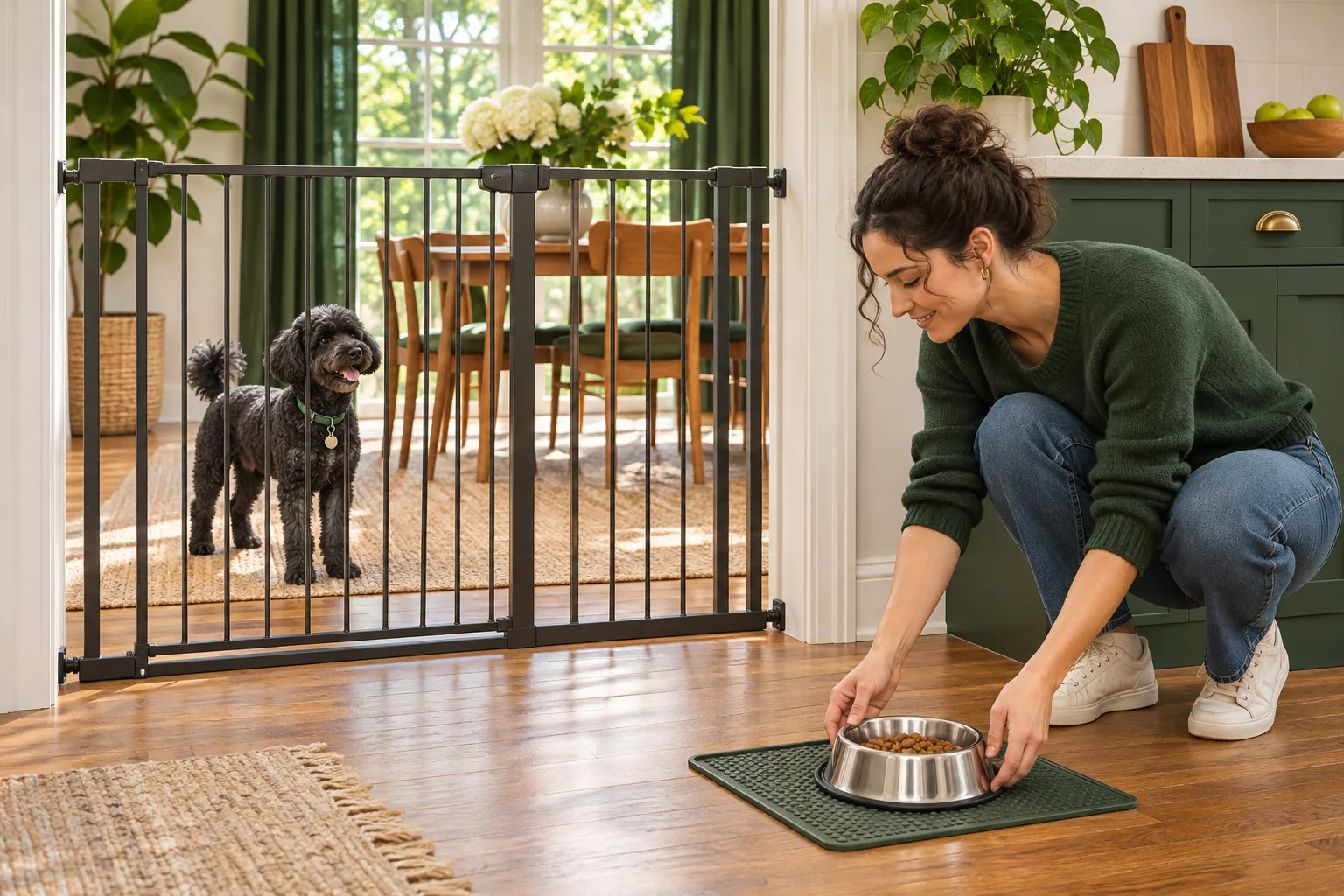
When your dog jumps at the food bowl, lowering dinner can become a scramble around your knees. Start by arranging the space so you can put the meal down safely while your dog waits in a familiar separate area. Then practise a very short response with four feet on the floor at another time. DogPath can help you prepare the foundation and reserve a brief practice slot, while ordinary meals remain predictable and easy to access.
Dog jumps at the food bowl? Find the difficult moment
Watch the sequence on a normal day without deliberately provoking another jump. Your dog might become busy when the cupboard opens, follow the scoop or spring up as your elbow moves toward the floor. Write down the first movement that changes their behaviour. The earliest useful practice point may be holding an empty bowl at your side, well before any food is prepared.
Check the surroundings as well. A narrow passage, another dog waiting close by or a slippery floor can make the final approach harder. Decide where the bowl will go and where the dog can stay comfortably during preparation. Keep the route clear enough that you can walk, bend and step back without edging over the dog. Arrange a separate eating area for each dog if you have more than one.
Look at the dog's body and comfort. Excited hopping with a loose body is a different observation from stiffening, hovering over food, growling or snapping as someone approaches. Those signs call for individual professional advice and safe distance. A sudden change in appetite, movement or reactions around food deserves a veterinary check. The meal itself should still be provided through an arrangement that keeps everyone safe.
Make tonight's meal straightforward
Prepare the food while your dog is in a familiar comfortable area, perhaps behind a gate they already tolerate. Put the bowl on a stable nonslip surface, step out of the eating area and then give access. Use a layout that lets you open the gate without reaching over the dog or squeezing past the bowl. If the dog struggles with gates, ask another adult to keep them company elsewhere while you prepare.
When access is open, let the dog approach and eat. Keep people and other animals out of that space. The Humane Society of Missouri food-bowl management guidance describes practical separation around feeding. In your own home, aim for a route that works even when you have only a few minutes to serve dinner.
Pick up the bowl when the dog has finished and moved away. Avoid reaching into it, taking it away during eating or touching the dog to check what they will tolerate. Children need physical separation and adult supervision around feeding. If you cannot find a setup that lets you serve safely, arrange in-person support promptly. You can describe the route, the gate and the dog's reaction when you ask for help.
Practise with an empty bowl at a quiet time
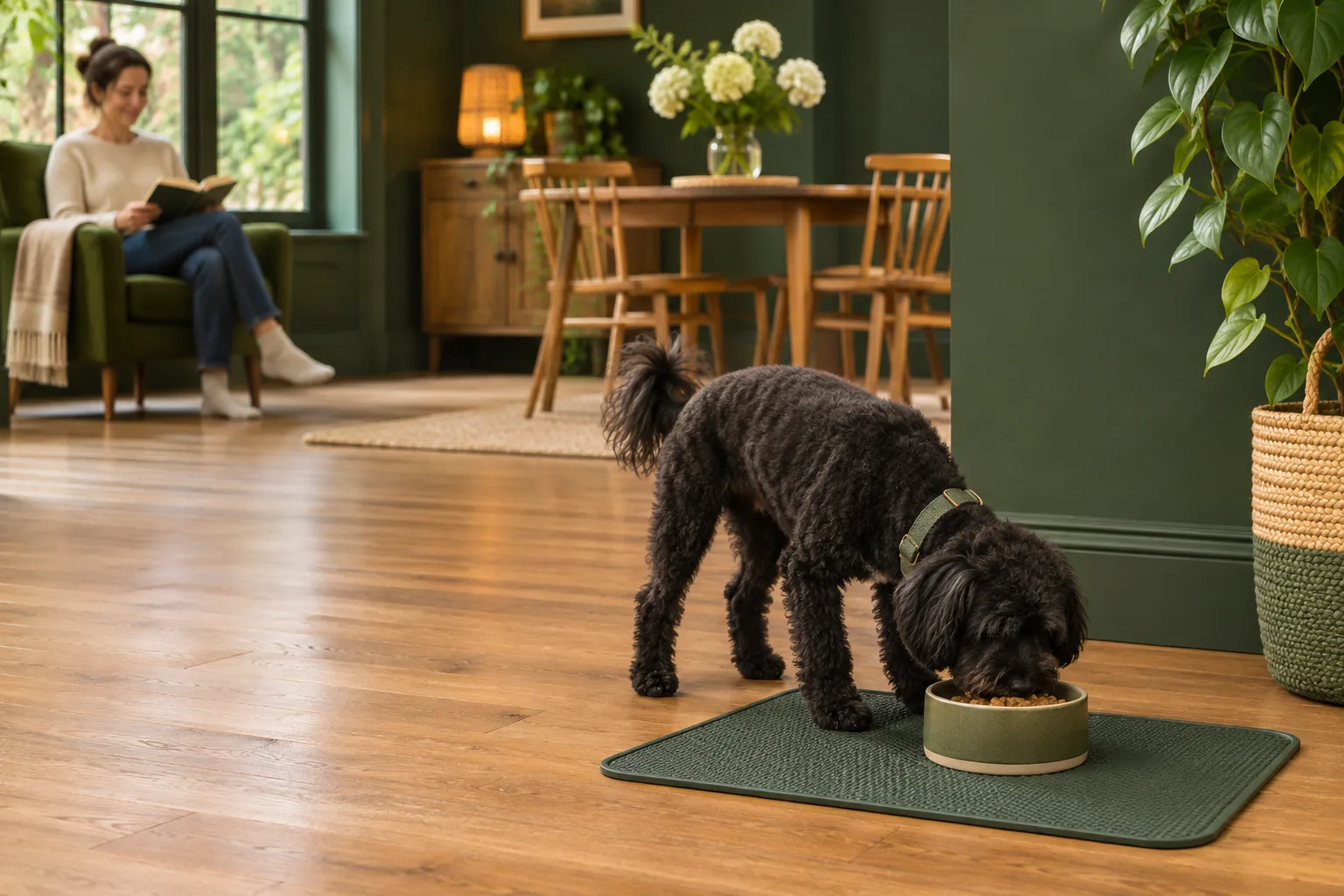
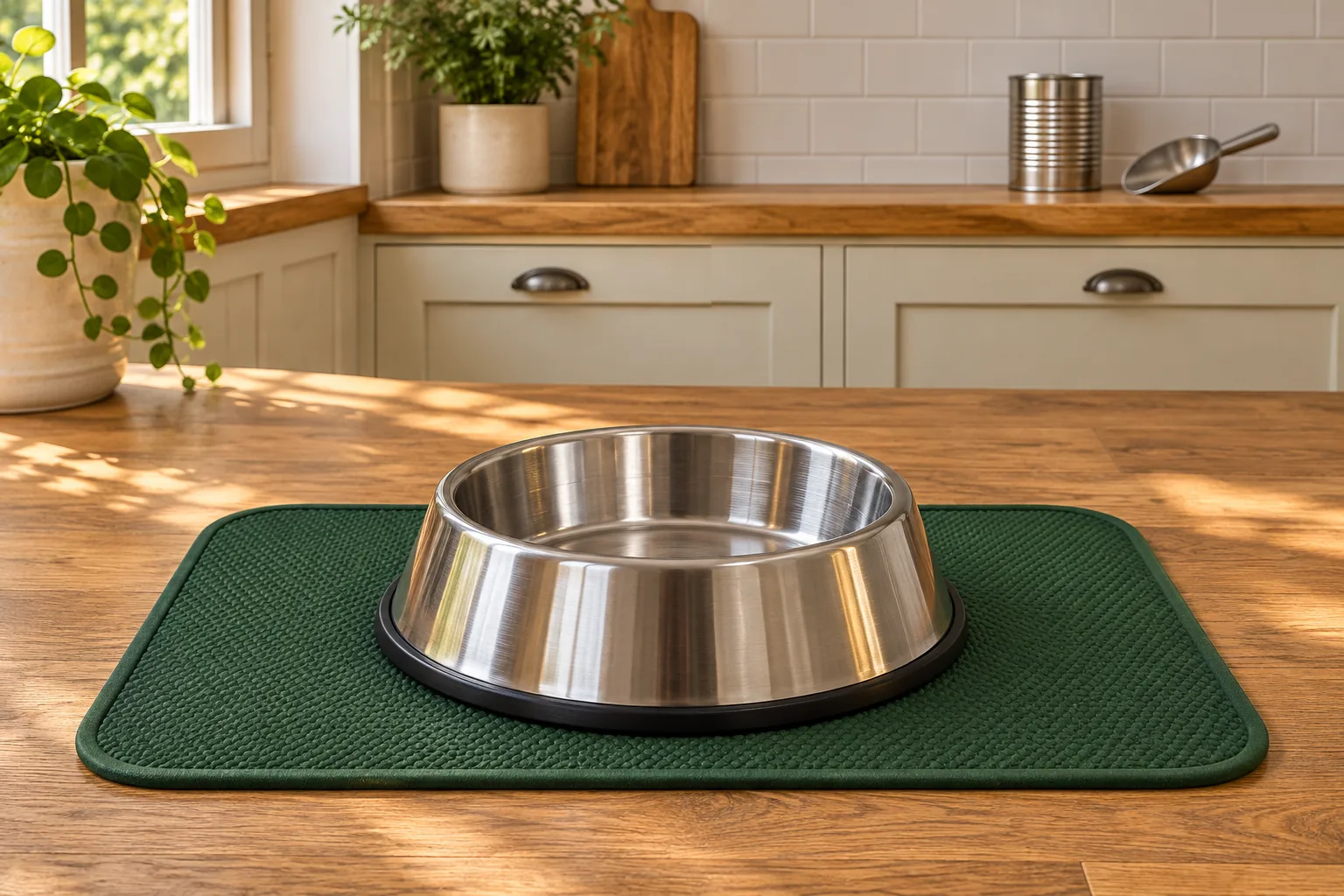
Choose a moment away from the main meal when your dog can move comfortably and take small suitable rewards. Start in a quiet room on grippy ground. Hold a clean empty bowl still at your side. If the dog stands with four feet down, recognise that moment with a familiar marker if you use one and deliver a reward low beside you.
Place the bowl out of sight between a few easy repetitions. Let the dog wander off or take a short break. There is no need to build a long wait. The reward marker guide explains how to make your timing clear, and our short-session guide can help you choose a stopping point before you begin.
If holding the empty bowl already produces jumping, start with it resting on a counter and practise the floor response without moving it. Keep rewards away from your chest so the dog does not have to reach up. If jumping continues, put the bowl away and return to an easier foundation in a different room. You can teach a comfortable stand beside you before introducing any feeding equipment.
Lower your hand just a little
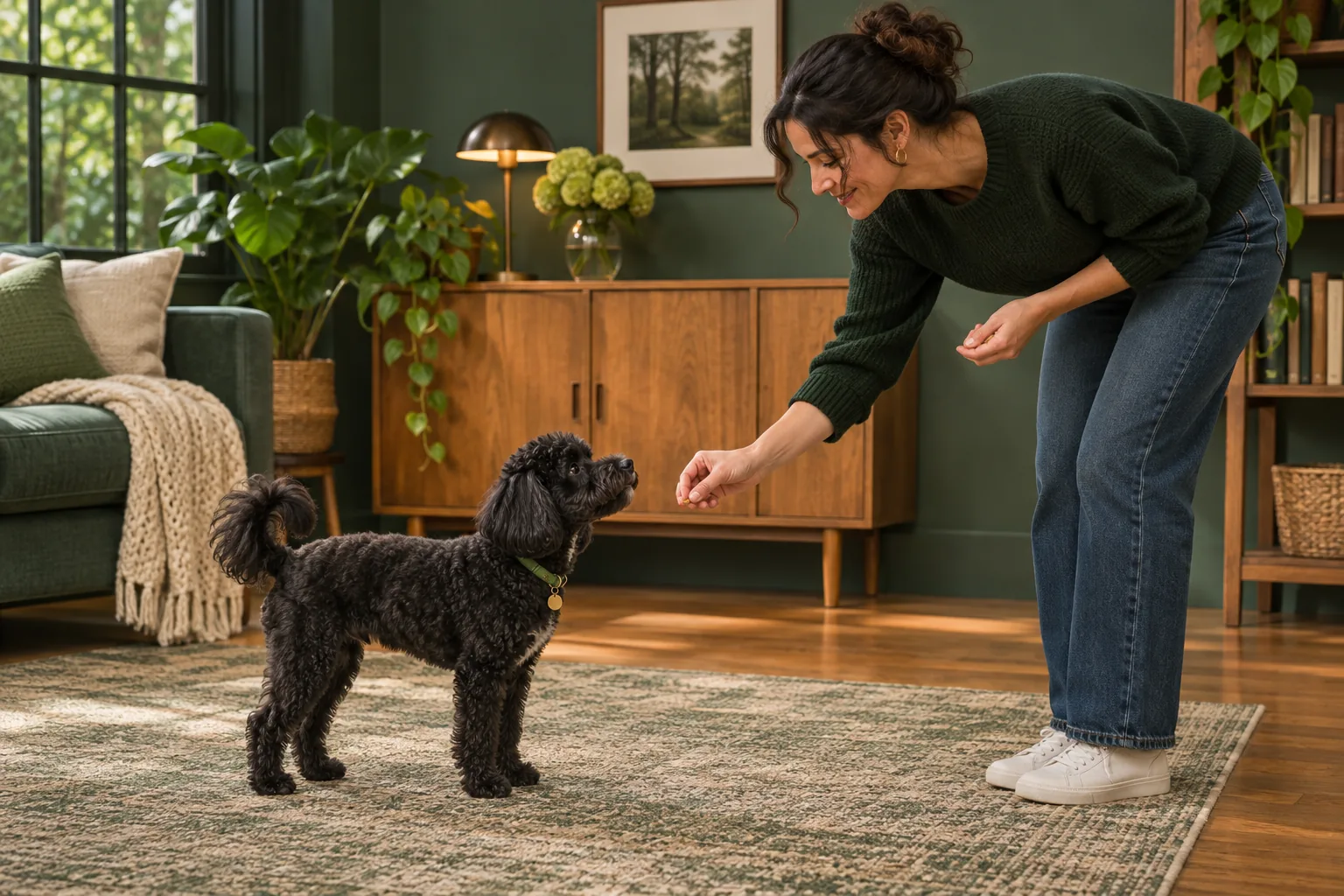
Once the still bowl is easy, move your hand a small distance downward and then reward while the dog's feet remain on the floor. Start with a movement you can complete without the dog rushing toward it. You may need only to bend your elbow slightly. Keep your body balanced and leave the dog room to move away.
If a jump starts, stop the practice and simplify the next setup. Avoid turning the bowl into a repeated up-and-down challenge. You can put it away, let the dog take a break and later try a smaller movement or greater distance. Actual dinner can still be served using the prepared separate area, without waiting for a successful rehearsal.
Change one feature at a time. Lowering a bowl farther, adding food and moving to the regular feeding spot are different changes. Repeat an easy version before choosing the next. A dog who keeps feet down beside an empty bowl in the living room may still find a full meal in the kitchen much harder. Observe the whole response, including whether they can move normally and take a reward comfortably.
Prepare one foundation in DogPath
Look for a known foundation lesson that supports what you want to practise, such as reward timing or a simple sit your dog can do comfortably. Read the instructions and prerequisites before you begin. A sit can be an option if it is easy for the dog. Standing with four feet down is also a useful starting response. Check comfort rather than repeatedly asking for a posture that seems difficult.
Use the weekly plan to reserve a short session when you can concentrate. Write one small goal on paper, such as “empty bowl held still beside me, three easy floor responses”. Prepare the rewards and a place to put the bowl away. After practice, record the lesson work actually completed in the app. Keep notes about the bowl and the environment separately.
For example, “still bowl easy, jump when I bent forward” suggests reducing your body movement next time. DogPath does not assess food guarding, hunger or the safety of your feeding space. Dog Train Club and DogPath share a publisher. If you need help understanding what you saw, bring your notes to a qualified reward-based professional who can watch the routine in person.
Keep normal feeding needs in the plan
Maintain the dog's usual meals, water and any veterinary feeding instructions. A training session can use a suitable small part of the daily food allowance if that works for your dog, but the meal should not depend on completing a growing list of exercises. For puppies, dogs taking medication and dogs with dietary needs, ask your veterinarian about any proposed change in food timing or content.
Notice whether the schedule is realistic. A hungry dog waiting while several meals are prepared may find the kitchen especially difficult. You can fill bowls out of view, serve dogs in separate places and shorten the busy period. Keep preparation supplies organised so you do not need to walk back and forth carrying the bowl over the dog's head.
If someone else feeds the dog, show them the practical setup first. Explain where the dog stays, where the bowl goes and when access opens. The helper does not need to extend the exercise to prove it works for them. A consistent ordinary meal is useful while you practise the small foundation separately. Write the steps down if several adults share feeding duties.
Decide when to make a small change
Compare a few quiet sessions. Note the bowl's position, the person holding it, the distance and what the dog did. “Four feet down for a tiny hand movement” gives you something repeatable. If the dog starts barking, grabbing rewards or bouncing repeatedly, the session may be too difficult or badly timed. Finish and return to an easier arrangement another day.
You may eventually rehearse near the feeding area when it is empty and quiet. Keep the same small movement and familiar response. If you add a little food, reduce the difficulty again. The point is to make one brief movement manageable. It is reasonable to keep using a barrier for ordinary meals whenever that remains the simplest safe arrangement.
Seek individual help if the dog's response becomes more intense or you feel unsafe holding food nearby. Stiffening, guarding the bowl or a bite risk needs distance and a tailored plan. The Tufts food-aggression resource describes warning signs and management. Contact your veterinarian for sudden changes, pain or appetite concerns. Share observations rather than testing whether the dog will react again.
Common questions
Does my dog have to sit before dinner?
You can serve the meal safely using separation and give access once you are out of the way. Practise a comfortable floor response separately if you want to work on the movement.
Should I raise the bowl whenever the dog jumps?
Repeatedly lifting a meal can make the sequence more difficult. Use the prepared feeding arrangement for dinner and make the next practice easier with an empty bowl or a smaller movement.
Can two dogs practise together?
Begin separately so each has space and a clear reward opportunity. Feed them in separate suitable areas and seek advice if either dog guards food or approaches the other's bowl.