When a dog wraps their front legs around a visitor's leg, the room can become awkward very quickly. A dog humping people needs a practical plan that protects everyone's space. Laughing, scolding or wrestling the dog away can add activity to an already difficult moment. Start by making access easier to manage, then teach a simple way to move away before mounting begins.
Mounting does not tell you a dog's motivation by itself. Notice the situation without assigning a personality label or assuming a medical explanation. This guide focuses on adult visitors, safe household arrangements and voluntary alternatives. A sudden change, signs of pain or any risk of biting call for personal professional help rather than a more demanding home exercise.
Dog humping people: make the next visit easier
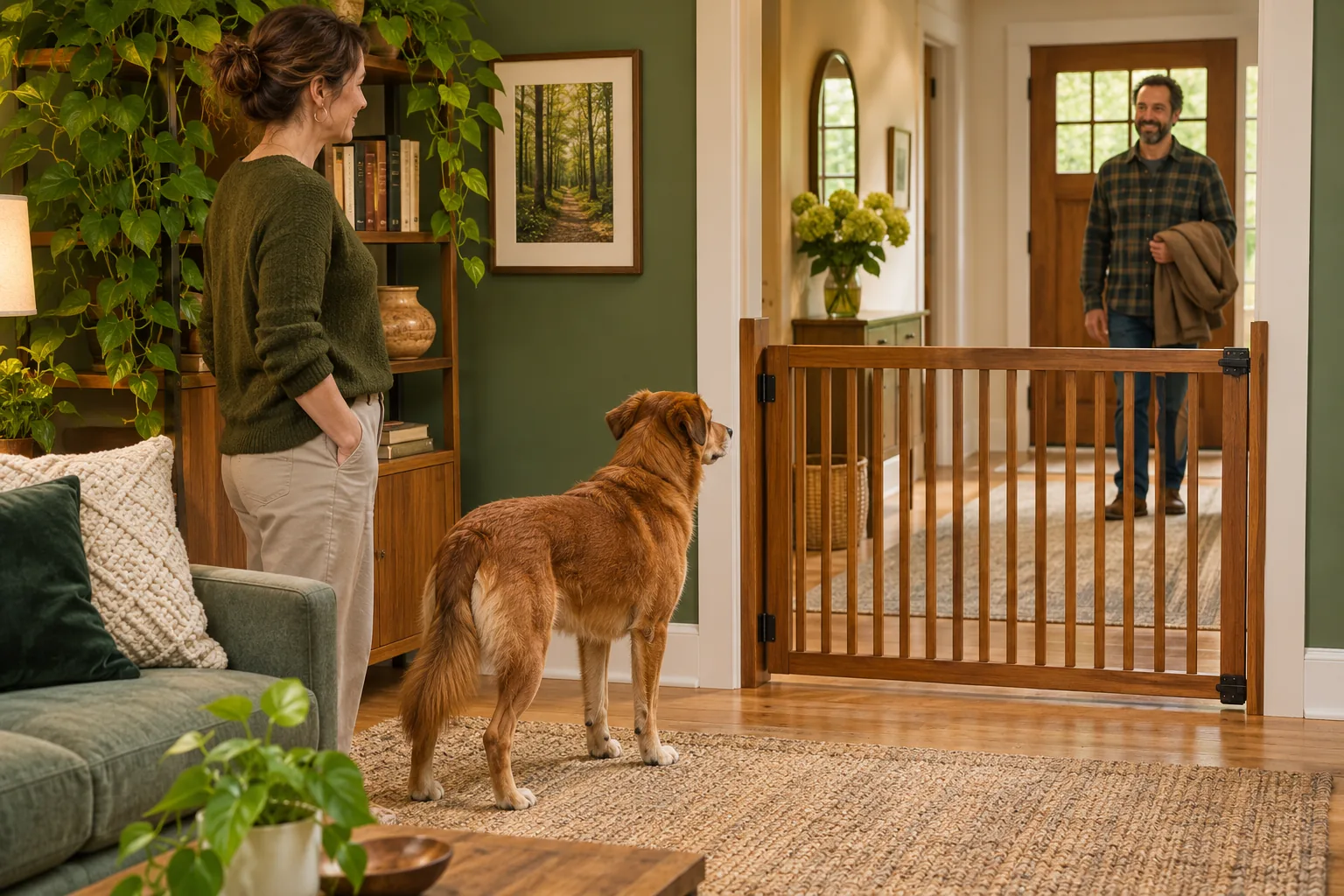
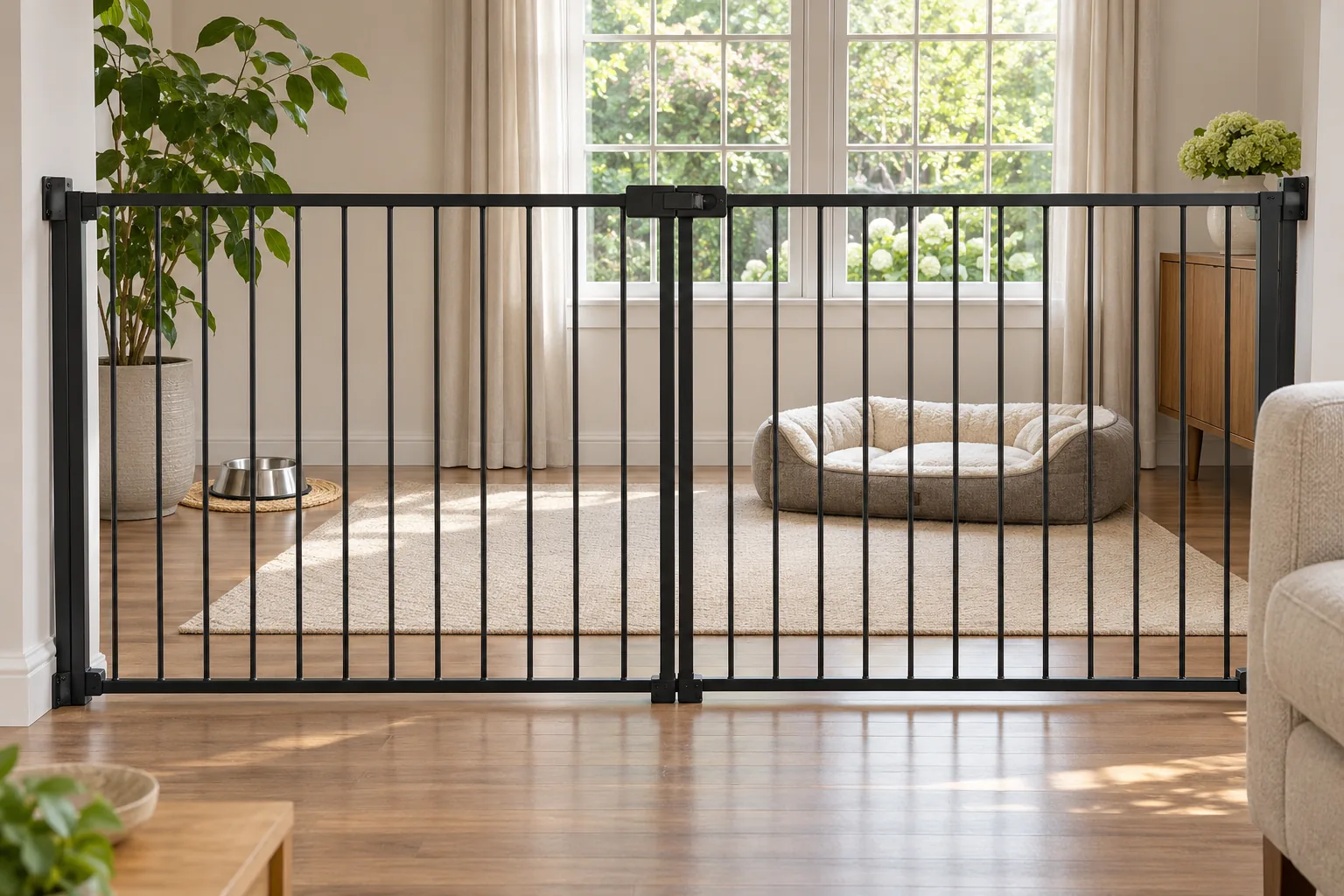
Before another visitor arrives, decide where your dog can comfortably spend the opening minutes. A familiar room or a secure gate can create useful distance, provided your dog is already comfortable there. Check the latch and keep the arrival route clear. A barrier must prevent contact; a small obstacle that people need to step over is not a dependable plan.
Tell the adult visitor what to do before opening the door: enter quietly, keep their hands to themselves and give the dog space. Nobody needs to greet the dog immediately. Put children and anyone unsteady on their feet outside this practice arrangement. If your dog is distressed behind a gate, use a different familiar arrangement and seek help with separation rather than leaving them to struggle.
For the first visit, success may simply mean everyone enters and sits down while the dog remains comfortable elsewhere. You do not owe anyone a demonstration. Prepare water, a resting place and supervision that does not require reaching over the dog. Avoid creating a narrow passage where a person and dog must squeeze past each other.
Set up a place to pause before training
A pause area should feel ordinary before visitors become part of the picture. Spend a few quiet periods there together on uneventful days. Your dog can choose to rest or investigate a safe familiar activity. Keep the space at a comfortable temperature, with secure flooring and an unobstructed bed. Do not introduce an unfamiliar confinement setup at the height of an incident.
Practise closing and reopening the barrier briefly while you remain nearby. If your dog becomes worried, stop and make the arrangement easier. Food is optional, and any item offered needs to suit that individual dog's safety and supervision needs. A resting area is management, not a punishment delivered after a mistake. It also gives visitors permission to enjoy the visit without handling the dog.
Consider the return route as well as the entry. Can you lead the situation back to separate spaces without grabbing a collar or lifting a struggling dog? Arrange doors and adult positions beforehand. If the only workable interruption would involve physical confrontation, keep contact prevented and ask a qualified reward-based professional to help plan the next step in person.
Teach an away cue when nobody is visiting
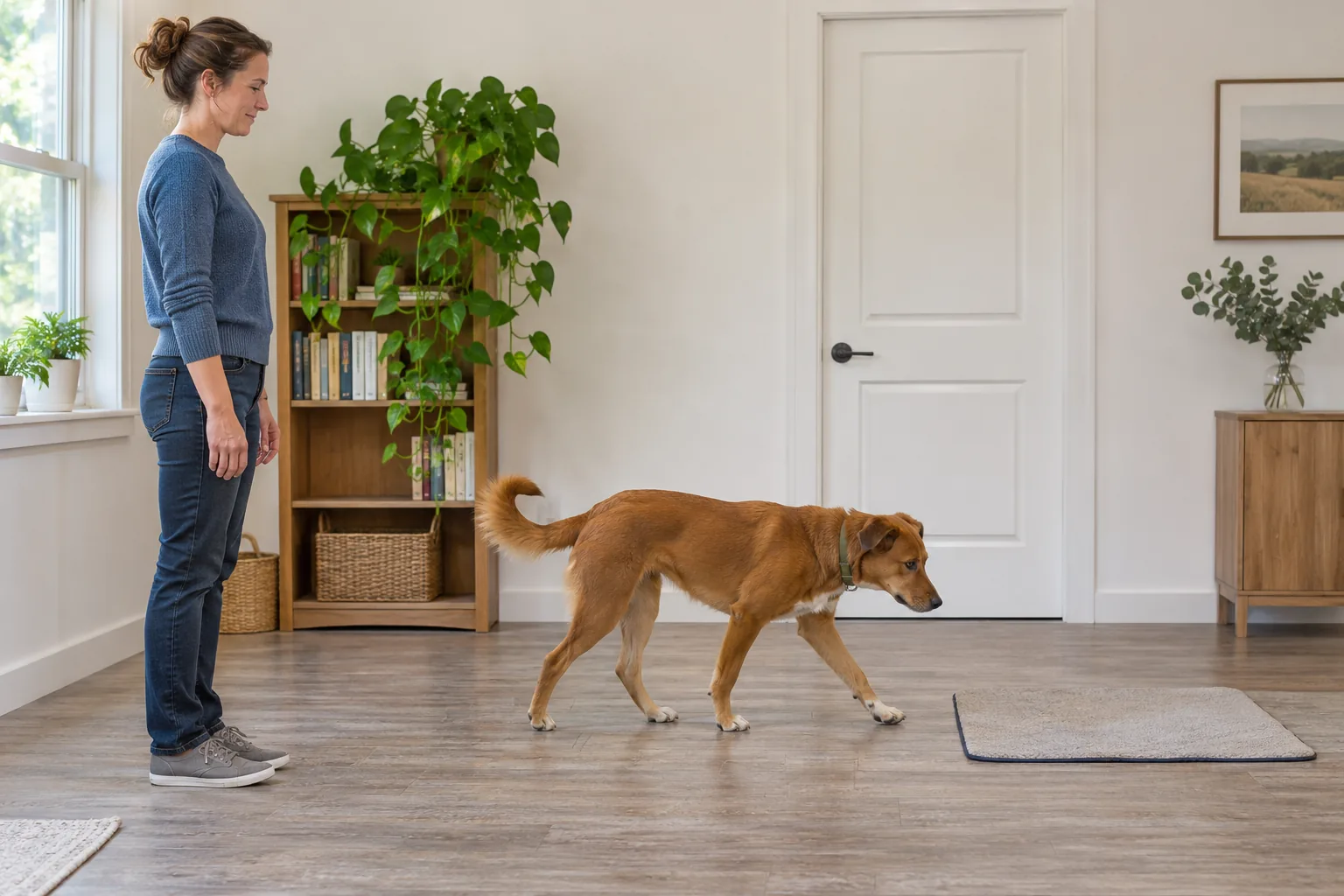
Choose a short word that will mean moving with you toward a familiar spot. Begin in a quiet room with your dog already free to move. Say the word once, turn toward the spot and reward a few steps in that direction. Keep the reward available at the destination rather than waving it beside someone's trousers. Repeat only while the exercise remains easy.
Once your dog understands the route, add a pause on a mat if that is comfortable for them. Our settle on a mat guide explains how to build that place separately. The first goal here is movement away from a person, not a long, motionless stay. Let your dog leave the mat between repetitions so it does not become another place where they feel trapped.
Use a clear reward moment for the first useful turn or step. A familiar reward marker can help you identify that choice without repeating the cue. Practise with an adult standing still at a generous distance only after the empty-room version is reliable. If your dog cannot disengage comfortably, remove the helper and return to the easier version.
Interrupt early without turning it into a contest
Watch for your own dog's sequence. Perhaps they begin following a particular visitor closely, crowd a leg or repeatedly return after moving away. These observations do not prove why mounting happens, but they can tell you when to act. Give the familiar away cue while there is still room to move. Reward the voluntary turn at a distance, then provide a longer pause.
If mounting has already started, the priority is reducing contact safely. The visitor should avoid pushing, grabbing or pulling the dog's legs. Have them remain as steady as safely possible while the supervising adult creates an exit using the established cue and space. Do not demand that someone stand still if they risk falling. If your arrangement cannot safely resolve the moment, do not recreate it for practice.
After contact ends, separate the spaces calmly and let the visit continue without further dog greetings. Repeatedly bringing the dog back to see whether they will try again creates more rehearsals. If the dog stiffens, growls, snaps or resists people approaching, stop the household exercise. Keep people safely separated and obtain individual help; online instructions cannot assess a bite risk.
Rehearse one small part of a visit
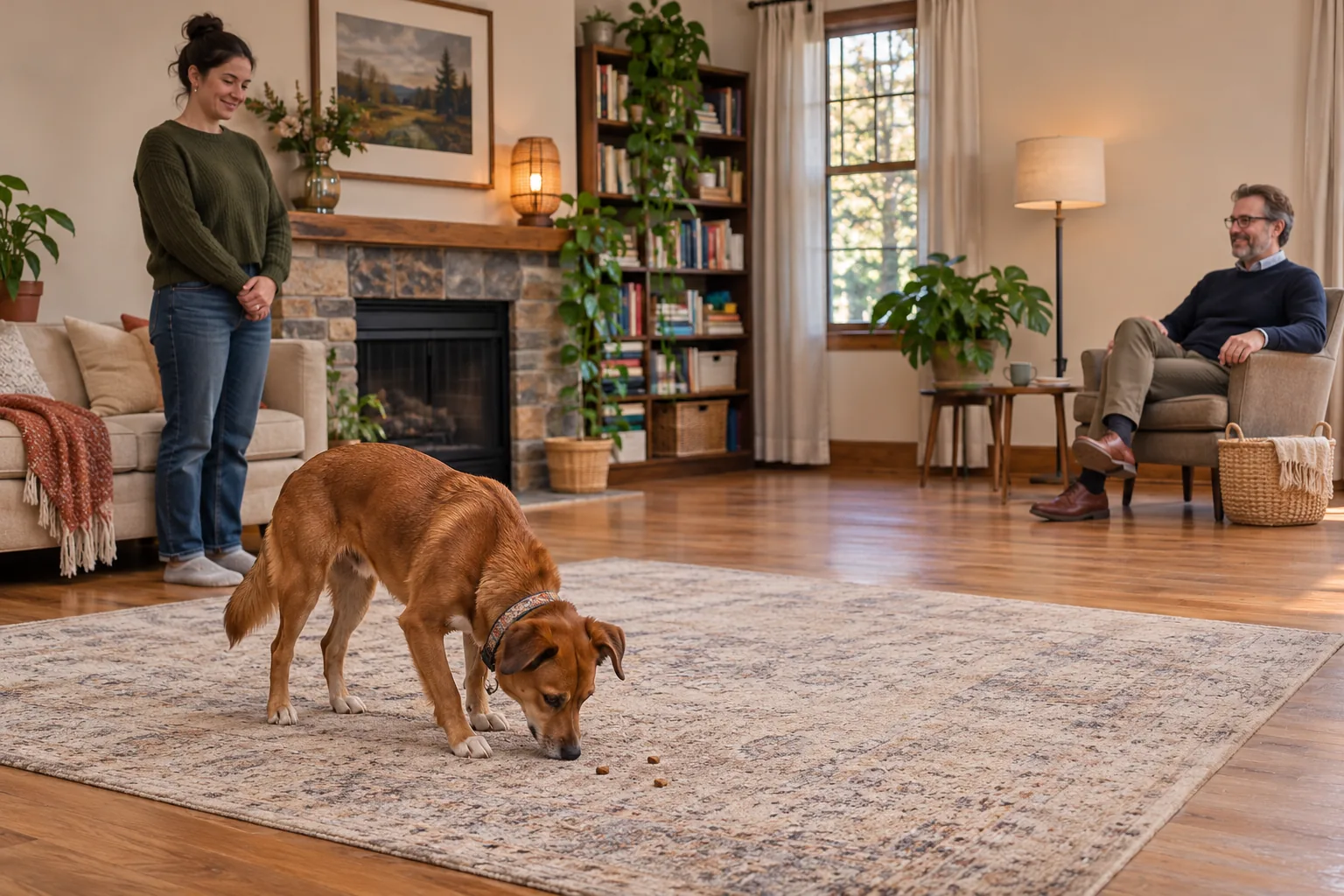
Choose one calm adult helper who can follow the plan, rather than a busy gathering. Start with the dog comfortable behind the familiar barrier and the helper seated at a distance. Your first rehearsal might consist only of the helper being present while the dog continues an ordinary activity. End before the dog repeatedly crowds the barrier or needs frequent instructions.
When earlier rehearsals are comfortable, briefly practise the known away route with the helper still and distant. Reward your dog for moving with you or choosing their resting place. The helper should not call, pat their legs or lean over to encourage a greeting. A dog does not need direct access to a visitor for the session to be useful.
Change only one detail on another occasion: perhaps the helper stands, or moves a little farther into the room. Keep the other details easy. If following, crowding or mounting returns, restore the previous arrangement and finish with distance. Do not increase difficulty just because one repetition went smoothly. Ordinary visits can remain managed while short rehearsals happen separately.
Notice the whole day, not just the episode
Keep a brief factual note after an incident or rehearsal: who was present, what happened just beforehand, where the dog could move and what helped contact end. Record quiet visits too. Useful observations might be “followed the visitor when they stood up” or “rested behind the gate while coats were removed.” Avoid explanations such as “trying to be boss”; they do not describe an observable event.
Look for practical changes you can test without provoking another episode. A quieter arrival, fewer people at once or an earlier rest opportunity may make the next visit easier. Balance appropriate activity with genuine downtime, rather than trying to exhaust the dog. A tiring outing does not guarantee a comfortable social situation, and added stimulation may leave less room for learning.
Check whether the behaviour appears only around visitors or in other contexts as well. Note any new physical signs, changes in toileting, persistent licking or difficulty settling and discuss them with your veterinarian. These observations are information for an assessment, not a diagnosis. Do not choose medication, surgery or another medical treatment from a training article or assume it will solve mounting.
Decide what progress looks like in your home
Count useful choices and workable management, not just the number of mount attempts. Did the dog remain comfortable while someone entered? Could they turn away on one familiar cue? Was the visitor able to move without the dog repeatedly returning to their legs? Those details help you choose the next arrangement without requiring perfect behaviour through a whole evening.
Keep expectations specific. One dog may comfortably join a quiet visit for a short period; another may need a separate resting space throughout. Both arrangements can protect people and avoid repeated conflict. A greeting is optional, and access should never depend on a visitor accepting unwanted contact. Use the arrangement that is safe and sustainable for the household today.
If incidents are frequent, difficult to interrupt or increasing despite management, take your notes to your veterinarian and a qualified reward-based behaviour professional. Arrange in-person help promptly if there is pain, sudden change, guarding of space or any handling or bite risk. Bring an accurate account of what people did as well as what the dog did, so the plan can address the whole situation.
Common questions
Does mounting mean my dog is trying to dominate the visitor?
The behaviour alone cannot establish motivation or a social role. Describe what happens, protect the visitor's space and work on an easier alternative. A label is less useful than knowing when your dog starts following a person and how to prevent contact safely.
Should I let a visitor push my dog away?
Plan visits so that visitors do not need to physically manage the dog. Pushing, collar grabbing or wrestling can make the interaction harder and may create a handling risk. Use established separation and an easy voluntary away behaviour; seek personal help if contact cannot be interrupted safely.
Can I reward moving away after an attempt?
You can reinforce a useful voluntary choice while also improving prevention. Aim to cue movement earlier next time, then provide a proper break rather than alternating mounting and treats beside the same person. If that sequence keeps repeating, end access for the visit and review the setup with a qualified professional.