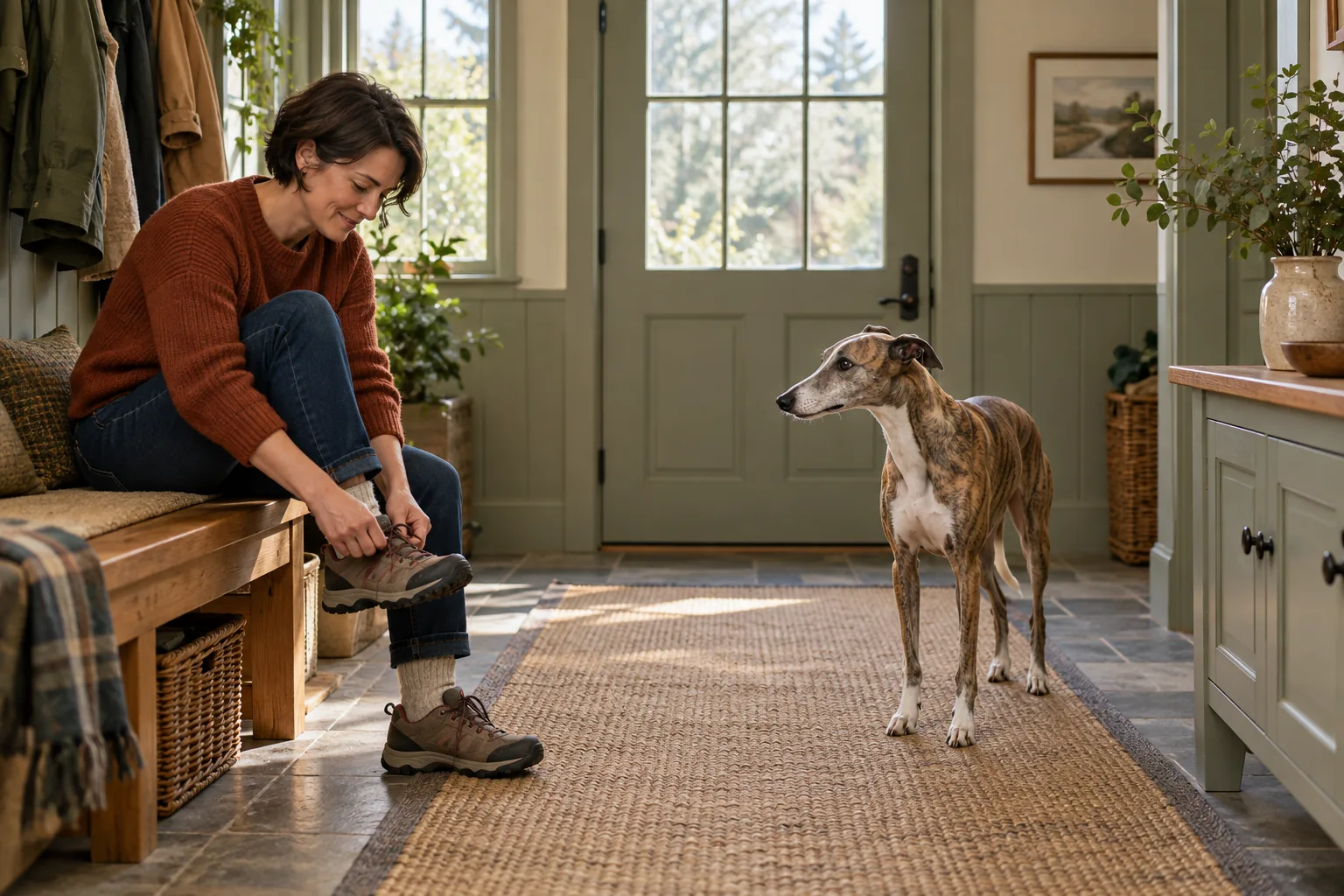
A dog excited before walks can make the simplest preparation feel hurried. You pick up a shoe, the dog starts circling, and getting dressed becomes a moving target. Begin by making the human part easier to organise. You do not need a perfectly still dog or a longer list of commands before every trip outside.
This guide uses an ordinary shoe-and-coat example, with DogPath supporting the preparation and review of a suitable foundation lesson. The actual rehearsal stays small and separate from essential outings. The app cannot assess the dog’s emotions, decide whether equipment is comfortable or certify a safe departure. You remain responsible for those decisions and for obtaining individual help when needed.
Dog excited before walks: notice the first change
Watch what already happens during one ordinary departure, without repeatedly picking things up to provoke a response. Does movement increase when you leave your desk, find your shoes or call someone to join you? Describe the earliest visible change in plain language. “Walked between the bench and the door when I stood up” is more useful than “went completely crazy”.
Separate manageable anticipation from situations that need personal help. A loose body and an easy return to ordinary activity are different from sustained distress, frantic escape attempts or teeth directed towards a person. An article cannot diagnose these signs. If behaviour changes suddenly, touch seems painful or there is bite risk, contact your veterinarian and a qualified behaviour professional before rehearsing.
Write only what you actually observed. Do not film with one hand while trying to control the dog with the other. If watching another normal departure would be unsafe, skip the observation exercise and arrange help. An ordinary paper note made afterwards is enough to identify which part of your own preparation might be simplified.
Get the human equipment ready first
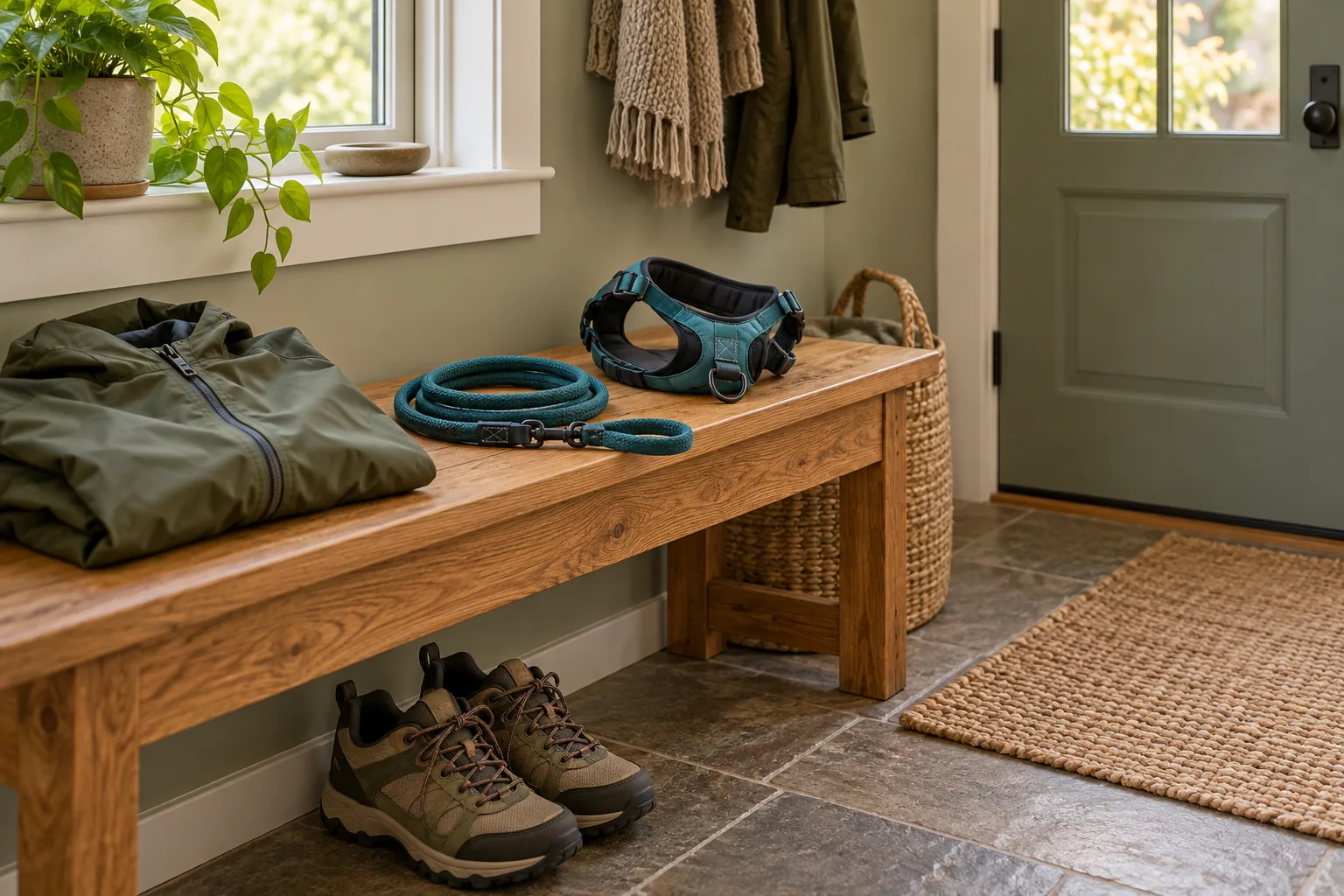
Pick a practical place for shoes, outerwear, suitable walking equipment and rewards. Preparing these while the dog is resting can reduce the amount of searching and repeated movement immediately before you leave. Keep straps, keys and food safely stored when unused. A tidy bench is useful only if the dog cannot reach anything unsafe on it.
Check that the floor provides secure footing and that the person getting dressed has somewhere stable to sit. Leave room for the dog to stand or move away without being stepped over. You are arranging a workable room, not creating a position the dog must hold. Close the exterior door and keep all ordinary safeguards in place during indoor preparation.
For a busy household, agree who handles the departure and who stays out of the route. One adult can finish getting ready before the dog joins them, where the dog is comfortable with that arrangement. Do not isolate a distressed dog to obtain silence. Adapt the household setup and seek individual advice if ordinary separation creates difficulty.
Choose an actual DogPath lesson before practising
Open DogPath when you have time to read, rather than during the hurried moment by the door. Look at a suitable foundation or attention lesson in the training path available to you. Read its prerequisites, equipment and preparation. Select an accessible starting point that matches the dog’s present skills; do not assume that every lesson fits this particular situation.
The verified workflow includes guided lesson instructions, preparation, recording completion and a weekly plan. Use it to organise the foundation work that supports your routine. This article does not establish a dedicated pre-walk programme, an excitement measurement or an automatic departure checklist. If the available lesson is unrelated, keep it separate rather than marking your own shoe rehearsal as that lesson.
Dog Train Club and DogPath are published by Rocket Digital Limited. We are describing our own app’s planning role. Put the household details, such as which shoe movement you tried, in a separate notebook. There is no need to assume the app stores custom trigger logs or can judge from a completed activity whether the dog is ready to leave.
Rehearse one small movement away from departure time
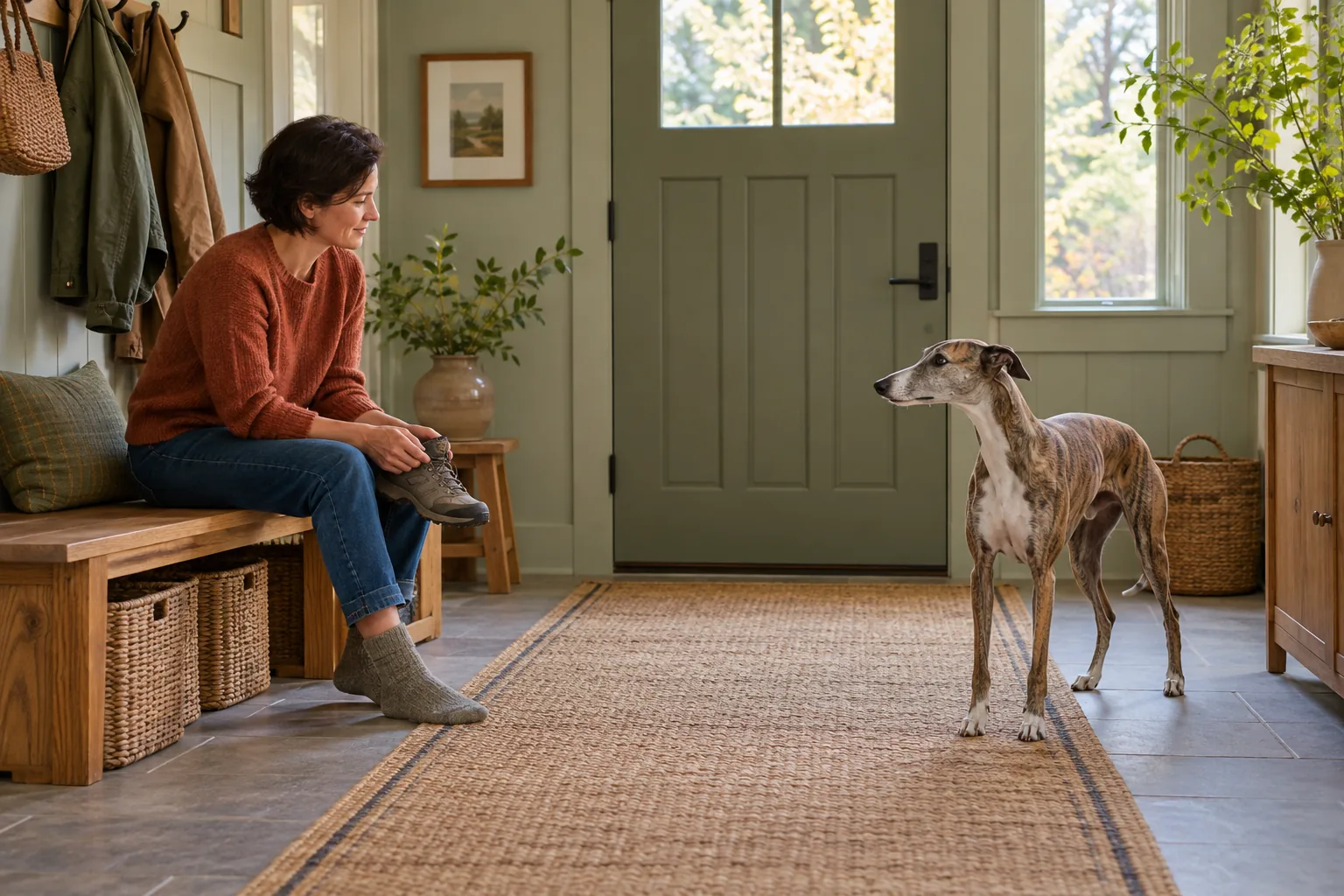
Choose a moment when toileting, rest and other immediate needs have already been met. Start with something smaller than the whole departure: sit on the bench with a shoe already beside you, for example. The exterior door stays closed. If that arrangement already causes difficulty, start elsewhere with less equipment or get help rather than repeating a struggle.
Move the shoe a little, then put it down. Notice whether the dog can remain comfortable and choose ordinary movement. You might reward a brief voluntary glance towards you or four paws remaining on the floor. Do not demand a sit, prolonged eye contact and complete silence together. The point is a manageable opportunity with one clear action, not an obedience test.
Finish while the situation is still easy and return to ordinary life. Our short-session guide explains how to give a small exercise a clear ending. Rehearsal does not need to produce a walk each time, but avoid a long sequence of departures that never happen if this makes the dog more frustrated. Shorten or abandon the exercise when it stops being useful.
Make the reward easy to understand
Prepare a small appropriate reward before moving the shoe so you can respond without rummaging in a pocket. Deliver it where the dog can receive it comfortably, without jumping, being cornered or reaching over furniture. Use food that suits the individual dog’s diet and health. Normal meals and water remain available; hunger is not a preparation method.
If you already use a familiar reward marker, the marker guide can help keep the timing clear. You are acknowledging a specific manageable action, not claiming that a treat has changed an emotion. Do not wave food around to keep the dog beside the bench while continuing movements they find difficult.
The RSPCA’s training advice supports reward-based learning. In this example, pay attention to whether the arrangement remains comfortable. Refusing food is a reason to reassess the situation, not to offer ever more exciting food while pushing ahead. Stop if participation becomes difficult, and seek veterinary advice for appetite concerns or other changes.

Keep equipment comfort separate from eagerness
A dog that moves away when equipment approaches may need a different plan from a dog that happily approaches but bounces beside your shoes. Do not treat every movement as anticipation of a walk. Check the equipment’s condition and fit, and notice whether touching or putting it on appears uncomfortable. Do not chase the dog around the room with a harness.
The Dogs Trust harness guide advises responding to concern and making the introduction easier when necessary. That principle matters here: a shoe rehearsal cannot resolve painful handling or a worrying harness. Arrange suitable individual help if comfort is uncertain, especially with a sudden change. Do not force the head or legs through equipment.
When the dog is already comfortable being equipped, prepare everything so the real departure involves as little fumbling as possible. Secure appropriate walking equipment before opening an exterior door, and keep the dog safely managed throughout. Never open the door as a test of the rehearsal. A history of rushing through doors needs its own physical safeguards and professional support where appropriate.
Protect the real walk from training demands
When a toilet break is due, use the easiest safe routine you can manage and go out. Do not repeatedly remove your shoes, cancel the outing or wait indefinitely for a quiet pose. Necessary care is not a prize for successful rehearsal. Young, older or unwell dogs may have particularly urgent needs; follow personal veterinary advice for their situation.
Prepare a modest route with room to move and investigate safely. Once outdoors, the loose-lead walking guide addresses walking skills separately. A manageable indoor start does not establish readiness near traffic, unfamiliar dogs or wildlife. Keep appropriate control and adapt to the environment instead of expecting the indoor exercise to solve every part of a walk.
If you had to manage a hurried departure, do not label the day a failure or try to make up for it with extra drills afterwards. Note one practical obstacle, such as shoes being in another room. Change the human arrangement next time. The dog should still receive suitable movement, sniffing, rest and normal care even when no rehearsal takes place.
Review the lesson and keep the next change small
Afterwards, record completion in DogPath only for the actual lesson step you practised according to its instructions. A brief glance during a separate shoe exercise does not mean an unrelated lesson is complete. Use the weekly plan to leave space for appropriate foundation practice, and read the next step before increasing difficulty. App progress is an organisational record, not proof of safety.
In your separate notebook, record the context and the movement: “after lunch, shoe already beside bench, lifted once, dog stayed comfortably nearby”. Include a difficulty honestly, such as the dog leaving the area or being unable to engage. Choose one adjustment next time: a quieter moment, a smaller movement or less equipment visible. Avoid changing several things and then guessing which mattered.
There is no deadline for a polished departure and no need to rehearse at every outing. Useful progress may be a person finding their equipment without rushing or recognising when to stop. If repeated attempts leave the dog distressed, pause the plan and get individual help. The next departure should remain a practical care routine, with training fitted around the dog’s needs.

Common questions
Should I wait until my dog is completely calm before leaving?
Do not delay necessary toilet breaks or care while waiting for a perfect pose. Prepare a safe, manageable departure and practise separately at a suitable time. If ordinary departures cannot be managed safely, arrange personal professional help rather than turning each outing into a long test.
Can I practise putting on shoes without going for a walk?
You can try a small comfortable movement at a time when immediate needs have been met. Keep it brief and stop if it increases frustration or distress. The aim is an easy practice opportunity, not repeated teasing with the promise of an outing.
Which DogPath activity should I mark complete?
Only record the actual suitable lesson step you completed following its instructions and prerequisites. Keep details of a separate shoe or coat rehearsal in an ordinary notebook. This guide does not claim that DogPath has a dedicated pre-walk checklist, emotion detector or automatic readiness assessment.
What if my dog mouths the lead or my hands?
Prioritise safe distance and practical management. Do not pull the lead from the mouth, grab the collar or force handling. For redirected biting, fear, pain or a sudden change, stop the rehearsal and seek veterinary and qualified behaviour support tailored to the dog and household.