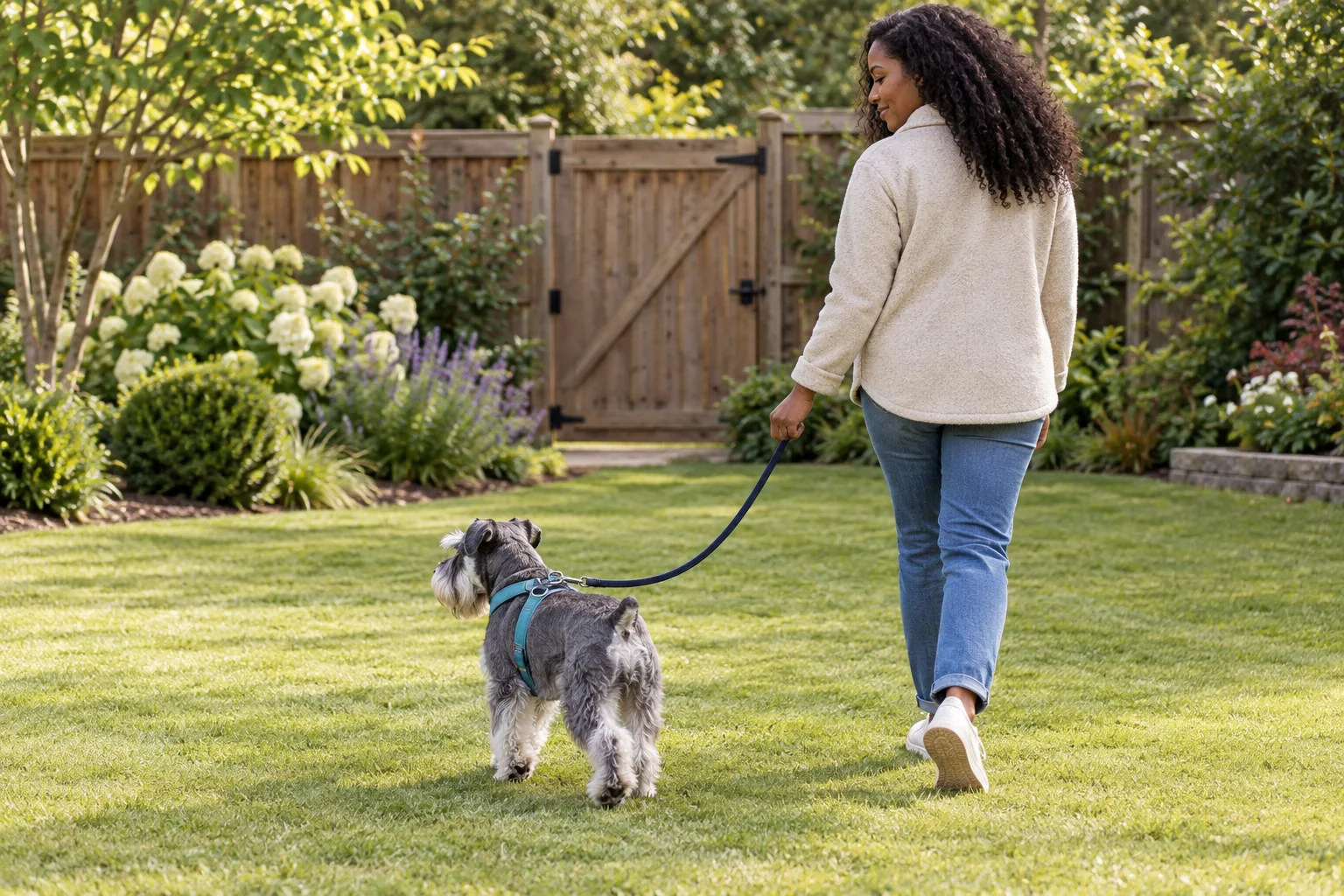
Is your dog biting the leash just as an ordinary walk gets going? A few steps turn into grabbing, you pull back, and suddenly the equipment is part of a game neither of you meant to start. For the next suitable practice opportunity, begin earlier in the sequence. Prepare an easy walking moment before the mouth reaches the strap, rather than waiting for another tug to decide what to do.
This article uses DogPath to organise preparation, familiar foundation work and an honest review afterwards. The phone stays away during handling. The example is optional practice in a quiet, securely enclosed setting, not a method for managing a bite incident beside a road. Pain, sudden behavioural change, severe distress or concern about being bitten needs veterinary and qualified personal support. Safe everyday care comes before completing any lesson.
Dog biting the leash: identify the earlier moment
Think back to an ordinary outing without recreating the difficult scene. What happened first: you stopped to check a message, the strap swung across the muzzle, the route became busy, or you searched for food after asking for several steps? Record what was visible immediately before the grab. “Turned towards the moving strap while I opened the pouch” is more useful than deciding that the dog was testing you.
Notice where the sequence begins. A dog who mouths equipment before leaving needs a different starting arrangement from one who becomes uncomfortable late in an outing. Do not infer a single cause from the final behaviour. Shortening optional practice may be useful, but it does not establish whether the dog was tired, worried, playful or physically uncomfortable. Keep observations separate from explanations.
If the dog's mouth is already on the lead, avoid turning the moment into pulling, shouting or reaching towards the teeth. Maintain safe control without jerking or inviting a tug, and end optional practice. Use a familiar taught release only if it is safe and appropriate. If safe handling is uncertain, obtain personal help; this guide does not teach an emergency release manoeuvre.
Check equipment and your own hands first
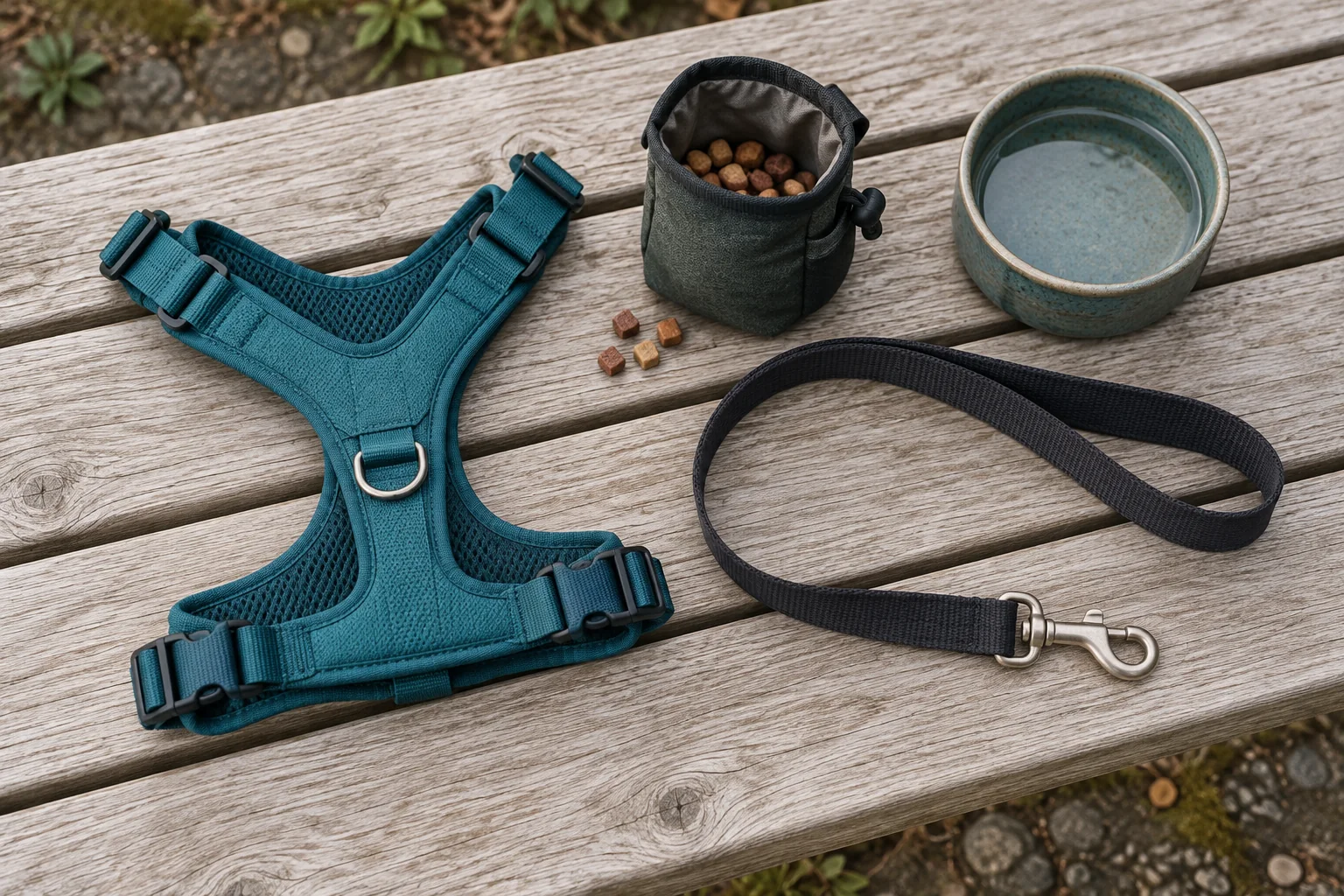
Before the dog joins you, inspect the lead, stitching and clip. Damaged equipment needs replacement before another outing; stronger-looking material is not a training solution. Use comfortable, appropriately fitted equipment already familiar to the dog. If putting it on causes avoidance or conflict, address that separately with suitable help rather than adding walking demands on top of an uncomfortable fitting routine.
Rehearse your movements without the dog. Can you hold the lead securely without wrapping it around fingers, and reach a prepared reward without letting the strap wave across the dog's face? Keep the line clear of feet and obstacles. If the arrangement is awkward, change where the pouch sits or seek handling guidance. Do not practise with a damaged lead or let go to make the exercise easier.
Choose a quiet enclosed place with secure boundaries and a clear level surface. Keep other animals and children out of the practice area. Have suitable small rewards ready and water available. Our loose-leash walking guide covers the broader foundation. Today's narrow question is what you can arrange before a familiar lead-grabbing sequence starts, not how far you can walk without a pause.
Prepare one suitable DogPath foundation
Open an appropriate existing walking or attention foundation in DogPath and read its instructions before attaching equipment. Check the prerequisites, starting conditions and expected response. Choose the lesson only if you can arrange those conditions comfortably. This is not a claim that the app contains a dedicated leash-biting treatment. A suitable basic lesson can organise practice; a next item in the path does not establish readiness.
Translate the plan into one sentence on paper: “Quiet enclosed garden, one familiar nearby step, reward ready, then pause.” Keep this contextual note separate from the app's completion record. If the dog cannot comfortably do the familiar starting response, choose an easier appropriate foundation or get qualified guidance. Do not combine several lessons in the hope that one will interrupt an escalating episode.
Dog Train Club and DogPath share the publisher Rocket Digital Limited. This example uses existing guided lessons, the training path, progress records and weekly planning. It does not rely on automatic bite detection, a frustration score or an invented equipment-analysis screen. Put the phone somewhere secure before practice; looking down to read while managing a lead can change the very sequence you are trying to simplify.
Reward the easy step before the strap becomes interesting
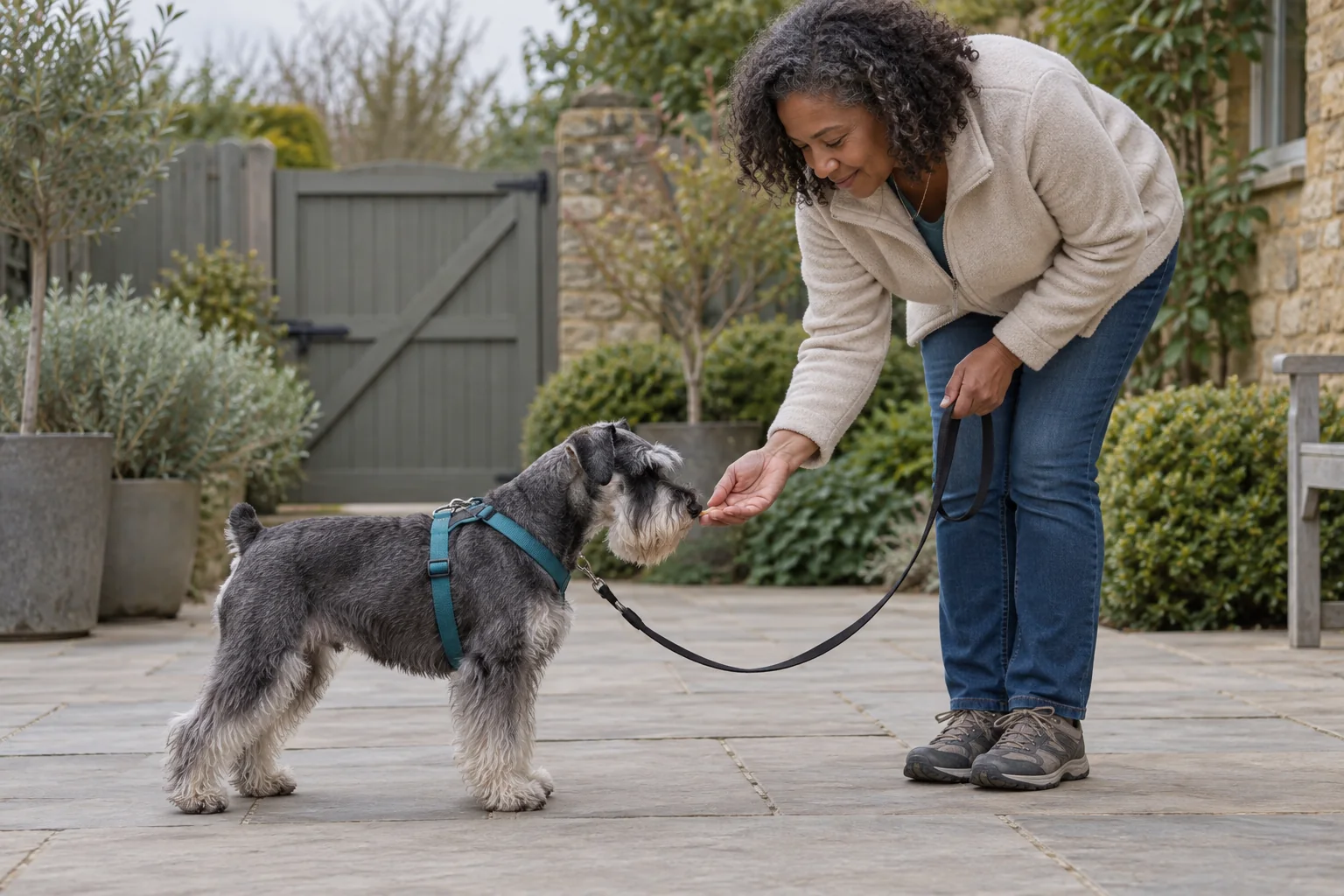
Start where the dog is already comfortable with the equipment and your nearby presence. Invite one familiar easy step, keeping your hands quiet and the line loose where safe. Reward promptly at a comfortable point beside you while the strap remains clear of the mouth. Then pause. You are preparing a small alternative action, not asking the dog to concentrate through an entire outing without investigating the surroundings.
The American Kennel Club's leash-biting guidance supports rewarding suitable on-lead behaviour before mouthing begins. Apply that limited principle to your timing. If you wait until the dog has grabbed before every reward appears, you have missed the earlier opportunity this exercise is designed to make available. Change preparation rather than withholding an appropriate reward after a safe response.
If the dog turns towards the strap, do not wave food around the face or add rapid commands. Pause and review what changed. Perhaps the first step was already too much, the lead swung forward, or your reward was not ready. A suitable next attempt might return to a stationary familiar response. There is no requirement to finish with a harder successful repetition before you stop.
Use a pause without making it a confrontation
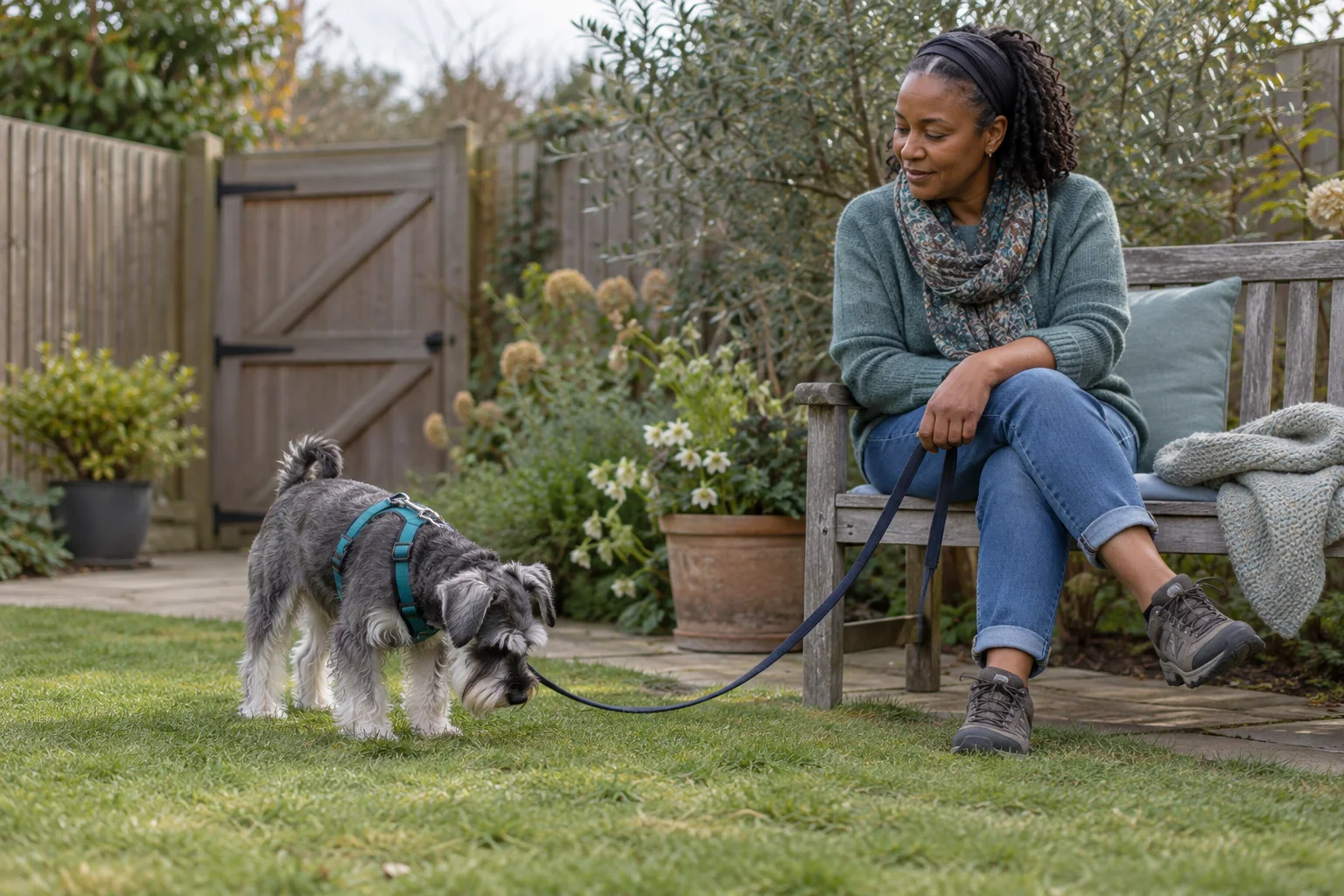
A pause is a chance to reduce demands, not a test of who will wait longest. Choose a comfortable safe place where you can supervise and keep the lead secure. Allow normal head movement and a comfortable posture. Do not demand a rigid sit, fixed eye contact or perfect stillness merely because you stopped walking. Water, rest and necessary toileting do not depend on training performance.
The Connecticut Humane Society's advice includes calm human behaviour and teaching suitable alternative responses. Use a quiet ordinary manner rather than building excitement around the next departure. This article does not ask you to swap between two leads or create a game with equipment. A simple setup you can use safely is preferable to improvising additional handling during a difficult moment.
If movement can continue comfortably, keep the next part easy. If not, end optional practice and use an already familiar safe care routine. Do not prolong the outing to tire the dog into compliance. A dog who cannot be safely handled, directs bites towards people or repeatedly becomes distressed needs an individual plan. General foundation practice should not be used to test how serious that risk is.
Keep the observation separate from lesson completion
After practice, return to DogPath and record only the work actually completed using its available controls. Reading instructions, trying part of an exercise and finishing the prescribed lesson are different things. Leave unfinished work unfinished. A calm step in a garden does not mean that the lesson is ready beside traffic or another dog, and it does not justify checking off several later stages.
Add context to your separate paper note: place, starting action, reward position, lead position and the point where you paused. For example: “One step beside the bench; reward already in hand; strap stayed behind the muzzle; stopped before moving farther.” If nothing was practised because the garden became busy, write that. You have learned something about preparation without needing to manufacture a training result.
Our reward marker guide explains feedback timing when that is the specific foundation you need. Avoid adding a new sound, a new walking location and a longer distance together. If the lesson and your observations do not fit, clarify the method with a qualified professional rather than changing its instructions midway to make the app record look complete.
Let the weekly plan repeat a comfortable version
Use DogPath's weekly plan to keep an appropriate lesson in view, while allowing the actual next opportunity to repeat or simplify it. A calendar slot does not require a longer walk. You might repeat the same quiet nearby step with the reward ready, or postpone optional practice on a day when the household is busy. Do not compensate for a missed session with extra repetitions the next evening.
Review the moment that changed, not only whether there was another grab. If moving the pouch made delivery easier, preserve that arrangement. If the strap began swinging when you turned, rehearse the turn without the dog before deciding whether to add it. Our short-session guide supports organising a manageable opportunity; the specific observation here remains the equipment-and-reward sequence.
Keep normal walks, comfortable exploration and companionship in the week. Practice is a small part of daily life, not a reason to remove every enjoyable activity. Where routine outings are repeatedly unsafe or overwhelming, ask for personal support with management as well as training. A lesson plan or progress streak cannot assess the safety of your route or replace someone who can observe the whole situation.

Share a small plan between caregivers
Tell another adult exactly what you prepared: the quiet location, familiar response, reward position and stopping point. “Work on leash biting” leaves too much open to interpretation. Have the second person begin with a comfortable foundation rather than at your largest previous distance. Agree who handles the dog; avoid simultaneous voices and hands reaching towards the equipment during an attempt.
At review, choose one modest change only when appropriate. A slightly different starting place is already a change; it does not need a new handler and more distance too. If the dog struggles, restore the easier setup and examine comfort. The useful outcome is a clearer next decision, not a claim that an app has fixed a behaviour or made all future walks reliable.
Common questions
Should I pull the lead out of the mouth?
Avoid tugging, jerking or reaching near the teeth. Keep safe control and end optional practice. If handling or bite risk is uncertain, seek qualified personal help; this guide is not an emergency release technique.
Should I wait until the dog grabs before offering food?
The practice described here rewards a suitable easy response before grabbing begins. Prepare the reward early. If the sequence has already escalated, pause and review safety rather than repeatedly rehearsing a grab-and-reward pattern.
Does DogPath automatically identify the cause?
No. The workflow uses lessons, actual completion records and weekly planning. Context stays in separate notes. It does not diagnose pain, assess bite risk or automatically interpret a dog’s emotional state.
What if the behaviour is new or getting more intense?
Sudden change, possible pain or movement difficulty needs veterinary advice. Repeated distress, damaged equipment or bites directed at people need qualified personal support. Do not arrange a harder walk to demonstrate the problem.