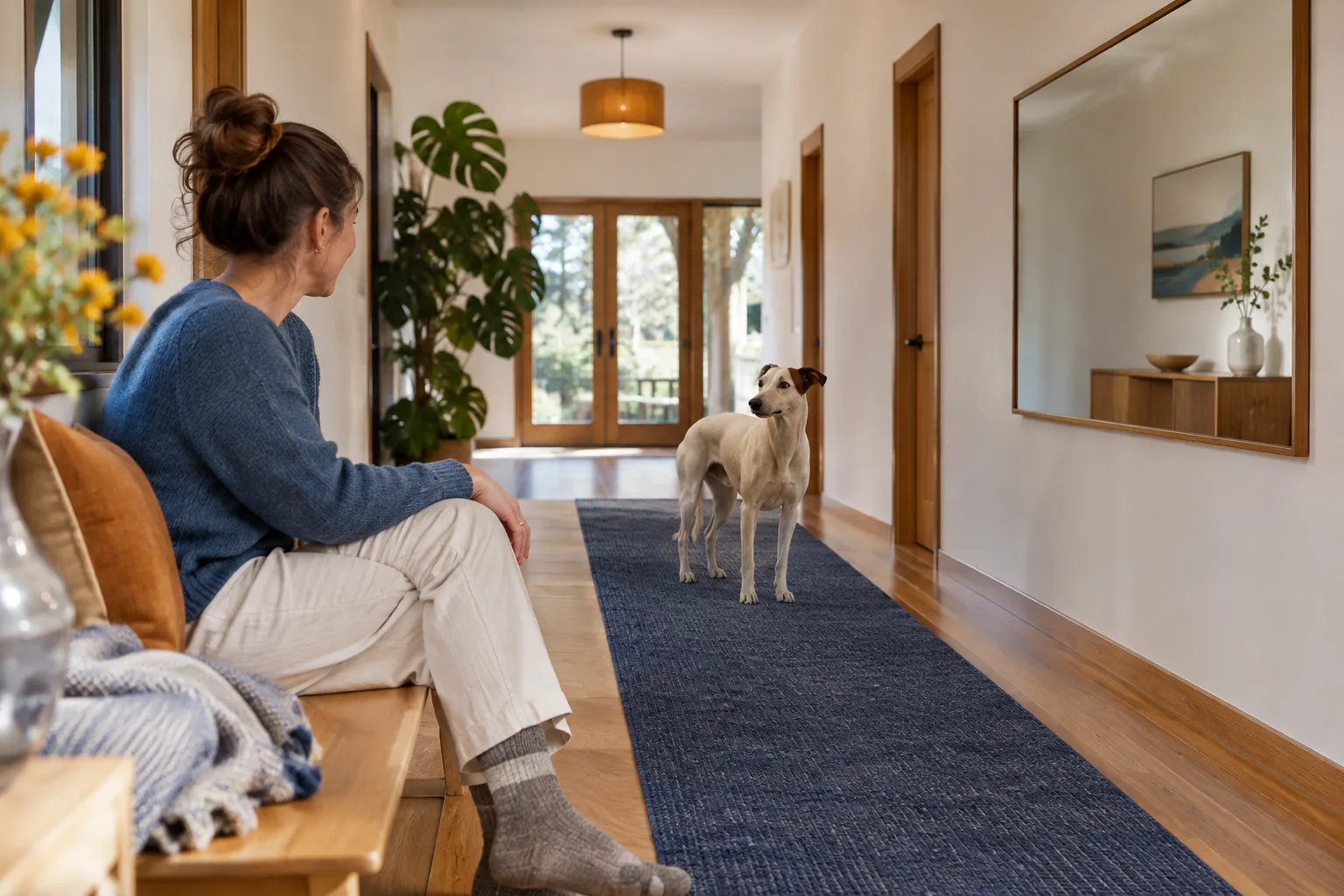
When your dog barks at its reflection, the most useful first step may be to change what they can see from their usual route through the room. A full-length mirror can look unremarkable to a person standing by the door, yet display a moving image at the dog's eye level as they pass. A dog may bark once and walk away, or return to the same spot and struggle to settle. Start with the effect on their day instead of trying to decide what the dog thinks the image is.
This guide focuses on mirrors inside the home. You can make the room easier to use, observe what changes without provoking another reaction and reward a voluntary turn away when there is room to leave. Training beside the glass is optional. A permanently different furniture arrangement can be a perfectly practical solution if the dog continues to have access to everything they need.
When your dog barks at its reflection, make space
If the dog is close to the mirror, keep the route away from it clear. Move yourself out of the doorway if you are standing in it, ask other people to give the dog space and turn toward the open room. Give them a chance to follow on their own. Avoid reaching over the dog to grab a collar or picking them up. If they are frozen or very tense, stay back and wait for them to disengage if the area is safe. Keep children and other animals apart from the situation.
Once the dog is elsewhere, reduce access to the reflection. You might close the door for a while, provided their water, bed and routes to the rest of the house are still available. If people need to use the room, arrange a separate dog-safe route before you open it again. If the dog has snapped, struck the glass or might bite, keep them away from that area and seek help in person.
Change the view from the dog's usual path
Without the dog present, look from their approximate eye level where they normally approach. Is the image visible from the bend in the hall or only when they reach the wardrobe? Check from where they drink or lie down too. You may find that a change in room direction solves the problem more reliably than standing beside the mirror to intercept the dog each time.
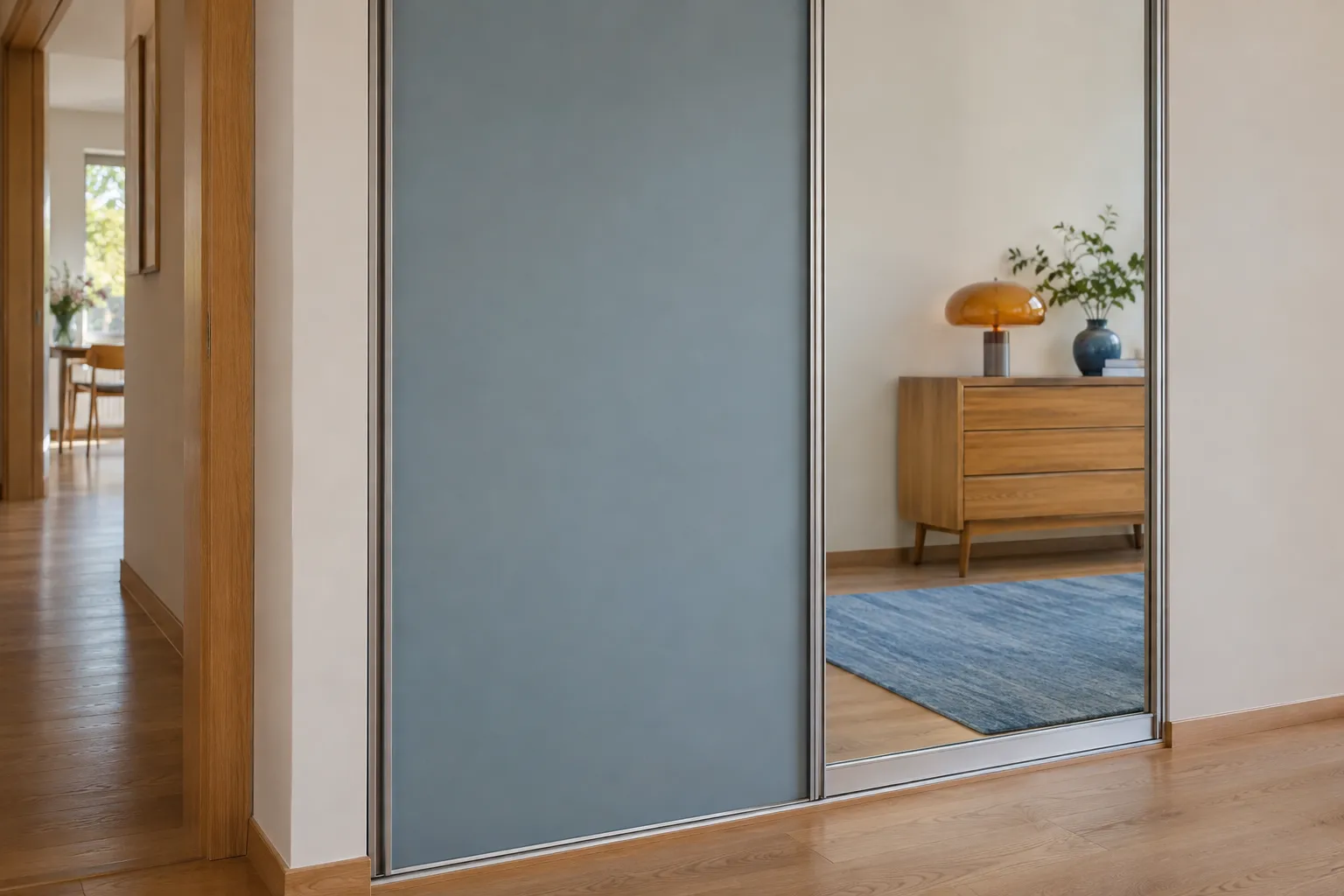
An opaque wardrobe panel that already closes over the mirror is a useful option. A safely fitted non-reflective covering can work for a securely mounted mirror, if it cannot be pulled down and has no accessible cords, clips or loose edges. If the mirror is freestanding or appears unstable, keep the room off limits until someone can secure or remove it safely. Avoid leaning a second object, a loose chair or a screen against it. Keep pathways wide and use a surface that does not slip.
If there are two dogs in the home, check whether the second dog runs into the room when the first one starts barking. Keeping the approach clear for one dog can be hard when both reach the same corner at once. Close access while you rearrange things and reintroduce the normal route only when you can supervise calmly. Each dog should be able to move away without passing the other in a narrow gap.
If you rent your home or cannot alter a built-in mirror, try moving the dog's resting spot to a place that already has a quiet approach. You can also keep the wardrobe room closed at predictable times and walk to the other side of the house before opening it. Choose an arrangement people can keep up every day. A temporary change only helps while someone remembers to make it.
Work out which change actually helps
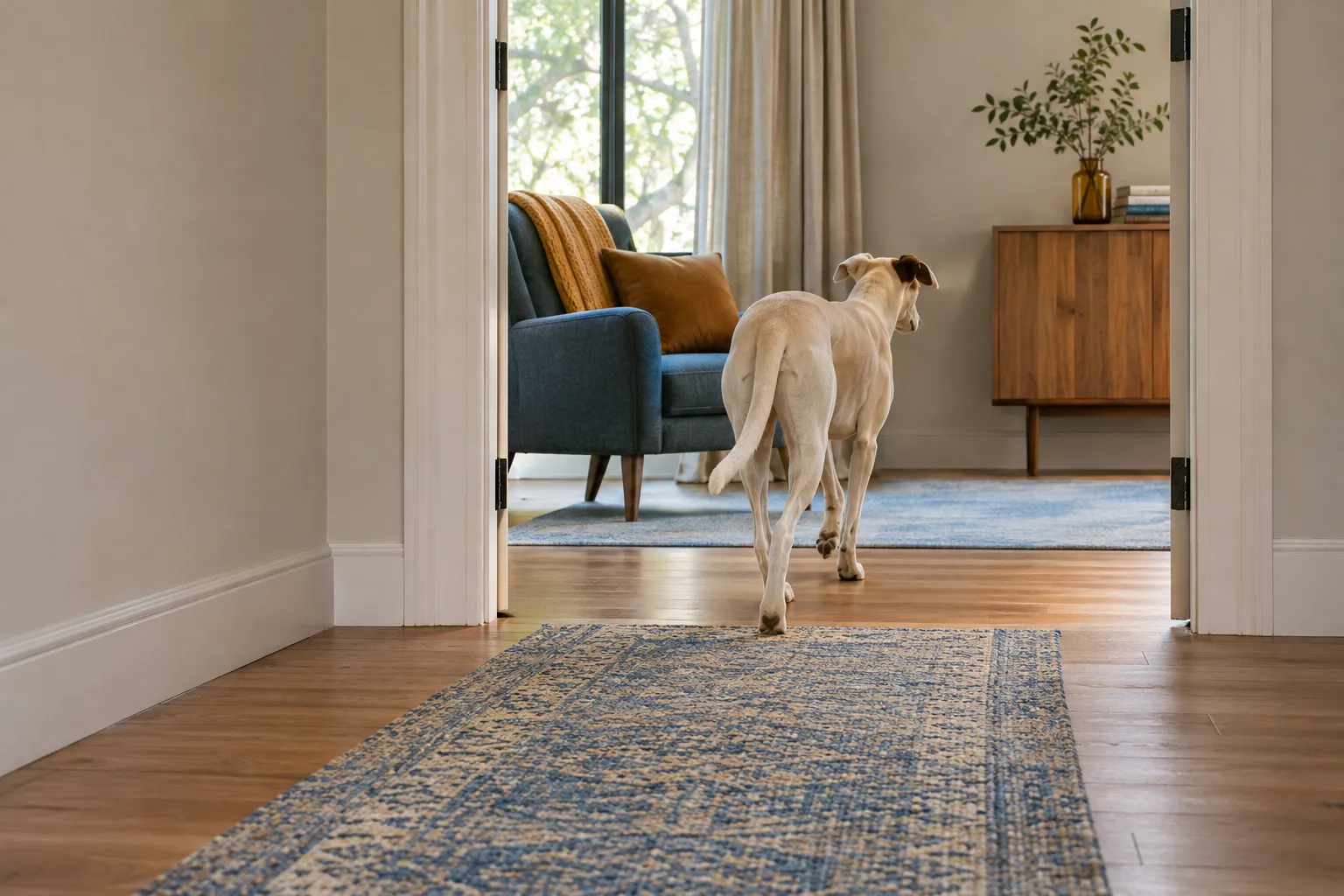
Take note of where the dog was looking before the bark, without leading them back to find out. Was the mirror visible or did a person move behind them at the same moment? If there was a sound at the door, write that down as well. Once the image is out of view, observe a normal part of the day, such as the walk from the kitchen to their resting place. Give them room to make the same everyday choices.
Try changing just one thing at first. For example, if you close the mirrored wardrobe panel, keep the hall lighting and rug as they were. You might see the dog take the former route again, go by it at a normal pace or choose to rest in another room. If the dog avoids the hall even when the view is blocked, leave an alternative available. Take notes for a few ordinary passages instead of opening the panel as a test.
VCA's discussion of pets and reflections distinguishes seeing an image from knowing what it represents. At home, you can note the dog's response without assigning an explanation. A dog who passes calmly while the panel is closed has shown you a workable setup. You do not need to prove that the mirror was the only factor before giving them that easier route.
Reward a voluntary turn away from the area
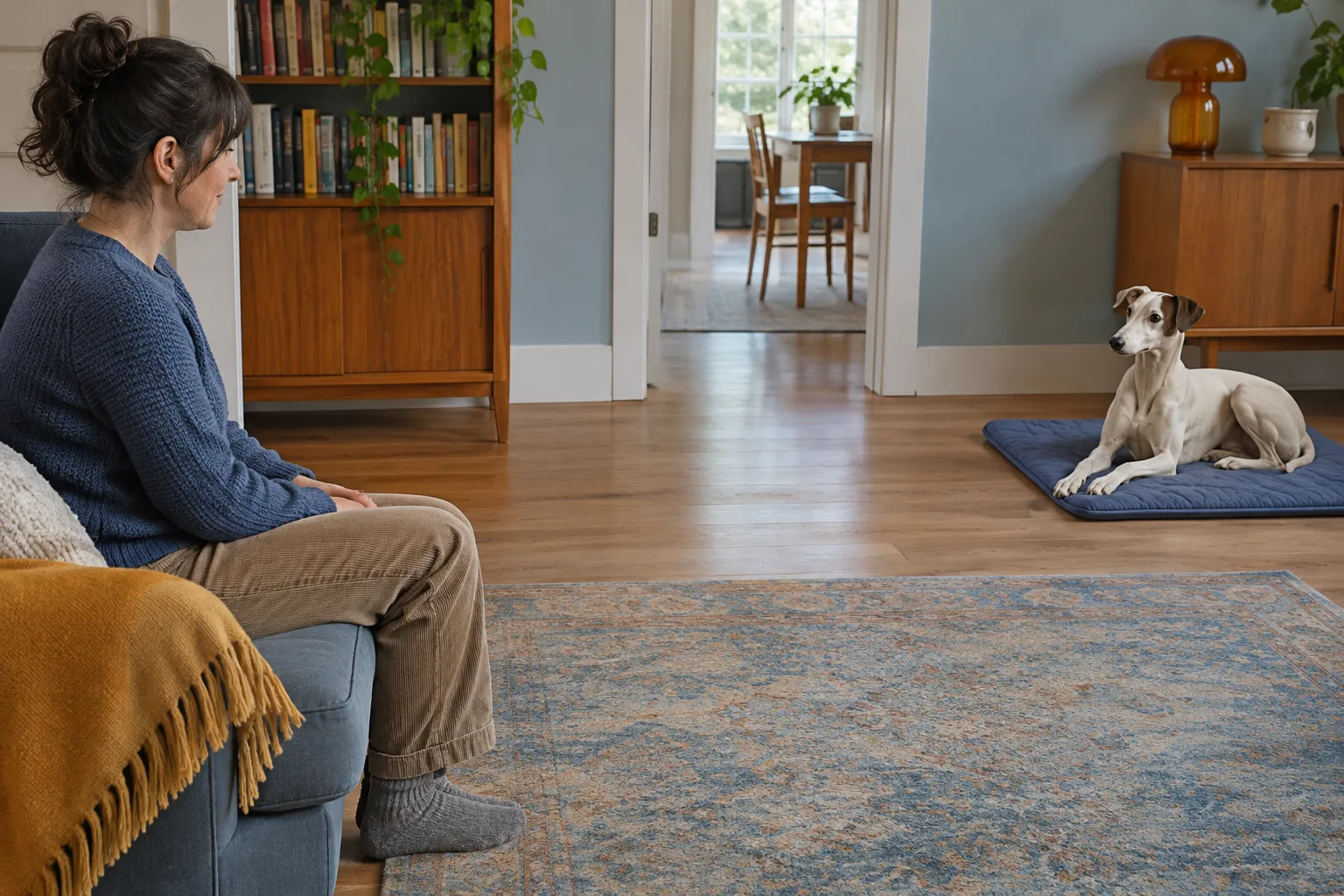
A dog who can already move comfortably in the next room may offer a glance toward you when you sit sideways away from the hall. You can place a small suitable reward beside the dog or along the direction they are already choosing. Use a quiet response and let them decide what to do next. The reward marker guide explains how to identify a brief action if your dog already knows that kind of signal.
If they practise going to a familiar resting spot, keep the mat activity in a room where the mirror is out of view. Let them leave whenever they like. One easy repetition may be enough. A dog who was just barking hard may need quiet movement, water or time on their own before they want to engage. Offer space rather than cycling through cues close to the spot that startled them.
Do not move the reward toward the mirror to see whether they will follow. If the dog slows, stiffens or begins to stare again, let the session end. A glance back at you from a comfortable distance tells you more about whether the setup is manageable than a brief silence beside the glass. If the mirror can stay out of view in ordinary life, you can keep practising attention in easier locations.
Keep simple records and know when to call
A helpful record describes what you saw and what you changed. For example: evening, heard two barks near the bedroom, dog looked at the wardrobe and then walked away when I cleared the doorway. Monday morning, opaque panel shut, passed the room on the way to the water bowl at her usual pace. Use the same words for things you can actually observe rather than rating bravery or guessing the dog's intention.
Share the setup with people who live with you. Decide who checks the mirror panel after using it, and where the dog can rest during cleaning or furniture moves. If you change houses or move a mirror, watch the new sight line before assuming the old arrangement will work. Young dogs and newly adopted dogs still need a clear way around an unfamiliar object even if they have shown little interest elsewhere.
If the response is sudden, your dog seems disoriented, bumps into things, moves differently or may be in pain, call your veterinarian and arrange an in-person assessment. Seek personal help promptly if the dog repeatedly fixates and struggles to leave the area or if there is a risk of injury or biting. A veterinarian can assess health factors and refer you to qualified reward-based behaviour support as needed. Avoid repeating the trigger for a video. An account of a naturally occurring episode is a good starting point.
Common questions
Is a single bark at a mirror a problem?
If your dog looks once and gets on with the rest of the day, note what happened and keep the normal path clear. Recurring barking, an inability to pass the room or running into the glass deserves more attention. You can reduce the view immediately and ask for help if the pattern becomes difficult to manage.
Should I put my dog in front of the mirror so they get used to it?
Keep their choice to leave. There is no need to arrange a close encounter when ordinary room changes already let them move comfortably. If a reflection cannot be avoided and the response persists, get an individual plan before deliberately exposing your dog to it.
Why does it happen only when I turn on the hall light?
Lighting changes what can be seen from different angles. The action of switching on the light may coincide with a person or another animal moving. Record the circumstances and consider keeping the sight line covered while leaving the room safely lit. A recurring pattern gives you something to describe without having to reproduce it.