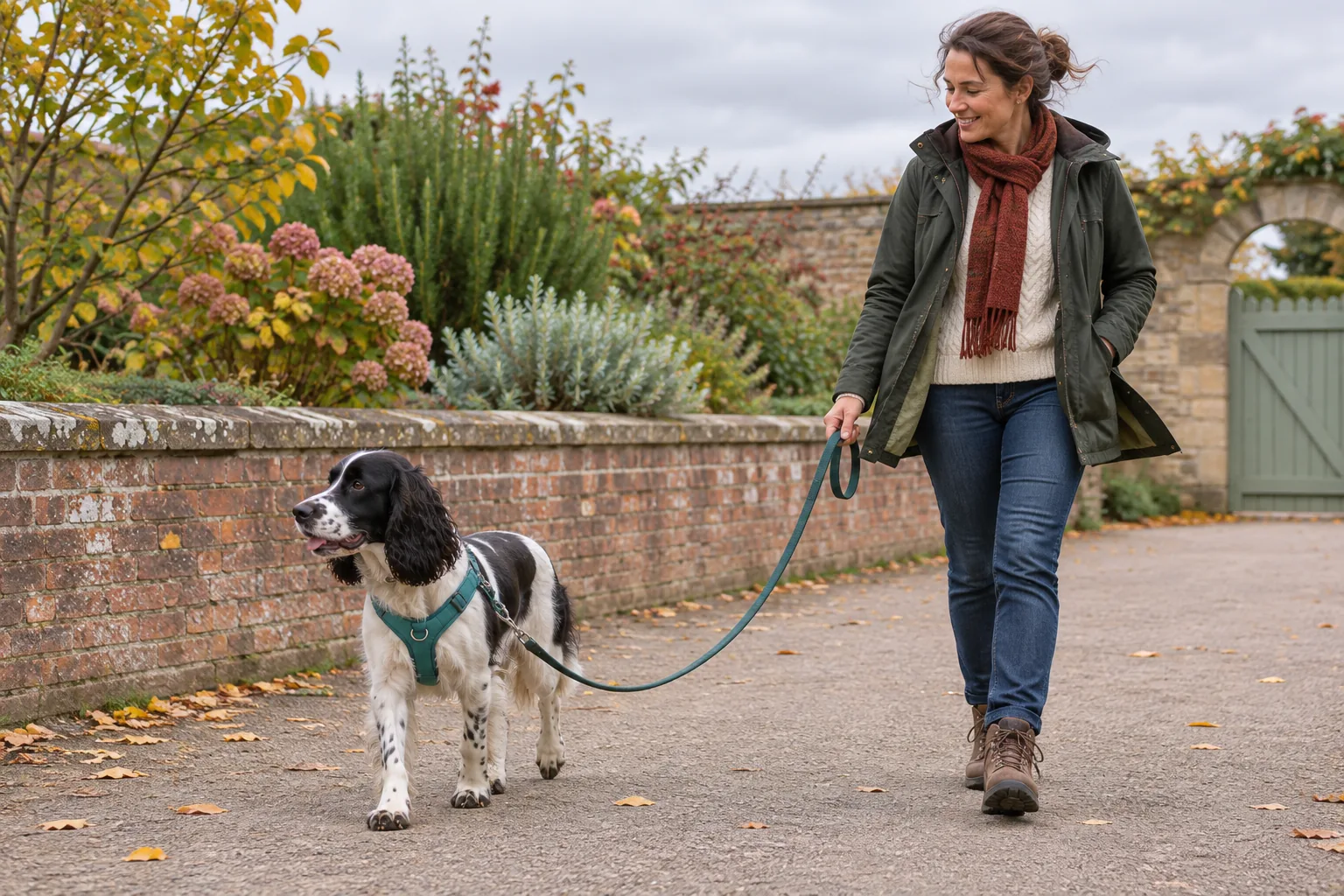
A dog afraid of wind may pause at the doorway, hurry home or struggle when a familiar street suddenly sounds different. Leaves move, gates rattle and a quiet corner becomes unpredictable. Your first job is to find a safe, comfortable option for today, not to complete the usual walking distance. You can shorten an outing, return indoors and practise on another day.
This guide separates essential toilet access from optional learning. It offers small choices in sheltered places during mild weather, with an easy route back. It does not ask you to train through dangerous weather or diagnose the reason for fear. A sudden change, physical discomfort or repeated distress needs individual veterinary advice.
Start with safety and today's needs
Check the actual conditions before you put the harness on. Weather warnings, flying debris, unstable branches or objects moving across the pavement are reasons to postpone an optional walk. A familiar route is not automatically safe today. Shelter should be a sound building or a genuinely protected area, not a place underneath an exposed tree. If you cannot find safe outdoor access, contact your veterinarian for an appropriate temporary toileting plan.
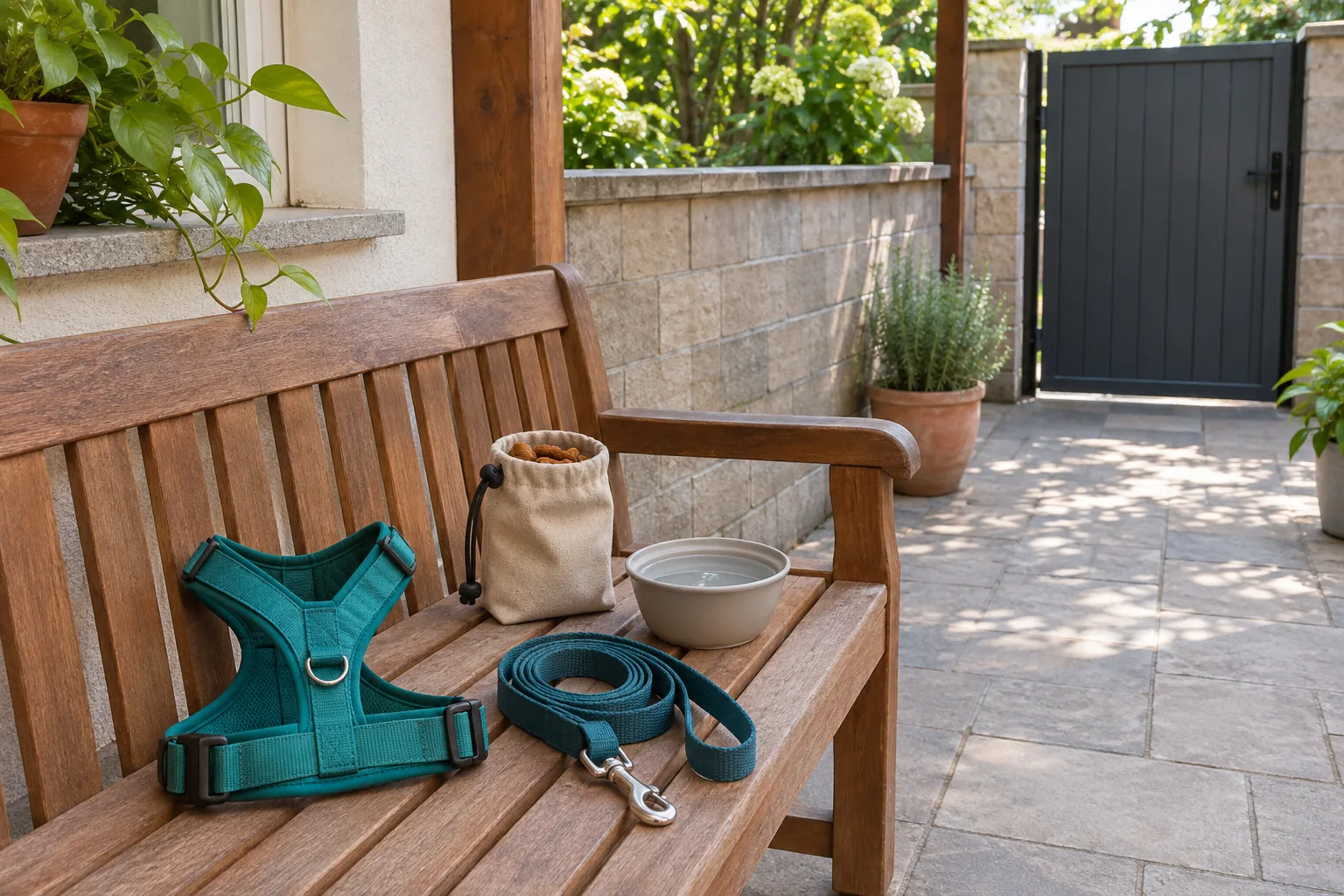
Decide what the next outing is for. A brief toilet opportunity close to home has a different aim from exercise, exploration or training. Keep those tasks separate so your dog does not have to endure a long route to meet a basic need. Bring the usual comfortable, correctly fitted equipment, check its condition and keep the lead securely held. Never let a frightened dog loose to see whether running helps.
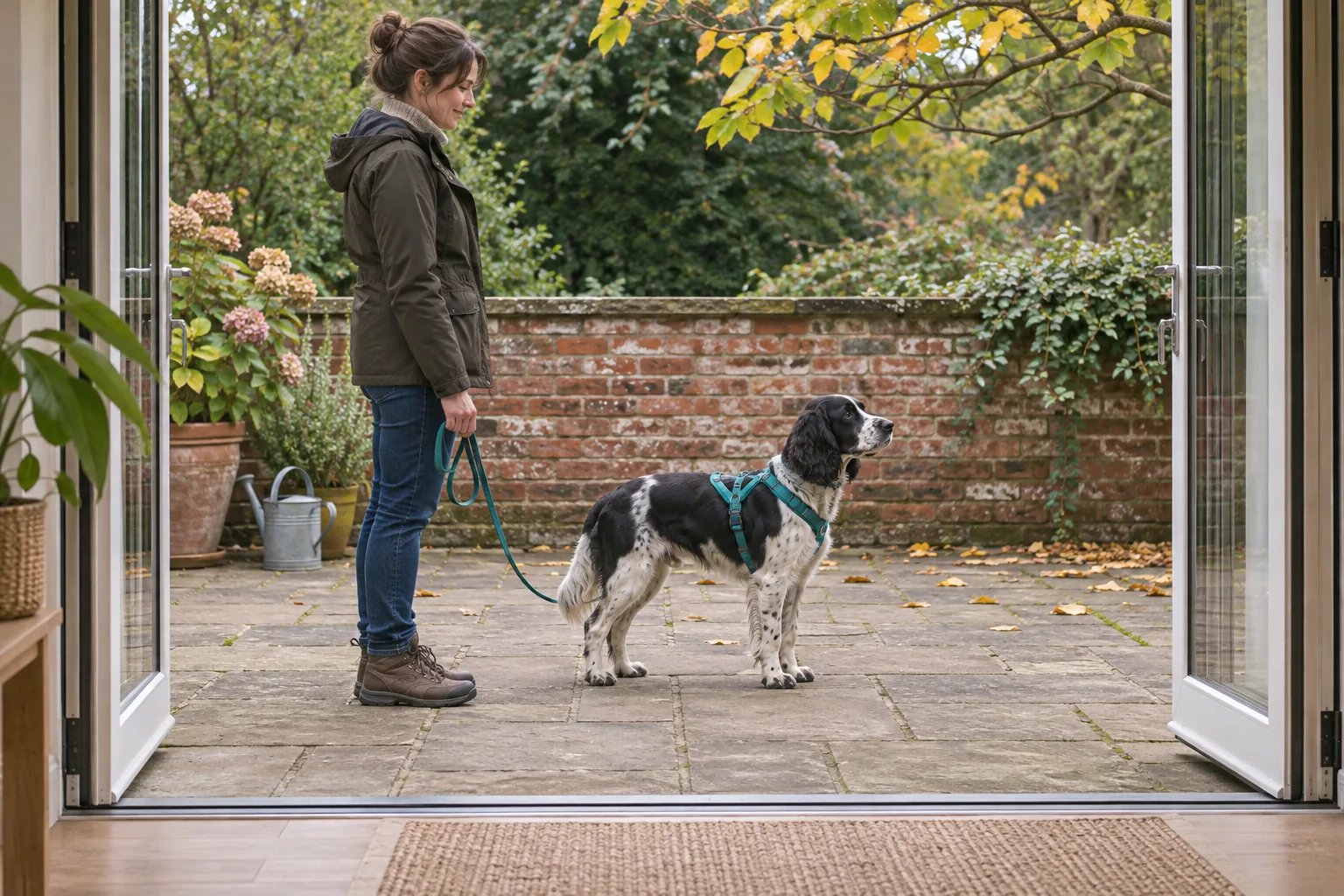
Agree on an exit before stepping out. For example, you might use a sheltered courtyard and return through the same door as soon as your dog needs space. Avoid a circular route that commits you to an exposed stretch. Tell anyone accompanying you that turning back is part of the plan. There is no minimum distance that makes an outing worthwhile.
Notice what changes when the wind starts
Observe from somewhere your dog already finds comfortable. Does the difficulty begin when the front door opens, when a bin lid bangs or only beside a particular fence? Write down what you actually see rather than deciding that every windy place is equally difficult. A dog may cope with moving leaves while finding a sudden metal noise overwhelming. Those observations help you choose a less demanding setting.
Look at the whole dog and the surrounding context. A lowered body, repeated scanning, freezing, urgent pulling home or difficulty responding to a familiar invitation can tell you that the situation needs to change. One isolated gesture does not identify a diagnosis. Compare movement and recovery with your dog's ordinary behaviour, and respond early instead of waiting for a dramatic reaction.
Food can provide information, but eating is not proof of comfort. Some dogs accept a treat while remaining tense; others decline food for reasons unrelated to fear. Consider whether your dog can move freely, look away from the disturbance and choose to return to a comfortable place. If those choices disappear, reduce the challenge or finish. Do not keep presenting food to test how much the dog will tolerate.
A dog afraid of wind needs an easier starting point
Choose a mild day and a place where the dog can watch a little outdoor movement without being surrounded by it. A doorway leading to a protected patio may be enough. Check doors cannot slam and keep a clear return route. Begin on the comfortable side of that boundary, allowing the dog to stay inside. Looking out is already an observation; crossing the threshold is optional.
If a gentle rustle occurs and your dog remains comfortable, quietly offer a small familiar reward close to their current position. Let the event happen before the reward, without creating louder noises yourself. You are pairing a manageable experience with something pleasant, not rewarding an endurance test. If your dog startles and cannot readily recover, move back and end that attempt rather than repeating it immediately.
Keep the first opportunity brief enough that stopping feels easy. That might mean one comfortable look and a return to the room. There is no universal number of repetitions or timetable. Change one thing at a time: a slightly more open position on a calm day, for instance, rather than a new route during stronger wind. Progress means more comfortable choices, not staying outside for longer at any cost.
Practise turning home before you need it
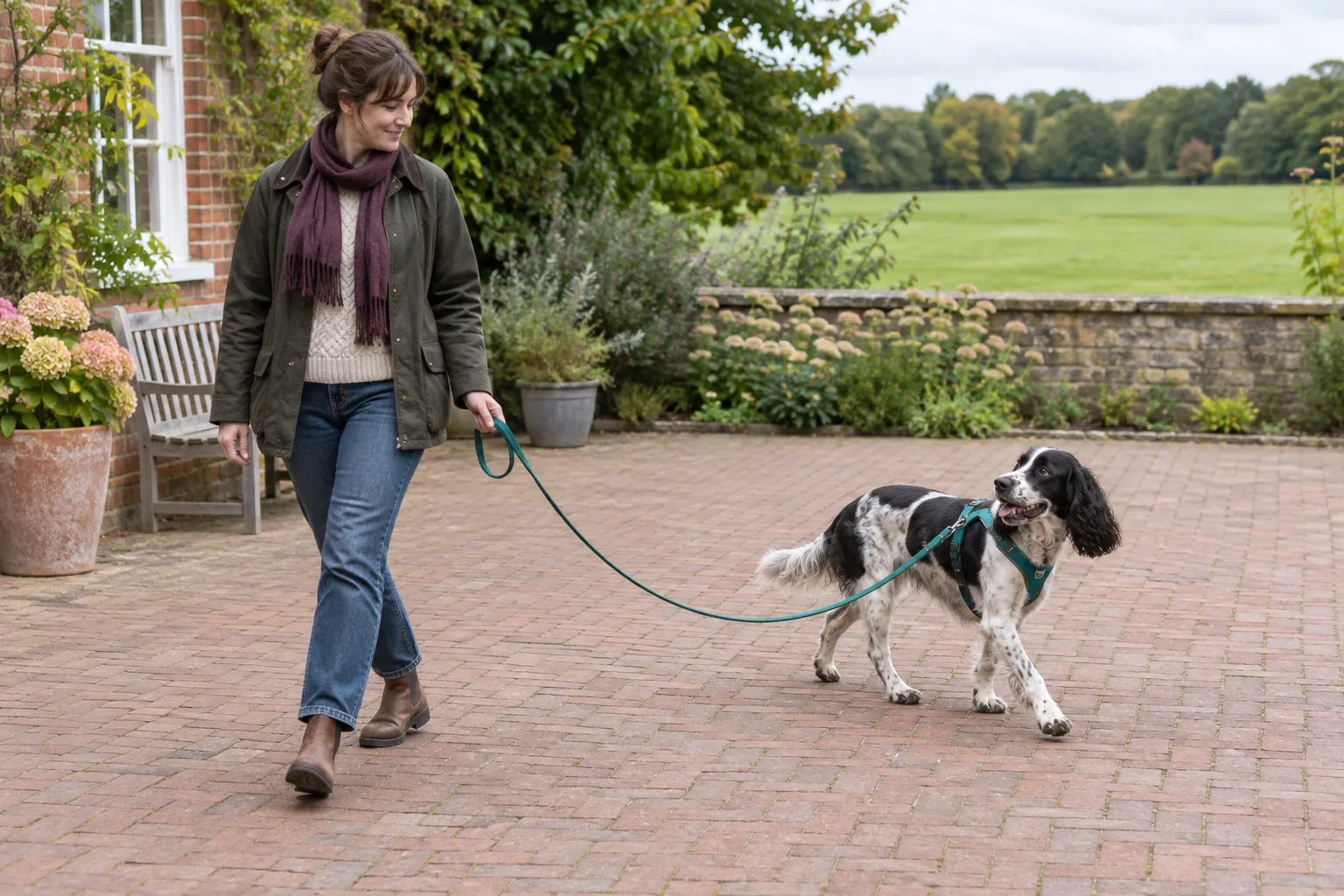
A familiar turn can make everyday handling clearer. Rehearse indoors first, using your usual invitation to move with you, then turn in a generous arc and reward beside you. Keep the lead loose rather than steering the dog's head around. Our loose-lead walking guide explains the underlying shared movement; practise that foundation away from the weather problem.
Once the turn is easy in a quiet place, try it in a sheltered outdoor area during calm conditions. Walk just a few steps, invite the turn and travel back together. Give your dog time to change direction without tripping over the lead or being crowded by your legs. A successful rehearsal should look ordinary, not like an emergency escape performed repeatedly for practice.
On a breezy outing, use that familiar movement early if it helps, but do not insist on a perfect response. A dog who freezes may need a quieter position, more space or the outing to end. Avoid pulling, scolding or repeatedly calling while the dog struggles. If you cannot move safely without force, seek individual assistance and plan safer access before trying the same route again.
Make the short route genuinely sheltered
Walk the proposed route yourself when appropriate and consider what might move or bang. Loose garden furniture, wheelie bins, hanging signs and rattling gates can make a small stretch surprisingly difficult. At home, secure objects you own before bringing the dog out. Do not approach somebody else's property or move public equipment to manufacture an exercise. Choose another route when the environment cannot be controlled safely.
Think about the surface and the space around you as well as the sound. Wet leaves can be slippery, a narrow passage may prevent an easy turn and a busy entrance can trap you near other dogs. A sheltered route should offer room to pause or leave. Stay away from traffic edges and avoid attaching the lead to furniture while you assess conditions. Keep supervision continuous.
If the dog needs to toilet, allow a quiet opportunity without adding extra cues or exercises. Reward comfortable voluntary movement, but do not lure the dog past a frightening object to reach a toilet spot. If the usual place has become inaccessible, ask for advice on alternatives suited to your dog's health and housing. Persistent inability to toilet, straining or apparent pain requires prompt veterinary attention.
Give the rest of the day another shape
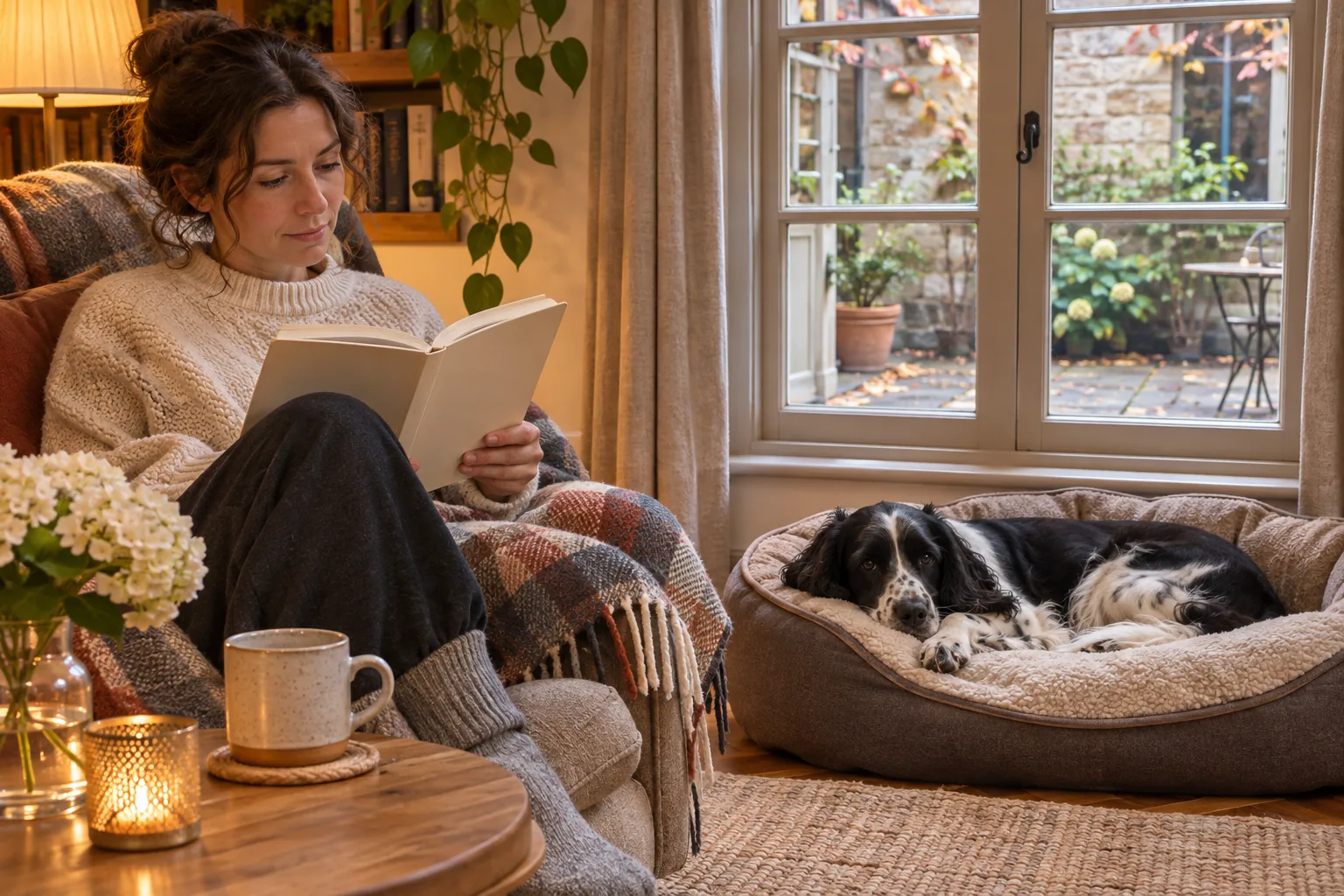
A shortened walk can leave a hole in a familiar routine. Offer something your dog already enjoys indoors: a gentle food search in a clear room, easy play or a comfortable rest beside you. Use part of the normal food allowance if appropriate, supervise activities and choose items suitable for that individual dog. More excitement is not automatically a better substitute for outdoor time.
Protect rest as well as activity. A dog who spent the morning listening to rattling windows may benefit from a quieter room and fewer demands. Our settle-on-a-mat guide offers a separate foundation for relaxed time, but a mat is not a command to remain near a frightening noise. Place the resting area somewhere comfortable and allow the dog to leave it.
Keep a short factual note: weather conditions, location, what moved or sounded, the dog's response and what helped them recover. Compare similar situations rather than scoring today's outing against yesterday's distance. Ask everyone in the household to use the same easy exit plan. Avoid a second person attempting a harder version later simply because the first outing was short.
Know when the plan needs professional support
Arrange a veterinary consultation if the concern appears suddenly, becomes more intense, spreads to ordinary outings or accompanies changes in movement, sleep, appetite or toileting. Pain and other health factors cannot be ruled out by watching a training video. Describe the pattern and bring your notes; a short safely obtained clip may help if the clinician requests one, but do not stage a reaction to record it.
For persistent fear, ask about a qualified reward-based behaviour professional working with your veterinarian. They can assess the individual setting and design a plan around manageable experiences. If handling creates a bite risk, stop attempting the exercise and obtain in-person guidance. Do not experiment with restraint or protective equipment during a frightening outing without appropriate preparation and advice.
Avoid punishment, startling devices and forced exposure intended to make the dog give up reacting. Comforting a dog who seeks you out is compatible with giving them space and a safe exit. No guide can promise that wind will become easy or set a deadline. A useful immediate outcome is a safer routine in which you notice difficulty earlier and respond without escalation.
Common questions
Should I skip a walk when my dog is worried?
Postpone optional walking when conditions are unsafe or your dog is distressed. Arrange safe toilet access and suitable indoor activity instead. If basic needs cannot be met safely, ask your veterinarian for an individual plan rather than forcing the usual route.
Can I practise with a fan or a recording?
Those experiences do not reproduce all the movement, smells and sudden sounds outdoors. Do not aim a fan at the dog or create intense noise as a shortcut. An individual professional may suggest carefully controlled exercises, but mild real-world observation should also remain voluntary and manageable.
What if my dog is fine one day and worried the next?
Wind strength, moving objects, other events and the dog's comfort can differ. Return to the easier option, record the context and avoid treating variation as disobedience. A sudden or persistent change warrants veterinary advice, especially when movement or other daily activities also change.