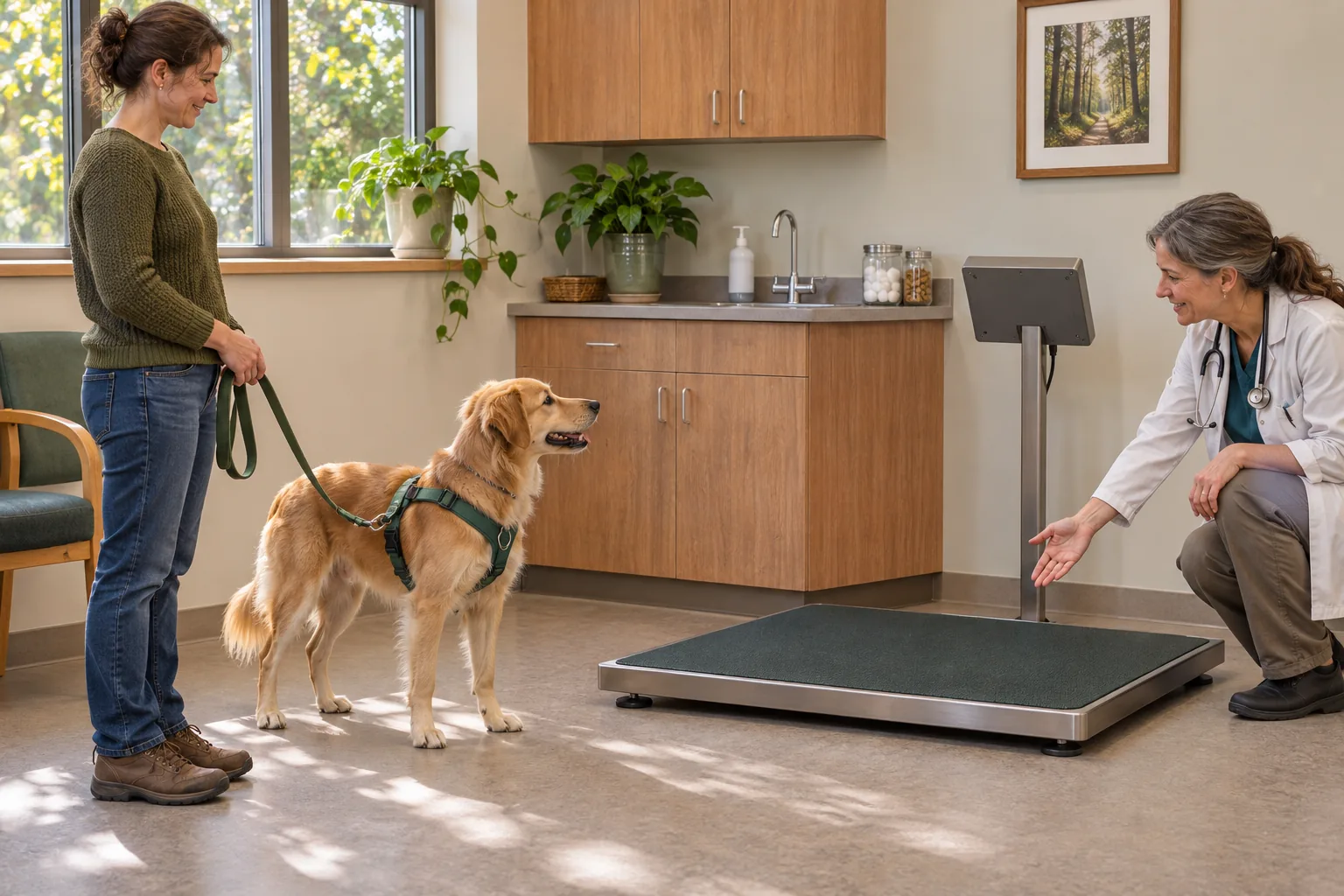
A dog afraid of weighing scales needs a manageable introduction, not a stronger pull onto the platform. Start by separating necessary veterinary care from optional practice. Your veterinary team can explain how urgently an accurate weight is needed and arrange suitable handling. At home, you can prepare familiar foundation skills without pretending that a household exercise replaces a clinical measurement.
This guide uses DogPath to organise preparation and short foundation practice. Dog Train Club and DogPath share a publisher. The app supports the learning routine; it does not diagnose fear, calculate medication doses or provide a specialist weighing programme. Keep notes about the actual scale and clinic context separately, and agree any practice visit with the team before arriving.
Check what is needed before practising
Call the practice if your dog already finds weighing difficult. Describe what happened: stopping at the edge, scrambling on the surface, trying to leave or becoming worried when somebody approached. Explain whether this was a sudden change and whether movement elsewhere has also changed. Those details are more useful than a label such as stubborn. Ask what the next appointment requires and which preparation is appropriate for your dog.
Do not postpone necessary care until a training plan is finished. If weight is needed for treatment, the veterinary team must decide how to obtain it safely and accurately. Do not estimate a dose from an approximate home weight, improvise restraint or lift a reluctant dog onto equipment. Pain, weakness, difficulty balancing or a sudden reluctance to step up needs individual assessment before physical practice.
Make handling safety explicit. If your dog freezes, growls, snaps or has a bite history, give space and arrange in-person reward-based support alongside veterinary advice. Keep children and other animals out of the practice area. Food should not be used to draw a worried dog close to hands they cannot comfortably avoid. The first useful change may simply be a quieter appointment arrangement and a clearer exit.
Prepare a surface that makes sense
Ask the practice about the actual scale: its height, surface, location and whether a suitable nonslip covering can be used. A platform next to a busy reception desk creates a different experience from equipment in a quiet room. Ask permission before moving anything or covering a weighing surface. Staff need to manage cleaning, equipment limits and the measurement process; your training setup must fit their requirements.
For a home foundation, use a flat familiar mat on a stable floor first. A slippery bathroom scale, a wobbling board or a small raised box is not a necessary substitute. Do not build a platform from stacked objects. If a professional recommends a practice surface, make sure it is suitable for your dog's size and mobility, remains secure and leaves enough space to step away without a jump.
Check the route as carefully as the destination. Clear bags, loose leads and furniture from the approach. Keep the area quiet and choose a time when the dog is awake and comfortable. A clear path back to the rest of the room helps you finish without a struggle. Do not put equipment in a doorway that the dog must cross to reach water, a resting place or the outside.
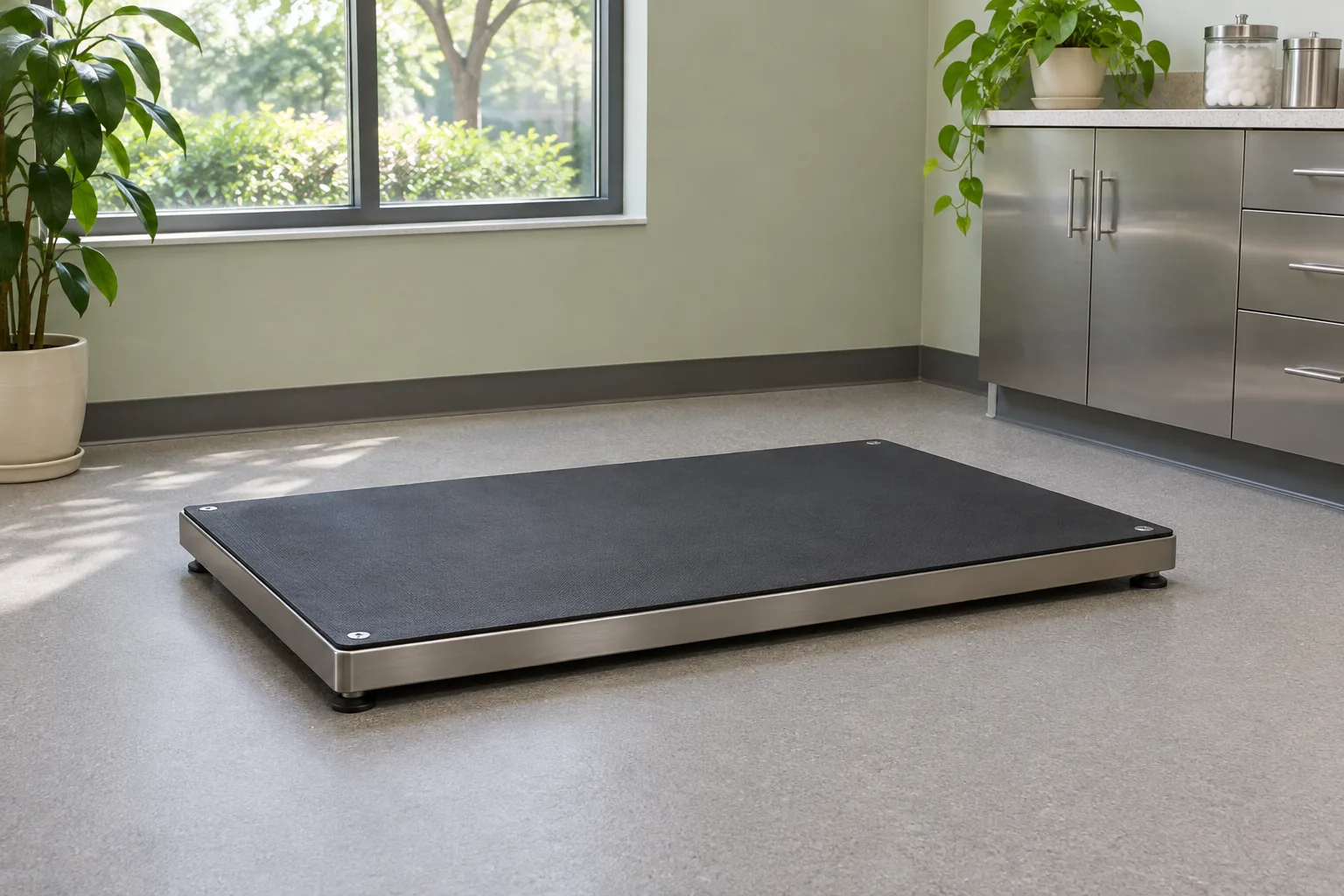
A dog afraid of weighing scales can start away from them
Begin with something your dog already understands on ordinary level ground. You might recognise an easy look toward a familiar mat or a voluntary step beside you. Use a small suitable reward near the dog's comfortable position. Our reward marker guide explains how to identify a movement clearly. The marker should describe an achievable moment, not become pressure to move closer to an unfamiliar object.
Let the dog leave after a simple repetition. Moving off a familiar mat can be part of the exercise, so departure does not mean failure. The settle-on-a-mat guide offers a separate foundation for making a surface familiar. For weighing, your veterinary team may need a standing position; do not assume that lying down or remaining in place for a long time is the right target.
Watch the quality of movement. Comfortable approaches, easy turns and the ability to look elsewhere matter more than the number of paws on a surface. Taking food alone does not prove the dog is relaxed. If they stretch forward while keeping their weight far back, pause instead of moving the reward farther away. Make the next opportunity easier, or return to a completely familiar activity and finish.
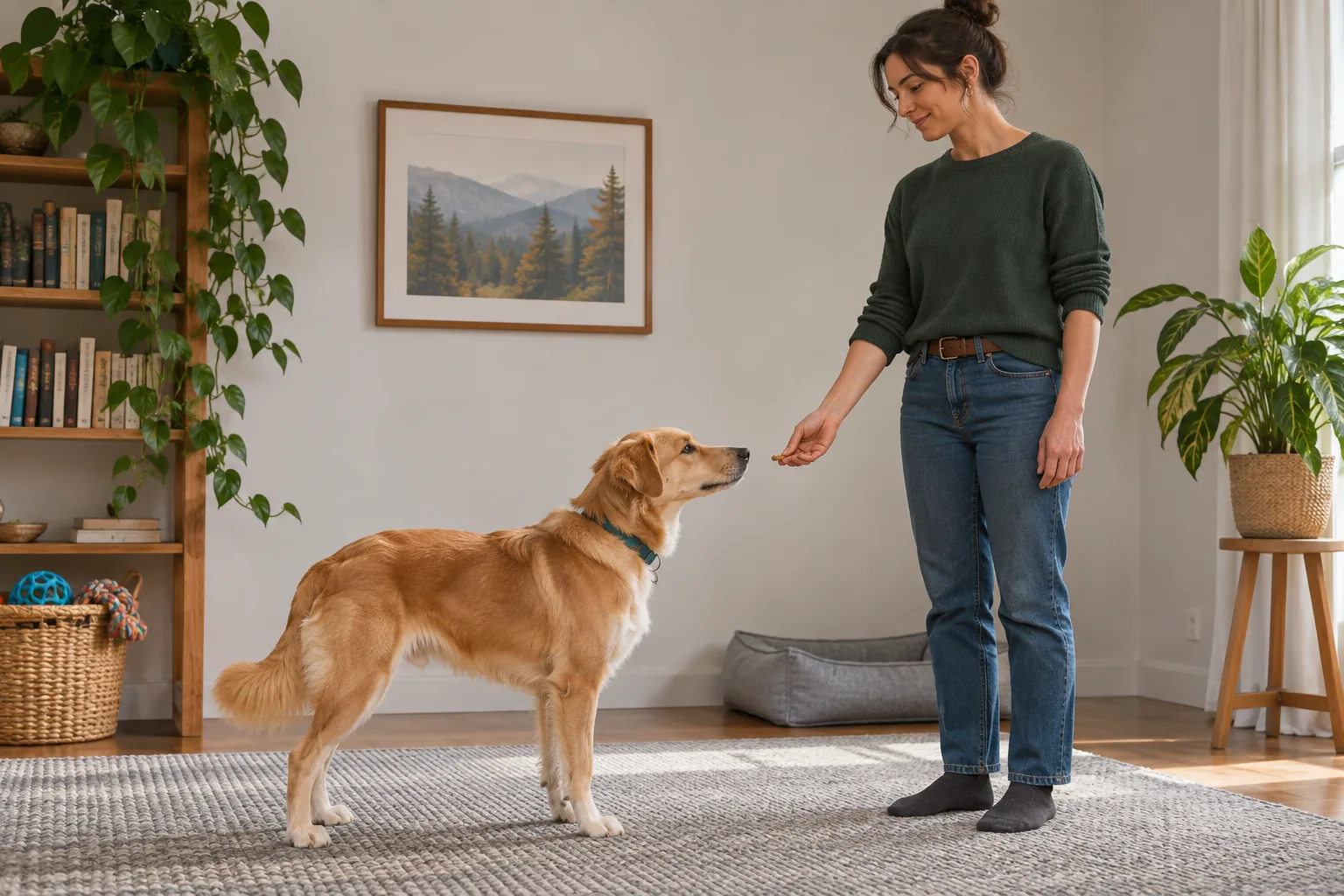
Use DogPath for the foundation you can verify
Before involving a scale, choose a relevant foundation lesson in DogPath and read its preparation and prerequisites. A familiar reward-marker or basic mat routine may support the work you have agreed with your professional. Follow the lesson that is actually available and appropriate for your dog. Do not search for a specialist veterinary weighing feature on the assumption that this article means one exists.
Prepare the room and rewards before starting. Use the weekly plan to give that foundation a realistic place in your ordinary routine, rather than filling every day with scale attempts. Practise the small lesson task away from veterinary equipment first. Record completion only after the practice really happened. A completed foundation exercise does not mean the dog is ready for a clinical weigh-in or that their fear has been assessed.
Keep context notes on paper or in your own ordinary notebook. Record the surface, location, person present, voluntary movement and how easily the dog returned to normal activity. These are separate observations, not claims about an app assessment or an automatically generated treatment plan. Review the notes before deciding whether another practice opportunity is useful. Your dog can need an easier setup even when a foundation lesson is familiar.
Introduce the destination without trapping the dog
When the team agrees that practice is appropriate, start far enough from the scale that the dog can observe it comfortably. In a quiet enclosed room, staff may help arrange an open approach and clear retreat. Follow the clinic's lead and equipment policy. If a lead is required, keep it securely held with room for comfortable movement. Do not use it to pull the dog onto the platform or hold them there.
Recognise a voluntary look or small approach and deliver the reward where the dog is comfortable. Avoid holding food beyond the platform edge so that they have to overreach. One front paw is not an invitation to move the other paws for them. If they choose to step back, allow that movement and reassess the distance. A brief comfortable observation can be the entire visit; agree that possibility before you begin.
Add difficulty only when the previous version is genuinely easy. You might work with the same surface in the same quiet room before changing the location, person or equipment state. Do not add a moving readout, unfamiliar sounds and people reaching toward the dog all at once. Equipment operation belongs with the team. They can explain when and how to introduce the real conditions needed for a measurement without creating an endurance test.
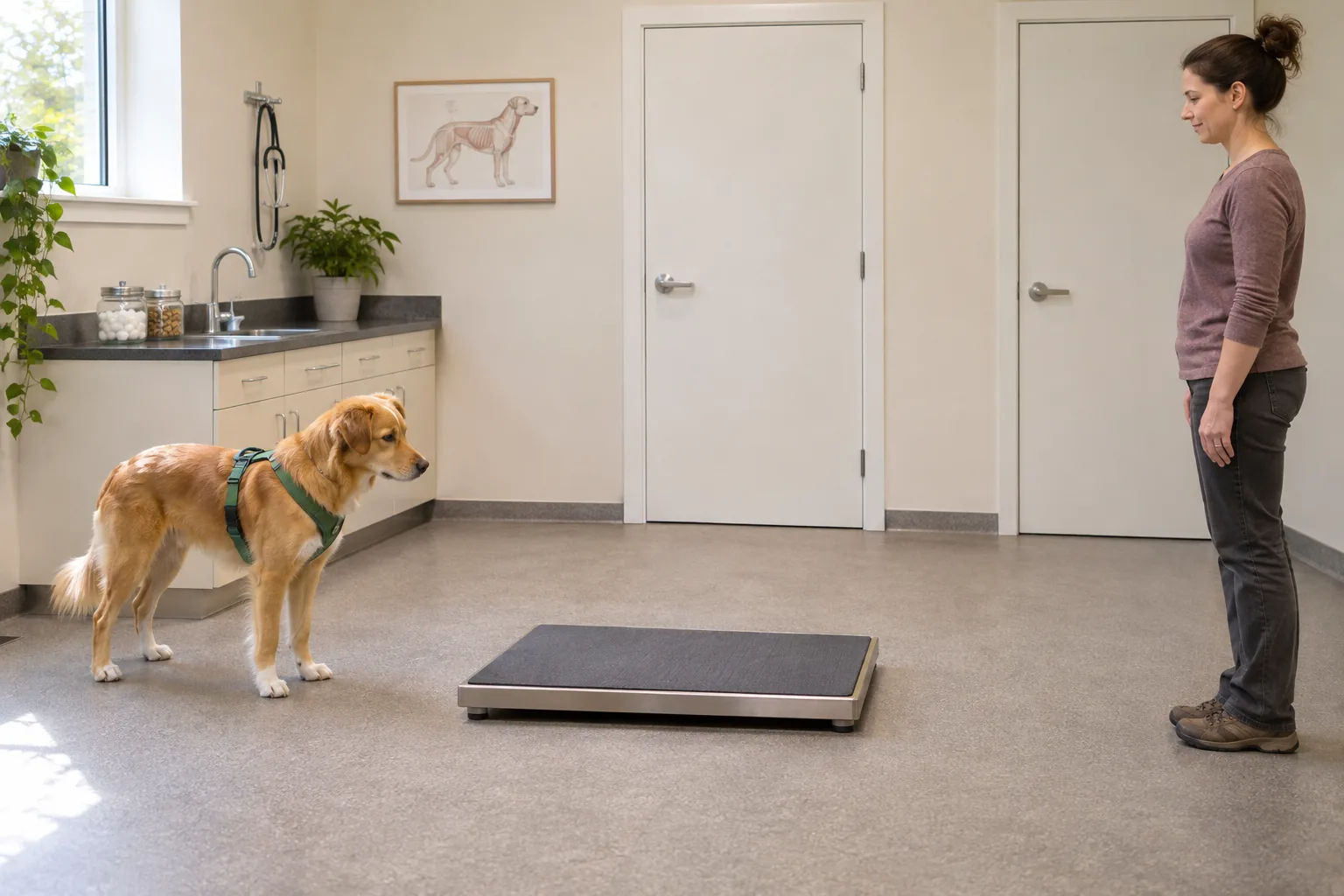
Plan the actual weigh-in with the team
A practice surface and a clinical scale have different jobs. Once your dog can approach comfortably, ask the team what they need for a valid measurement. They may need all paws within the platform and a brief moment of stillness. Follow their instructions about positioning, covering, leads and other equipment. Do not interpret a moving or partial reading yourself, and do not compare numbers from different setups as though they are necessarily equivalent.
Arrange the appointment environment where possible. Ask about a quieter time, waiting somewhere less busy and entering the weighing area without passing closely beside unfamiliar animals. Permission matters: a drop-in practice visit may interrupt care or put you in a crowded space. Tell the team when your dog needs a pause. It is easier to agree an exit beforehand than to negotiate one while somebody is already reaching over the dog.
After the appointment, separate the recorded clinical weight from your training observations. Veterinary staff can advise how the number should be used and when another measurement is needed. Your notebook can describe whether the approach was voluntary, what surface was used and what helped the dog recover. This keeps the next training decision focused on the experience rather than treating a particular number as a behavioural achievement.

Review one useful change at a time
Choose a small comparison for the next opportunity. For example, the dog might comfortably approach the same familiar mat with a second adult nearby, while everything else stays unchanged. Do not make every session harder because the previous one ended well. Repeating an easy version can be useful, and a rest day can be more appropriate than another outing. There is no universal schedule for confidence around weighing equipment.
Share the plan with everybody who may handle your dog. Agree not to pull, lift, corner or hold them on a surface to obtain a quick success. Ask that practice notes describe actual movement rather than obedience. If another person reports a difficult experience, return to the easier setup instead of trying to prove the dog can do it for you. Consistency means offering the same safe choices, not demanding the same performance.
Seek veterinary advice for new pain signs, balance problems or sudden changes, and in-person behavioural support for persistent distress or handling risk. Stop practice when the setup cannot be made safe. A useful outcome is a clearer arrangement with the clinic and a dog who has more opportunity to approach and retreat comfortably. Neither this guide nor the app can promise a deadline or replace the team's individual clinical decisions.
Common questions
Can I use a bathroom scale instead?
Do not use a small, slippery or unstable surface as a training substitute. Ask your veterinary team about suitable equipment and accurate weighing options. Start foundation practice on a familiar flat mat, without attempting a medical measurement or improvising lifting.
What if my dog steps off before the weight settles?
Let them leave safely. Do not restrain them to finish the reading yourself. Ask the team how to obtain the measurement they need and practise only a smaller voluntary task when appropriate. Necessary care should follow their individual plan.
Does finishing a DogPath lesson mean the scale problem is solved?
No. Record the foundation practice you actually completed, while keeping scale observations separately. Readiness for the real setup depends on your dog's comfort, the environment and the veterinary team's requirements, not an app completion mark.