Is your dog afraid of the harness, disappearing as soon as you pick up the equipment? Before another hurried attempt, separate the parts of the routine. Seeing a strap, having a hand approach the shoulder, hearing a buckle and actually wearing the harness are different experiences. Choose one small part you can present without preventing your dog from leaving.
This guide uses DogPath to prepare and review appropriate foundation practice. The app cannot determine why a dog avoids equipment or check its fit remotely. Start with care, comfort and a workable arrangement for necessary outings. Pain, sudden change, marked fear or bite risk requires individual veterinary or qualified reward-based behaviour support. Do not turn an urgent walk into a test.
Dog afraid of the harness: locate the difficult moment
Observe an ordinary preparation without repeating it to produce a reaction. Does the dog leave when you open the cupboard, when the harness appears, when you stand over them or when your hand approaches? Write down the earliest visible change. “Moves behind the chair as the harness comes off the hook” tells you more than “refuses to cooperate.”
Keep the setting in the description. A noisy hallway, a slippery floor and a person rushing toward the door can all make the preparation different from a quiet room. The same dog may also avoid touch in other situations. These observations help you choose where to begin; they do not establish the cause or rule out pain.
Dogs Trust's harness guidance advises responding to the dog's communication rather than pressing through concern. Your practical starting point may therefore be equipment held well away, with no attempt to put it on.
If the dog freezes, you have not automatically obtained agreement. Pause, create space and stop handling. Ask for help if you cannot safely understand the response. A short description made after the event is useful; deliberately repeating a worrying event for a video is unnecessary.
Check the equipment while the dog is elsewhere
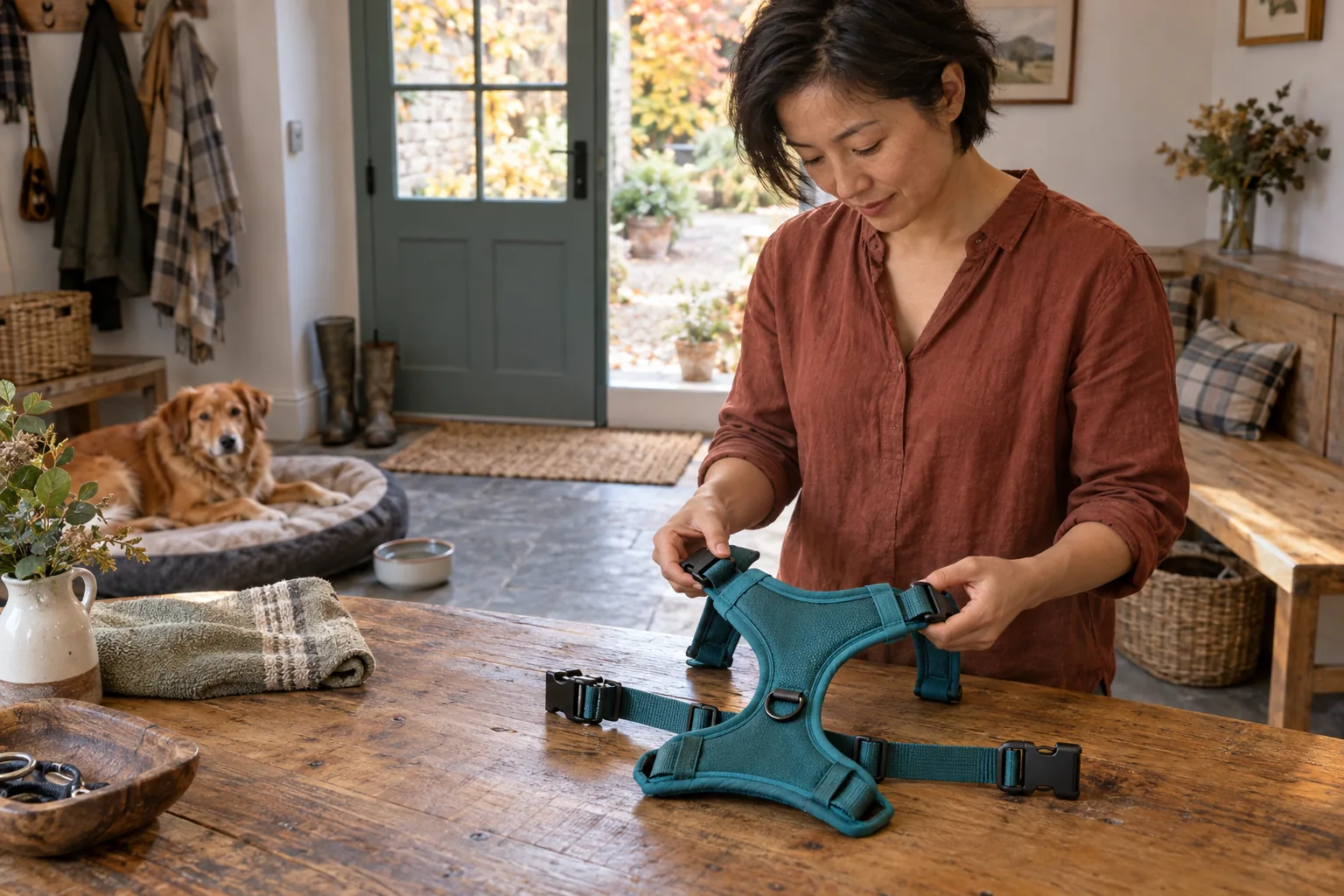
Inspect straps, seams, buckles and adjustment points before practice. Remove damaged equipment from use. Check the manufacturer's fitting instructions and get competent personal help when unsure about size or shape. A harness should allow comfortable movement; an attractive product photograph does not establish that this model fits your dog.
Consider how it goes on. Some designs have a head opening; others open around the neck and body. A step-in design may require leg movement that is uncomfortable for a particular dog. A different opening arrangement can reduce one difficult element, but changing equipment does not replace checking pain or a sensitive area.
Prepare a quiet room with grip underfoot, a resting option and an easy path away. Keep the exterior door secure. Put the lead aside for this first exercise so dangling attachments cannot catch furniture or distract you. A comfortable indoor setup lets you focus on one piece of equipment without creating an escape risk.
Have suitable small rewards ready, within reach but not scattered around the harness. Ask other adults to leave the room calm. Work outside the urgent departure routine, after ordinary needs have been met. Training should not determine whether your dog receives water, a toilet opportunity or necessary care.
Begin with a look and leave room to retreat
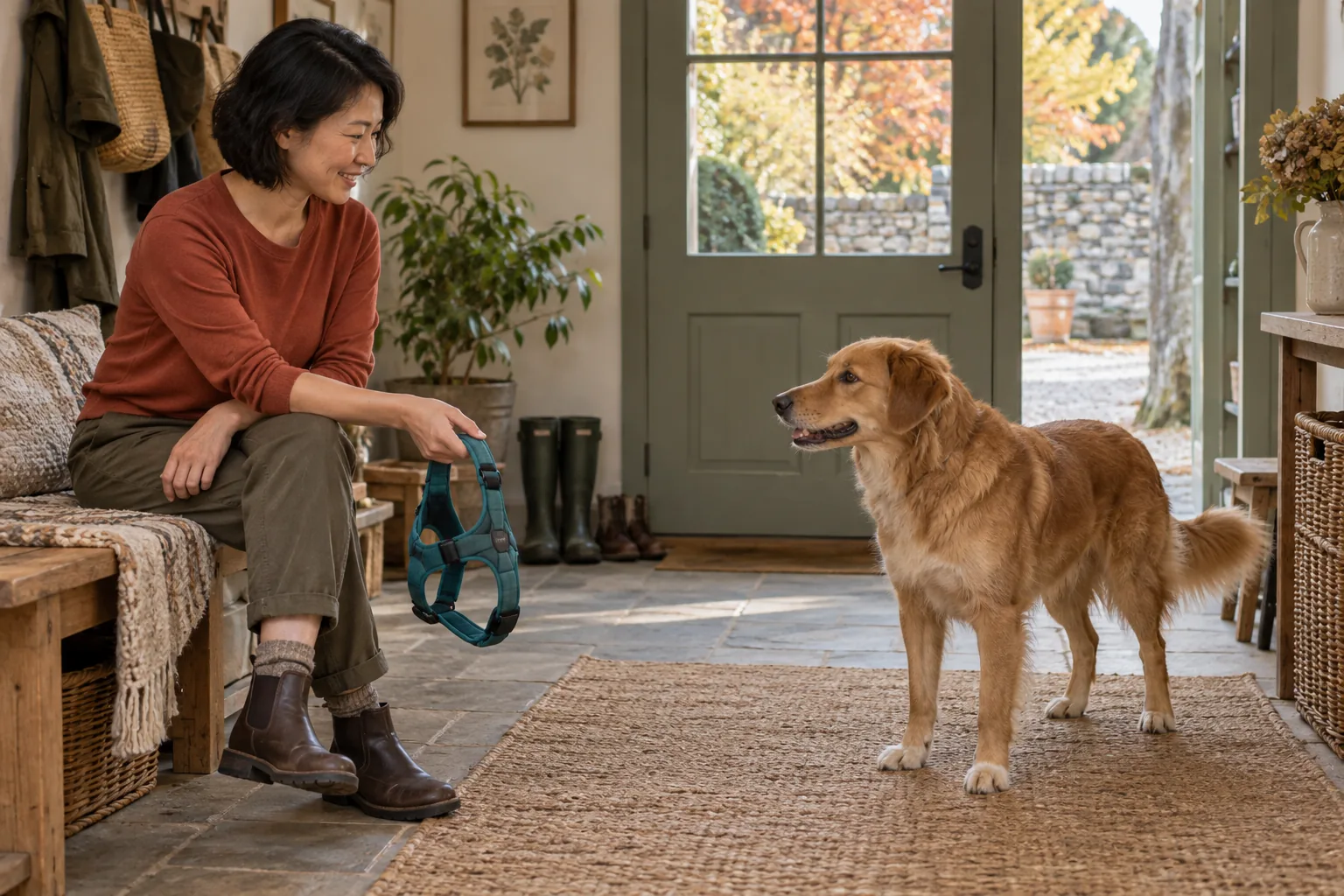
Sit sideways or stand without leaning over the dog. Hold the harness low beside your own body at a distance the dog can comfortably observe. Do not bring the opening toward the face. Notice a brief relaxed look or an ordinary voluntary approach, then offer a reward without drawing the dog into the equipment.
If you already use a reward marker, coordinate it with that easy action. Our reward-marker guide explains the foundation. Introduce an unfamiliar marker separately; equipment practice is not a good moment to add a surprising click near a worried dog.
Keep the harness still for that small opportunity, then set it aside and allow a break. The dog may look away, move elsewhere or choose company without approaching the object. You do not need to make each repetition closer. Distance is a part of the arrangement, not a measure of obedience.
When the dog moves away, avoid following with the harness or holding food at the neck opening to recover the approach. Increase space and end the attempt if needed. Next time choose an easier presentation. One comfortable look can be enough information to stop, especially when the previous routine was rushed.

Separate hands, straps and buckle sounds
A dog comfortable with the sight of a harness may still dislike a hand reaching around the chest. Practise familiar gentle handling separately only where touch is already comfortable. A brief invitation, a light appropriate contact and an immediate pause are different from pinning the dog while reaching for a strap.
Do not use food to hold the dog in place during unwanted contact. Watch whether they remain comfortable when your hands stop. Turning away, leaving, stiffening or repeated attempts to avoid the hand are reasons to pause and reassess. Sensitive areas, pain concerns or uncertain handling belong in a personal plan.
A buckle can also be its own exercise. Examine and operate it in your own lap away from the dog's body, beginning at a comfortable distance. If the sound causes concern, stop rather than clicking repeatedly until the dog becomes still. You can change distance, use a quieter preparation or ask for individual advice.
Battersea's equipment advice recommends short positive introductions and extra support for persistent discomfort. Use that as a reminder to separate difficult elements. A quiet sound exercise does not demonstrate readiness for hands and fastening together.

Use DogPath before you bring out the harness
Open a suitable foundation lesson while the dog is resting, with the equipment still put away. Read the prerequisites and setup. The verified DogPath workflow provides guided lessons, a training path and a weekly plan; it does not establish that a dedicated harness lesson exists. Choose an available familiar foundation relevant to short reward-based practice, not an invented equipment programme.
Prepare the rewards and space, then decide exactly what you can stop after. For example: “Notice one comfortable look while I hold the harness by my knee, then put it away.” The app can organise your preparation, but the dog's participation determines whether the opportunity continues.
Our short-session guide offers a practical way to change one condition at a time. Read instructions before practice so you do not divide attention between a screen, a buckle and a dog. Leave the device on a stable surface away from the exercise.
Dog Train Club and DogPath share a publisher. This relationship does not change the limits: an app cannot assess pain, measure fit from this article or approve a handling setup. If a lesson seems unsuitable, do not adapt it into forced dressing merely to complete a task.
Combine elements only when each is comfortable
Seeing equipment, approaching it, allowing comfortable contact and hearing a clip are separate starting points. Combine only elements your dog can already manage comfortably. Reduce the size of the next change: moving an opened strap slightly is different from putting on and fastening the entire harness.
A head opening should be large enough for the intended fitting procedure. Do not pull the dog's head through, catch the ears or close a buckle while the dog is trying to withdraw. Avoid making access to visible food depend on pushing into an opening that worries them. If you cannot keep the step voluntary and easy to reverse, stop and get practical guidance.
When progressing to actual wearing with an appropriate personal plan, check fit and freedom of movement carefully. Do not leave an unfamiliar harness on an unattended dog, leave a lead trailing where it can snag, or require a walk to prove success. Removal also needs calm preparation; avoid tugging equipment over sensitive areas.
Our loose-lead foundations become relevant when comfortable fitted equipment and safe handling are already established. This introductory practice is not a fitting certificate or proof that outdoor distractions can be managed. Treat the next stage as a separate decision.
Record what happened without declaring the problem solved
After the short opportunity, return to DogPath and mark only the lesson work you actually completed. If you read a foundation but did not practise its steps, do not mark the entire lesson completed. If you practised only part, follow the available progress controls honestly rather than using a completion badge to describe something that did not happen.
Keep equipment observations in a separate ordinary notebook if the app does not offer a suitable field. This workflow does not assume custom harness records, fear scores or automatic analysis. Write the setting, distance, visible response and next adjustment in plain language.
“Harness held beside my knee; dog looked briefly, accepted reward, then walked to the bed; no touch or fastening” is a useful record. “Harness trained” hides the boundaries. Include what you did not attempt so another adult does not jump straight to dressing on the next outing.
Use the weekly plan to reserve another suitable foundation opportunity when ordinary care allows it. The scheduled date is a reminder, not a deadline for tolerance. Repeat an easier version or take a break when circumstances change. A completed lesson never replaces ongoing attention to comfort and safety.

Protect daily care while arranging personal support
Necessary outings may arrive before equipment practice is ready. Agree on an individually suitable secure care arrangement with a qualified professional rather than improvising restraint from this guide. Keep gates and exterior doors secure while preparing. Do not pursue the dog around the home, trap them between your legs or withhold a toilet opportunity to force participation.
Tell the vet about sudden equipment avoidance, sensitivity around ears or limbs, changes in movement or other concerns. Persistent fear, growling, snapping or previous bites needs a personal safety and behaviour plan. Protect people with suitable separation while arranging help, without handling through a bite risk.
Coordinate the routine with other adults. Explain which parts are currently comfortable and which have not been attempted. A person who did not see practice should not assume that one rewarded look means the harness can be put on quickly. Clear notes and a realistic departure plan are more useful than insisting everyone be stricter.
The next step can stay modest: check the equipment, prepare one suitable foundation, offer an easy look and stop while the dog can freely choose. A better starting routine makes room for learning without promising a particular timetable or overlooking the need for individual care.
Common questions
Should I hold my dog still to finish putting it on?
No. Forced restraint can make the routine harder and introduce bite risk. Stop if the dog avoids contact or becomes tense. Arrange personal help for necessary care and a suitable fitting plan rather than completing an exercise through distress.
Can I practise without actually wearing the harness?
Yes. Looking at equipment from a comfortable distance, preparing familiar handling and considering buckle sounds separately can be starting opportunities. None proves readiness for fastening or a walk. Choose one manageable element and leave room to retreat.
Does DogPath have a harness programme?
This guide does not claim a dedicated harness programme. It uses the verified workflow of reading an appropriate foundation lesson, preparing practice, recording actual completion and planning another opportunity. Fit, pain and handling safety need personal assessment.
When should I ask for help?
Seek veterinary advice for pain concerns or sudden change, and qualified reward-based behaviour support for persistent fear, stalled practice or bite risk. Do not wait for an app schedule to finish before addressing necessary care or wellbeing.