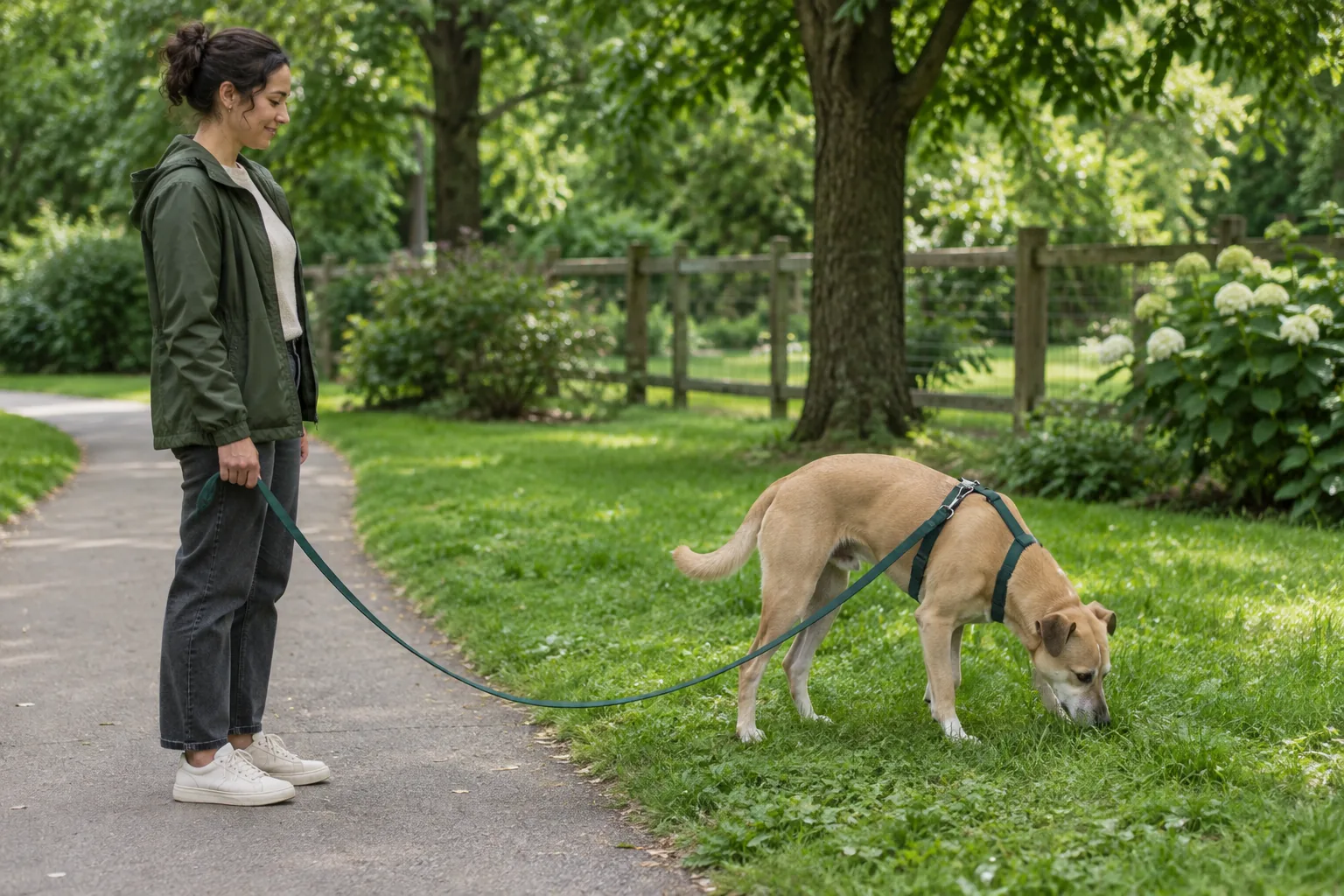
If your dog won't poop on leash, begin with the place and routine where they already toilet comfortably. Keep normal food, water and toilet opportunities available while you introduce a loose lead in small steps. A quiet patch, a little more room to sniff and a handler who stands to the side may make the outing easier. If your dog is straining, appears painful or has a sudden change in their usual pattern, contact your veterinarian before treating the problem as a training task.
Dog won't poop on leash? Check the pattern first
Think about the last time your dog passed a normal stool. Where were they, what surface did they choose and how close were you? A dog who toilets readily in their own garden but stops on a busy pavement has a different starting point from a dog who is repeatedly trying without producing anything. Write down what you have actually seen, including the normal opportunities your dog has had that day.
Call your veterinarian about a sudden change, repeated straining, discomfort, vomiting or unusual lethargy. If you are unsure whether your dog is trying to pass urine or stool, seek prompt veterinary advice. Difficulty passing urine can require urgent care. The PDSA constipation guide describes signs worth discussing with your vet. Give the timing of the last normal stool and mention any changes in appetite or activity.
For a dog otherwise behaving normally who toilets comfortably in a familiar place, look at what changes when the lead appears. They may have less room, a different surface or a person facing them from close range. Avoid testing how long they can hold on. Preserve an appropriate familiar toilet option while you work on the new arrangement, and ask for individual advice if that option is unavailable or outings are becoming uncomfortable.
Start with the surface your dog knows
Choose a permitted, clean spot that resembles your dog's usual preference. A dog used to grass may find a bare pavement unfamiliar. A quieter grassy corner on your regular route can be easier than a crowded entrance. Check for sharp debris, litter, treated areas and signs restricting access before you let the dog explore. Keep clear of traffic and places where other dogs regularly rush up.
Try to keep the first visits ordinary. Walk to the spot at a time that fits your dog's usual pattern, such as a normal morning outing. Let them sniff and move at a comfortable pace. You can offer another opportunity later without turning the first visit into a long wait. Record which place and time you tried so you can compare similar outings rather than changing everything at once.
If you have a secure garden and the dog already toilets there, you may be able to begin with the lead in that familiar setting. Stay with the dog, keep the line clear of their feet and allow slack. Use equipment you can manage safely without tying the dog to anything. A safely enclosed familiar space can help you practise your own handling before you need it on a public path.
Give the lead enough slack for a small search
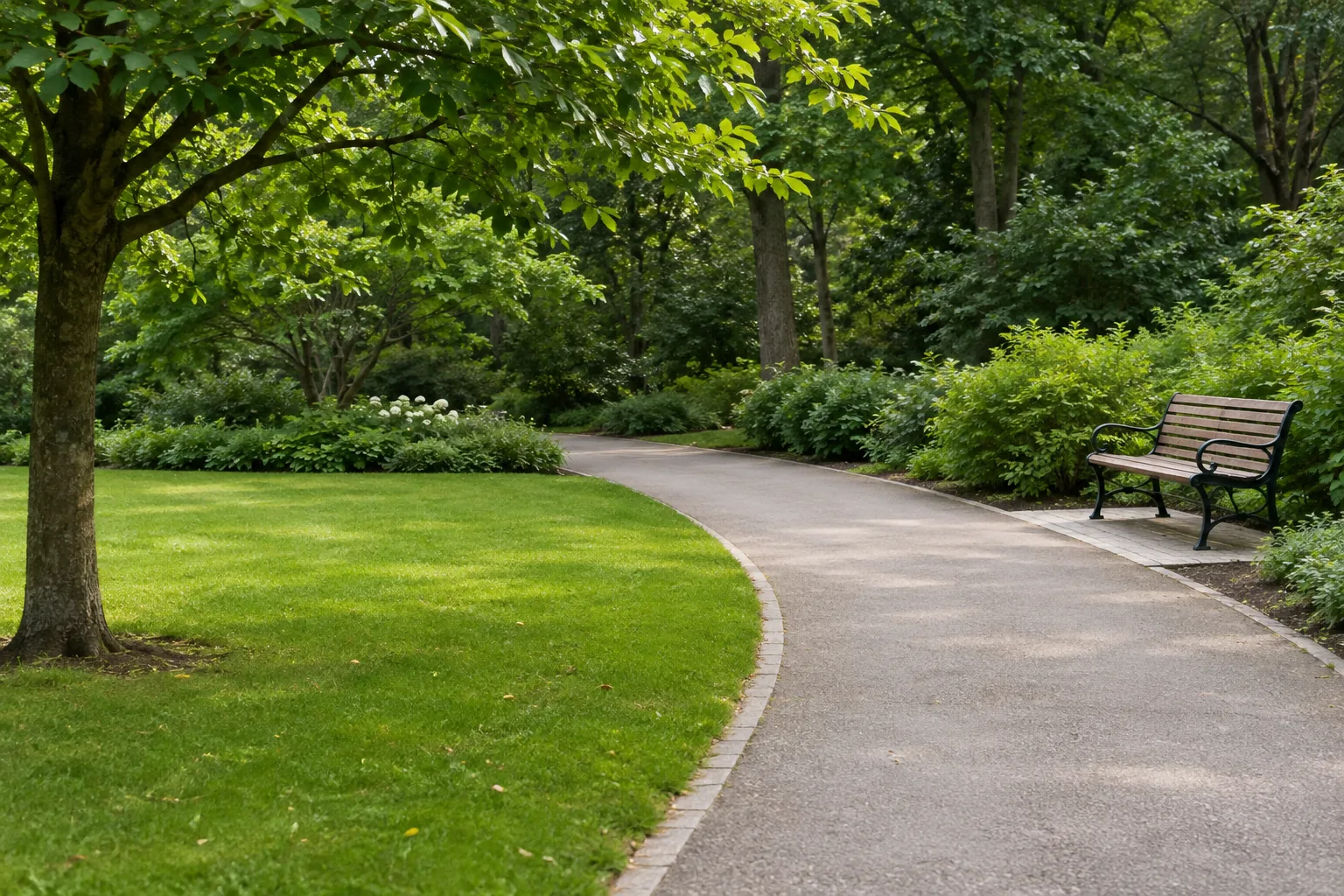
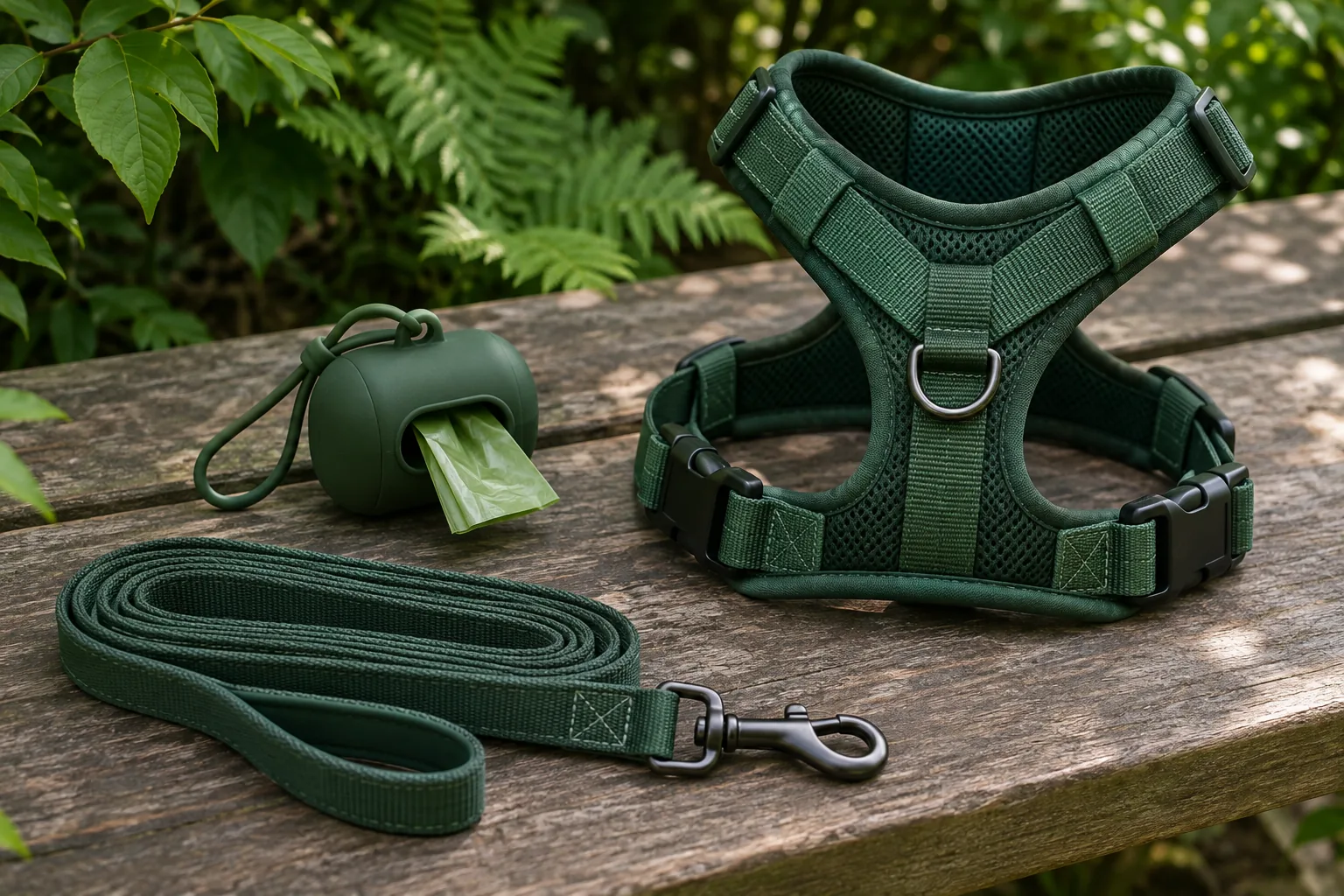
A comfortable, well-fitted harness and a flat lead let you accompany the dog without constant tension. Choose a length you can handle in the available space. There is no single length that suits every path or dog. A longer line needs room, clear ground and a handler who can keep it from wrapping around feet. In a narrow area, look for a wider spot before giving extra reach.
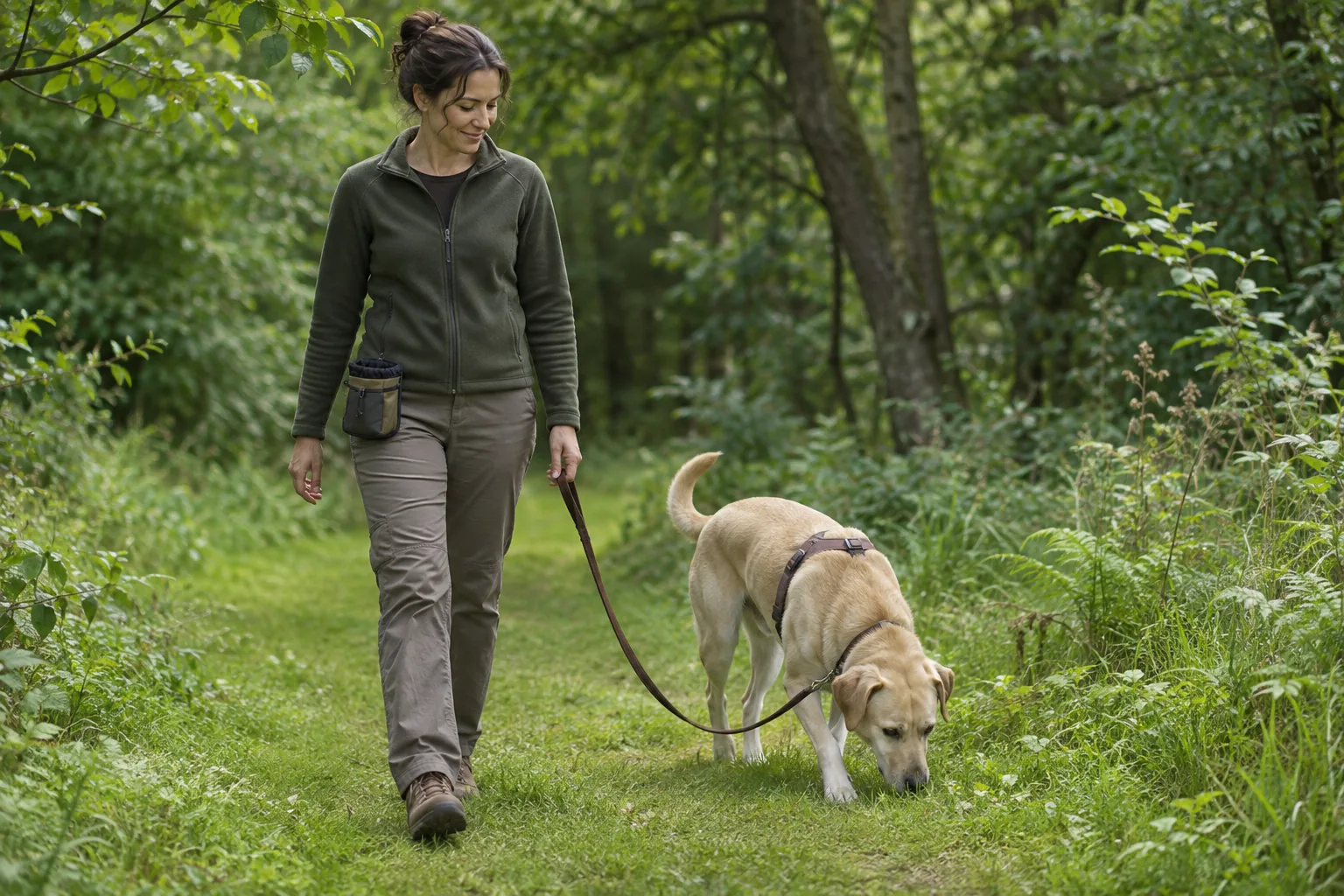
Follow a small sniffing arc instead of standing rigidly and pulling the dog back each time they turn. Keep your hands low and take a step if that helps preserve slack. If the lead tightens, check where it is caught and move to restore space. Our loose-lead walking guide offers basic handling you can practise on ordinary walks.
Avoid dropping the lead near roads or in places where dogs must be attached. If a longer line is hard to handle, get practical help in a safe setting. A toilet opportunity should not depend on a risky release. Keep the arrangement within your ability to manage, even if that means choosing another quiet spot or asking someone experienced to walk with you.
Stand beside the moment
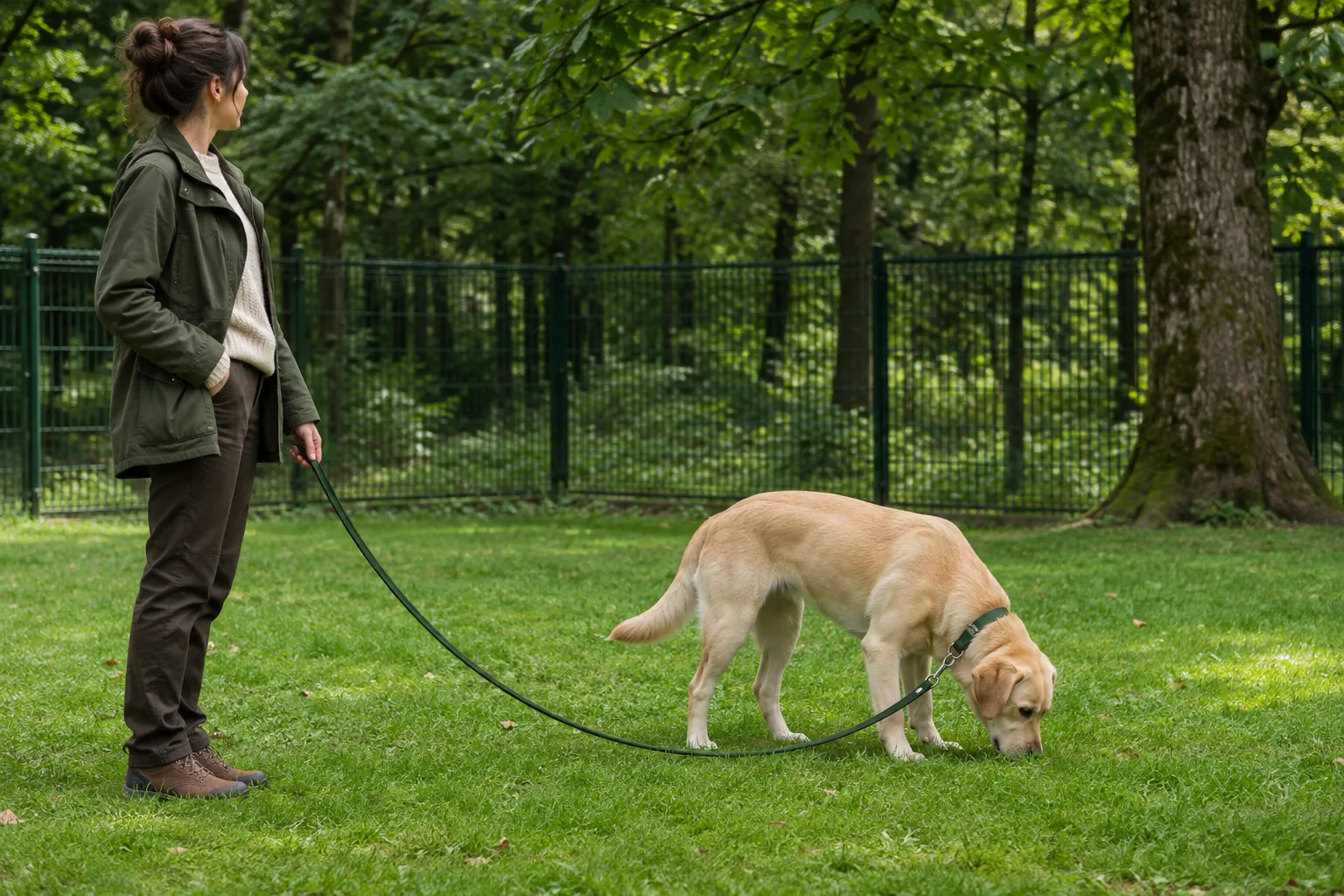
When the dog begins their usual sniffing or circling, give them room to continue. Turn your body slightly sideways and look around the area instead of leaning over them. Keep the lead clear of their hind legs. Some dogs move in a small circle before choosing a position, and an abrupt tightening can interrupt the sequence. Your job is to allow the movement while keeping the setting safe.
Wait until the dog has finished before offering a small suitable reward or calm praise they enjoy. Prepare it discreetly so you do not lure them away mid-sequence. The RSPCA toilet-training guidance recommends outdoor opportunities and rewards for toileting. Keep the reward close enough in time that it follows the completed behaviour while you are still at the spot.
Then clean up and, when the outing allows it, continue with a little ordinary sniffing or walking. If every bowel movement immediately ends a pleasant walk, the overall routine can become awkward. You can plan a short continuation without making a promise about how quickly the dog will learn. The aim is a repeatable outing that meets their needs and fits the place you use.
Add familiarity before changing the route
After an easy success, repeat the same spot under similar conditions. Check whether the dog can sniff, turn and finish with slack in the lead again. If it was possible only when the path was empty, keep using the quieter time while you plan the next small change. A successful outing gives you information about useful conditions. It does not tell you the dog will be comfortable in every place.
Move toward a new toilet spot in small, practical steps. You might choose another patch on the same quiet route before trying a different neighbourhood. Keep the surface similar and avoid combining a new place with heavy rain, a busy path and a different handler all at once. If you know the day will be hectic, preserve the easier option rather than relying on a training breakthrough.
A second adult can learn the same handling in the familiar place. Explain where you stand, how much slack you keep and when you deliver the reward. Our reward marker guide can help with timing, although a formal marker is optional here. Quietly recognising a finished toilet trip may suit the dog better than enthusiastic movement close to them.
Plan for outings away from home
Before a trip, look for suitable toilet opportunities along the way and near your destination. Allow enough time to find a quiet area, check access and clean up afterwards. Carry bags, normal water supplies and the equipment your dog already wears comfortably. Keep usual meals and hydration unless your veterinarian has given you a specific plan. Changing intake to avoid a toilet problem can create another difficulty.
If your dog cannot toilet during one opportunity, offer another appropriate chance and keep watching their comfort. Do not remain outside until they are exhausted or wait through signs of distress. A dog who is unable to use an available place may need a different surface, more privacy or professional help. If their usual pattern changes or they start straining, contact your veterinarian with your notes.
When staying somewhere new, ask where dogs are permitted to toilet and which routes are quiet. Take a short familiarisation walk before you need a hurried departure. If another person is caring for your dog, share the preferred surface, normal pattern and the veterinary contact details. These practical arrangements are especially helpful when a dog is learning to toilet with a person nearby.
Use notes to choose the next adjustment
Keep a simple record over ordinary days. Note the last normal stool, the place, whether the lead was slack and any obvious interruptions. “Sniffed grass and finished while I stood sideways” is more informative than “good walk”. “Started circling then stopped when a jogger passed” suggests trying a quieter time. Record health concerns separately and share them with your veterinarian.
If you still cannot create a comfortable attached toilet opportunity, ask a qualified reward-based professional to watch the setup. They can help with your handling, the environment and the size of the next step. Seek veterinary advice for pain or sudden changes, and arrange in-person help before practising if handling brings growling or a bite risk. Keeping an ordinary need comfortable matters more than a deadline for using a particular patch.
Common questions
Should I add a toilet cue now?
You can keep the first outings simple. If you later add a quiet word, pair it with a familiar routine and reward after the dog finishes. Repeating a cue will not create an immediate physical need.
Can I change food to make the trip easier?
Keep the normal diet and ask your veterinarian about any digestive concern. Avoid laxatives, supplements or home remedies unless your vet has advised them for this dog.
What if the only easy option is my garden?
Keep that appropriate option while you practise the new arrangement. If it will soon be unavailable, seek individual help early so you can plan around the dog's actual needs.