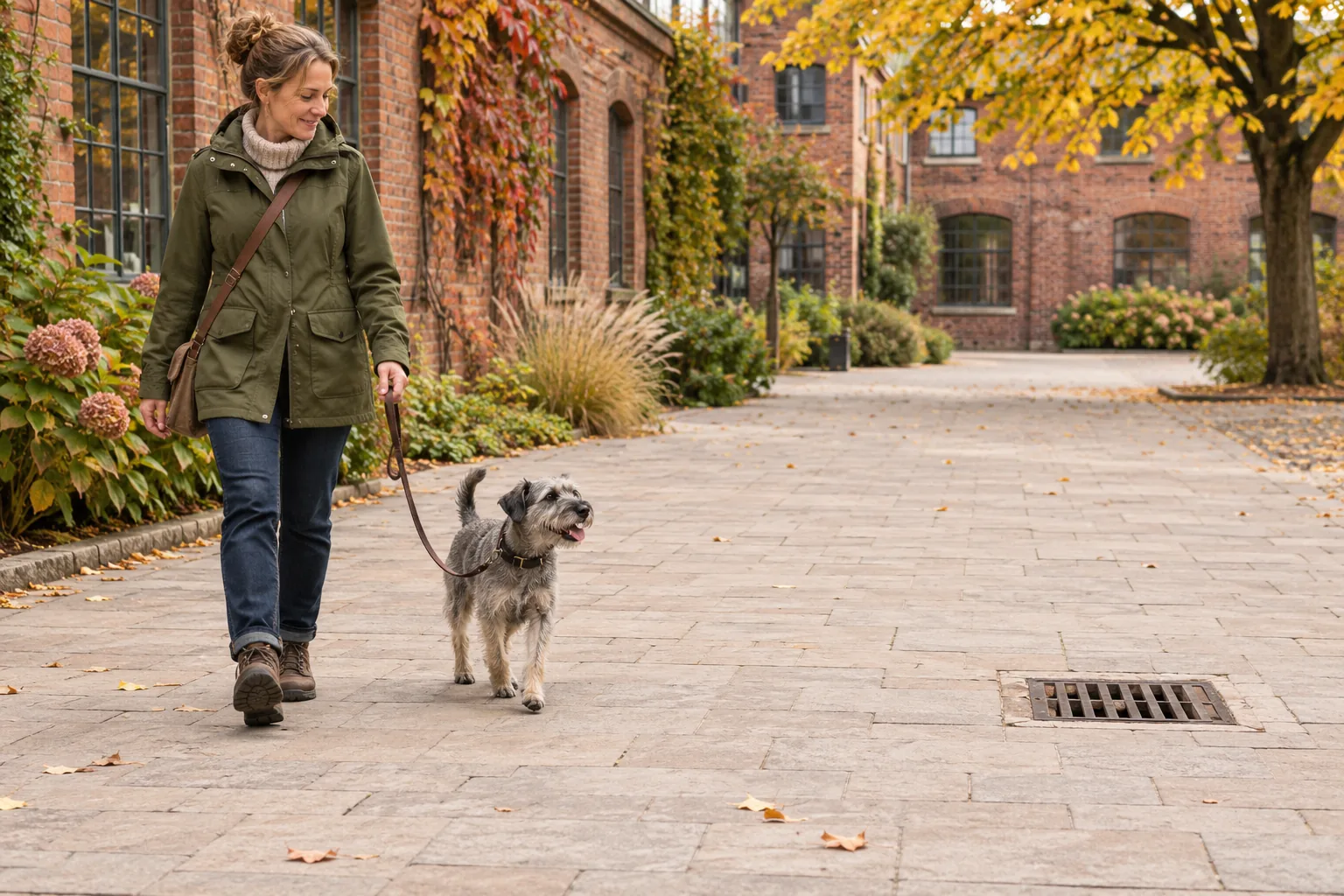
When your dog stops short at the same drain on every walk, the quickest useful decision may be to give that drain a wide berth. A dog afraid of metal grates can still have a good walk on solid ground. Choose a route with room to turn, spot the metal before your dog reaches it, and practise a shared change of direction somewhere quiet. The walk can go well even if paws never touch the grate.
This guide separates getting home safely from practising a skill. Use the route advice straight away and decide later whether there is anything worth practising near that particular spot. If the reluctance is new, your dog is limping or seems sore, or several ordinary surfaces suddenly become difficult, arrange a veterinary assessment. A familiar training exercise cannot tell you what is causing a change in movement.
Dog afraid of metal grates? Check where you can go
Look several metres ahead on a familiar walk. Grates often run across the narrowest part of an entrance or sit beside a kerb, just where attention is already divided. Spot the widest stretch of solid pavement and choose your direction before either of you reaches the metal. On a short outing you can turn back while the dog is still walking comfortably. A few calm extra steps on stable ground are enough to make that a good choice.
Check what the detour actually involves. A strip of pavement between the grate and moving traffic is a poor place to practise; a queue next to a doorway also leaves little room to retreat. If the only apparent route is through traffic, over a kerb without a safe crossing or onto loose material, turn back and find a different street or entrance. Follow applicable local access and leash rules.
Avoid stepping on a grate to make it clang as a demonstration. Give unfamiliar public fixtures their space, especially if they move, have wide openings or are wet. You do not need to establish whether your dog is worried by the appearance, the feel or the noise before organising a safe walk.
Make a detour that both of you can follow
Imagine a rectangular drain extending out from the planting along a pedestrian path. The paving on your side is broad and dry. Start the curve into that clear area early enough that your dog can follow on a loose leash without passing close to the opening. Leave room for other walkers. Once you are alongside the drain, keep moving at an ordinary pace toward the wide part of the path where the dog can sniff again.
If you only notice the drain when the dog freezes, first give them room to shift away. Turn your body toward the clear route and walk together as soon as they can move voluntarily. If practical, pause in a broad safe area behind you. Avoid pulling forward or backing your dog into a corner. A hurried reward beside the grate may bring the dog's head closer while their feet are still planted; offer it after the voluntary move to comfortable ground.
For a daily route with several drains, plan one easy option that still meets the dog's ordinary needs. On the way to a toilet spot, having a second exit or a short alternative loop is more helpful than adding an exercise at every drain. If a drain blocks an entrance you must use, contact the venue to ask about a safe accessible entrance. Let appropriate staff deal with damaged infrastructure.
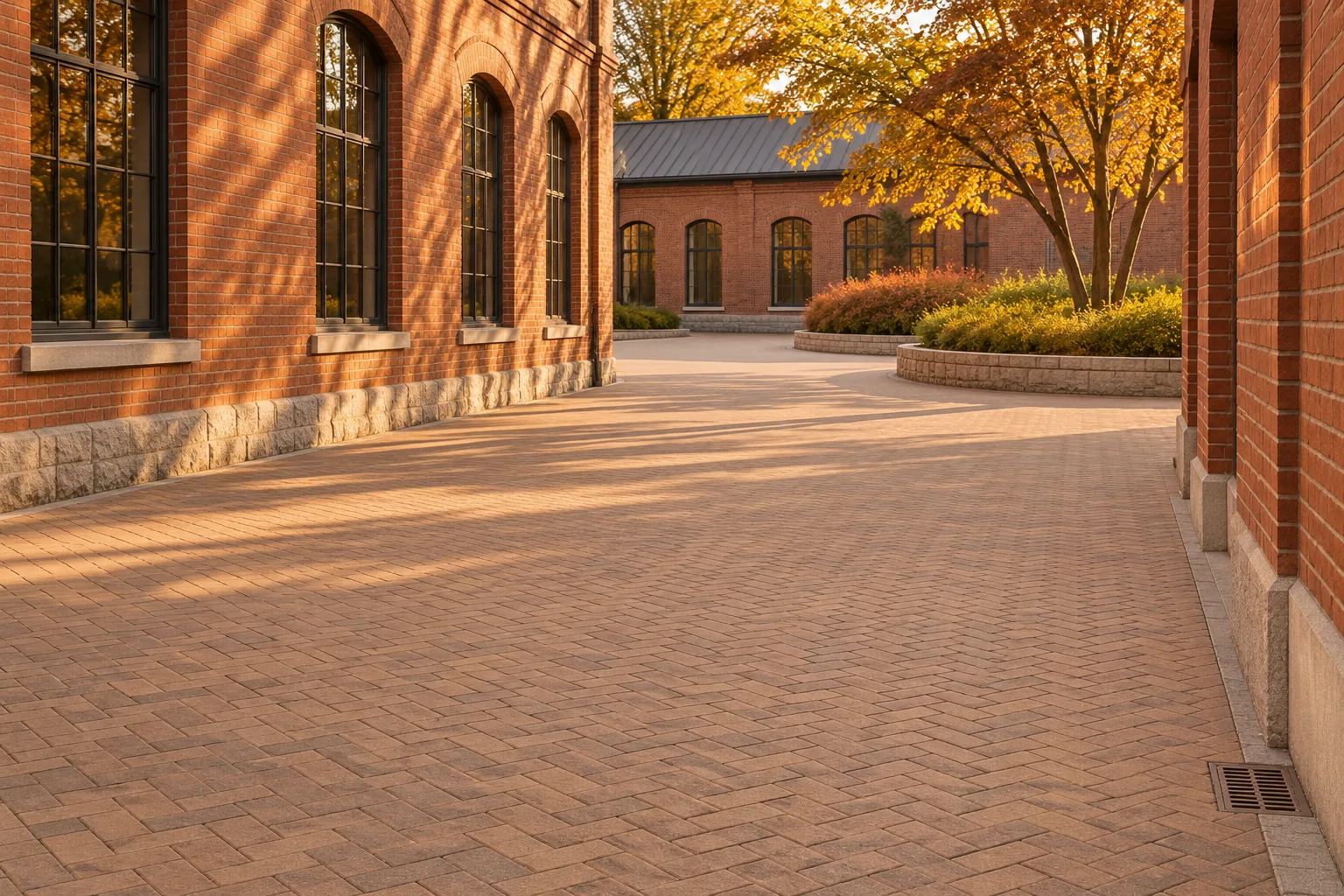
Rehearse the turn on plain ground
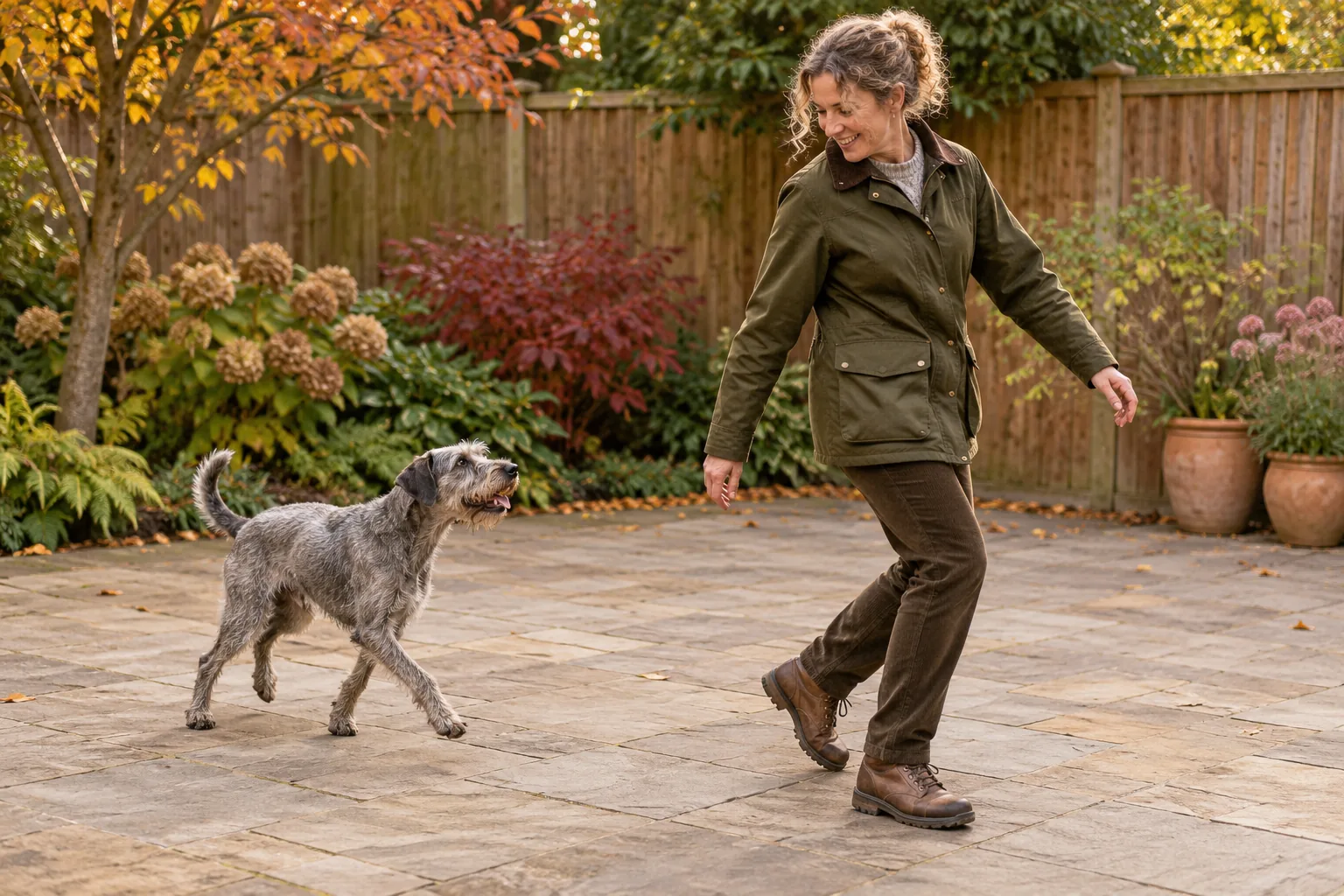
Choose a familiar word or a short phrase to say just before you change direction. In a quiet enclosed area with level footing, start while your dog is moving easily near you. Say the cue and turn through a wide curve. Reward the moment your dog begins to follow. Give the reward at your side on the new line, so your position remains easy to find. Stop after a few easy turns and let the dog return to an ordinary activity.
A turn from a standstill can be easier for the human learning the timing. Try a second version while walking only when your dog is comfortable. Check whether the leash still hangs loosely through the change of direction and whether you can keep your shoulders facing the new path. A wide turn is useful for handlers with limited mobility as well. Choose a radius you can both manage. Have an adult helper watch from the side if you want feedback on your own timing.
The loose leash walking guide offers a quiet place to start with the lead. If you use a reward marker, mark the first voluntary step with you. In a real walk, expect some situations where the dog is busy or has already noticed the grate and cannot follow the cue comfortably. Make space first and reset in a quieter place.
Choose the practice distance by watching the dog
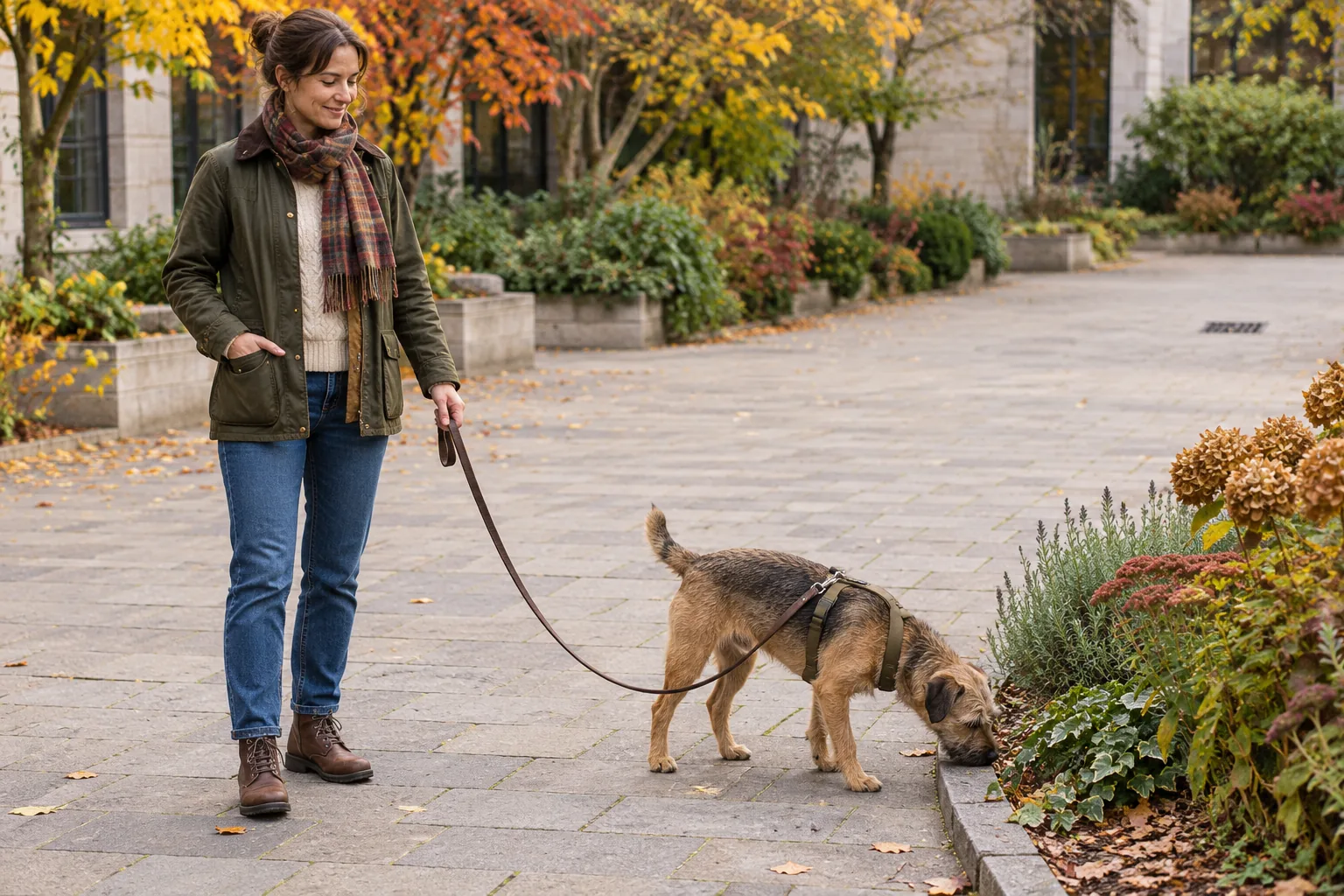
If there is a worthwhile reason to practise near a grate, choose a familiar pedestrian area with generous space and solid paving. Begin on the accessible route you already know your dog can walk. Seeing the drain from a comfortable distance is one possible step; there is no need to angle closer. Look for a dog who can move freely, notice the environment and turn back with you. Continue away while that response is easy.
A single signal can be hard to interpret. A dog who accepts a treat but leans back and keeps looking at the grate may still need more room. A dog who looks briefly and returns to sniffing without changing pace may be fine at that distance. What matters for this session is whether they can continue moving and make choices. Use a longer curve on a busy day. If there is no safe space for it, save your practice for another outing.
Keep the first attempts brief and separated by ordinary activities. You might pass at the same generous distance on two different days. Keep the direction, pace and route familiar while you find out whether it is comfortable. A noisy fixture, rain or a crowd can change the plan even when the previous pass went smoothly. End by leaving on the solid route with plenty of room.
Use DogPath to plan the skill you can rehearse
Dog Train Club publishes DogPath. You can use the app to organise a foundation lesson, such as nearby attention or walking together, and keep the route choices separate. Open the relevant lesson before going out, read the preparation and prerequisites and choose a quiet place for an easy repetition. Put the phone away while you guide the dog. Reading ahead also gives you time to decide where the reward will appear and what will end the exercise.
Here is one way to use the weekly plan. At the first opportunity, set aside a short session on plain ground and practise turning with the familiar foundation skill. At the next opportunity, repeat the easy setup. If the quiet area is crowded, handle the walk using the detour and leave the planned exercise for a better moment. Record actual completed practice after the session. A detour managed on the spot is a useful walk decision even if you postpone the planned lesson.
Keep the local details in a notebook or other notes you already use. An entry might read “dry path before breakfast, drain on right, curved left early, continued sniffing”. On another day you might write “shop queue blocked left side, used different street”. The app keeps the lesson plan and practice progress. You decide whether the public route is safe and whether the foundation exercise fits the dog in front of you.
Review the next walk by its easiest useful choice
At the end of the week, ask which option made routine walks more workable. An earlier turn at a planter may give the dog enough room. A different entrance might be the right permanent change. Compare similar walks so that darkness, rain and people standing around the entrance do not get confused with the skill you are practising.
If the dog repeatedly refuses whole routes or becomes hard to guide safely, get individual help from a qualified reward-based professional. If the change came on suddenly or you see soreness, paw sensitivity or changes in gait, consult your veterinarian. Keep people and dogs clear if there is a risk of a fall, redirected snapping or a bite. These are reasons to review safety with someone who can see the situation in person.
Common questions
Should I put treats on a grate to encourage crossing?
Place rewards on comfortable solid ground for useful choices such as turning or staying with you. Public grates may have openings, slippery sections or unpredictable movement. A reward beside your leg after a voluntary turn is easier to deliver and leaves the dog an exit.
What if the dog already knows the turn but stops anyway?
Use the route you planned to create distance and give them time to move. The familiar exercise will probably be easier farther away from the drain or back in the quiet practice area. Repeating the cue next to the obstacle adds another demand while you are both trying to leave.
Do we need to end up crossing a metal grate?
A safe everyday route and a voluntary turn can meet the practical need. Where a specific facility has no convenient alternative, ask about safe access and get an individual plan before practising there. Choosing a permanent detour is a valid outcome.